How Does an Aquaponics System Work? The Complete Cycle Explained
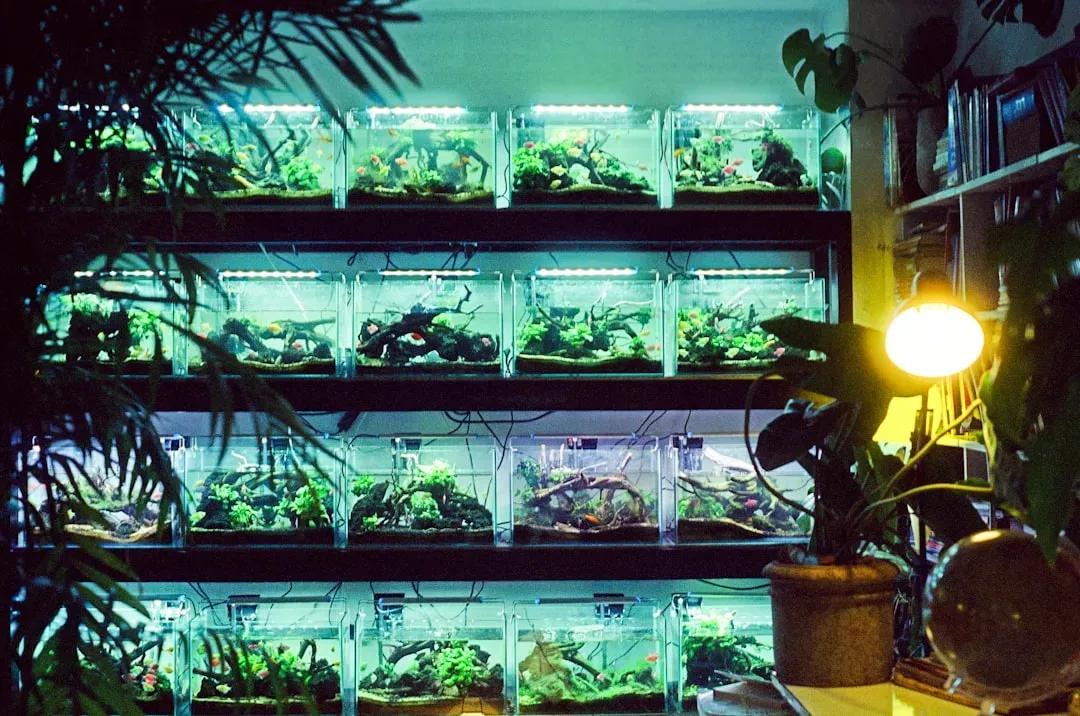
An aquaponics system works by cycling fish waste through beneficial bacteria that convert ammonia into nitrates, which plants absorb as nutrients while cleaning the water that returns to the fish tank. This closed-loop ecosystem mimics a natural pond where fish, bacteria, and plants maintain balance without synthetic fertilizers or constant water changes.
Table of Contents
- What Is Aquaponics and How Does the Basic Cycle Work?
- The Three Essential Players in Your Aquaponics System
- Why Aquaponics Is Different From Traditional Gardening
- The Complete Nitrogen Cycle: From Fish Waste to Plant Food
- Step 1: Fish Produce Ammonia Through Waste
- Step 2: Beneficial Bacteria Convert Ammonia to Nitrite
- Step 3: More Bacteria Convert Nitrite to Nitrate
- Step 4: Plants Absorb Nitrates and Clean the Water
- How to Cycle a New Aquaponics System: The 4-6 Week Process
- Week 1-2: Establishing Ammonia and Initial Bacteria
- Week 3-4: The Nitrite Spike and Patience Period
- Week 5-6: System Stabilization and Readiness Tests
- Key Components That Keep the Cycle Running Smoothly
- The Fish Tank: Sizing and Stocking Density
- Grow Beds and Biofilters: Where the Magic Happens
- Water Pumps, Aeration, and Flow Rates
- Maintaining Your System's Cycle Long-Term
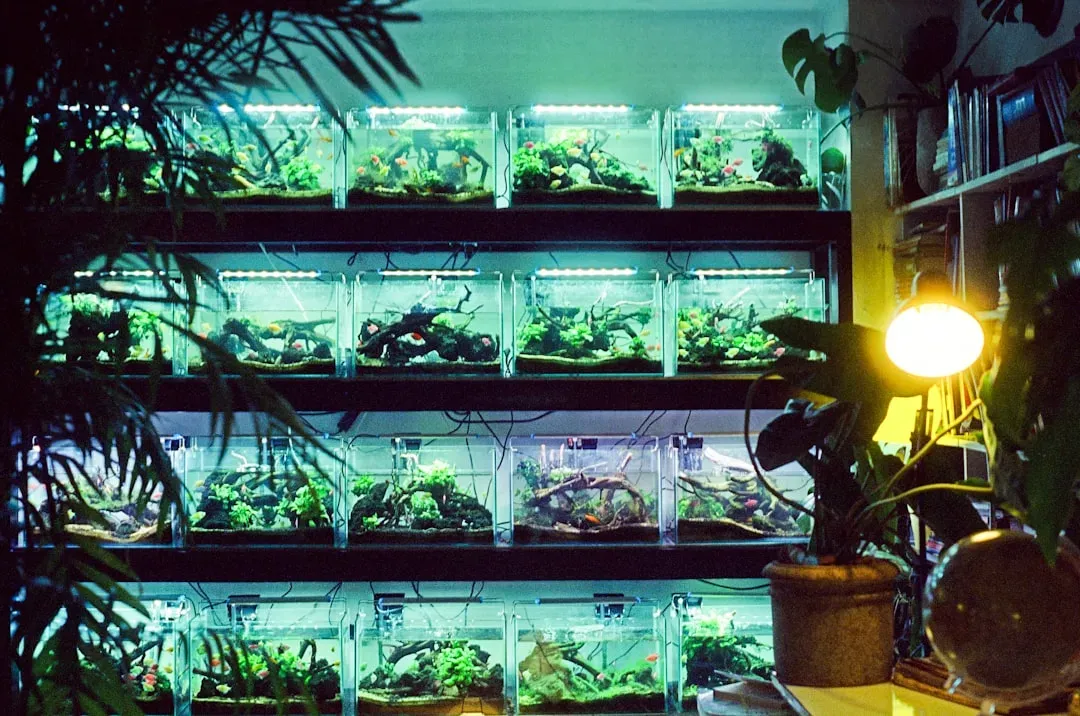
- Daily and Weekly Monitoring Tasks
- Managing pH and Water Chemistry
- Troubleshooting Common Cycle Disruptions
- Seasonal Adjustments and Long-Term Success
If you've ever kept a fish tank or maintained a garden, you already understand half of aquaponics, this system simply connects those two activities into one self-sustaining cycle. The fish waste you'd normally remove becomes the exact nutrients your plants need to thrive.
What Is Aquaponics and How Does the Basic Cycle Work?
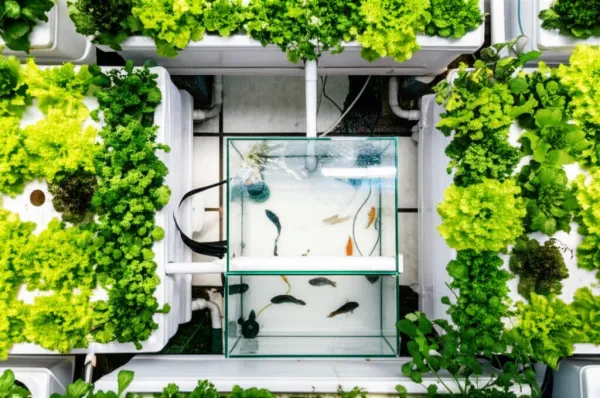
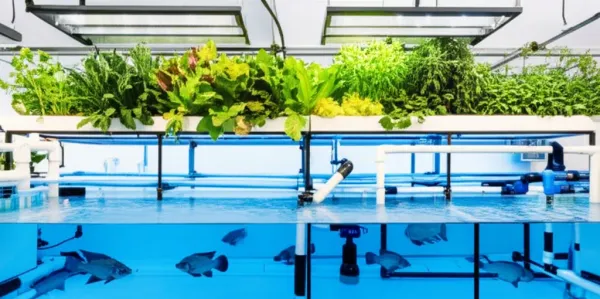
Aquaponics combines recirculating aquaculture with hydroponic plant production in a bio-integrated system (USDA). Think of it as recreating a natural pond ecosystem in your backyard or basement. In a healthy pond, fish produce waste, bacteria break down that waste, and aquatic plants absorb the resulting nutrients while filtering the water. Your aquaponics system does exactly this, but in a controlled environment where you harvest both fish and vegetables.
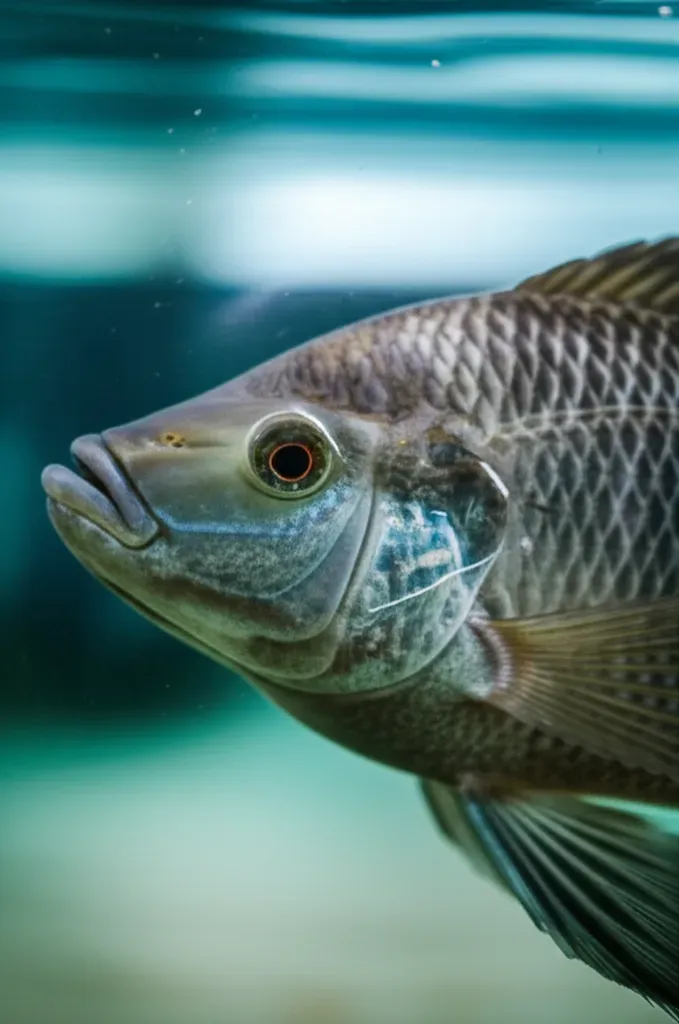
The cycle starts when fish eat and excrete waste. Water carries this waste to bacteria colonies living on surfaces throughout your system. These bacteria transform toxic compounds into plant-available nutrients. Plants absorb those nutrients through their roots, and the now-clean water flows back to your fish tank.
This biological loop runs continuously once established. You add fish food at one end, and harvest vegetables and fish at the other, no soil, no synthetic fertilizers, no water dumping.
The Three Essential Players in Your Aquaponics System
Fish serve as your nutrient factory. Tilapia, goldfish, trout, or catfish consume feed and produce ammonia through their gills and solid waste. The amount of food you provide directly determines how many nutrients enter your system, typically 1-2% of fish body weight daily (University of Hawaii).
Beneficial bacteria are your invisible workforce. Two types matter most: Nitrosomonas bacteria convert ammonia into nitrite, then Nitrobacter bacteria convert nitrite into nitrate (University of Maryland Extension). These microorganisms colonize every wet surface in your system, particularly in grow beds and biofilter media where water flow and oxygen levels support their growth.
Plants act as your biological filter. Lettuce, herbs, tomatoes, and other crops absorb nitrates through their roots, using this nitrogen to build proteins and grow leaves. As plants remove nitrates, water quality improves for your fish. Leafy greens work fastest, while fruiting plants like peppers need higher nutrient concentrations.
Why Aquaponics Is Different From Traditional Gardening
Soil gardening requires you to kneel, bend, and fight weeds while managing separate watering and fertilizing schedules. Aquaponics eliminates most of that physical strain. Your plants grow in waist-high beds filled with clay pebbles or floating on rafts, no kneeling required.
Weeds can't establish in aquaponics media. Watering happens automatically through your pump system. Nutrients arrive continuously from fish waste rather than through manual fertilizer applications. Many growers over 55 discover they can maintain a productive aquaponics system with less physical effort than a traditional garden bed.
The system produces year-round in climate-controlled environments. A greenhouse or basement setup lets you harvest lettuce in January and tomatoes in November, extending your growing season beyond what soil and weather allow.
The Complete Nitrogen Cycle: From Fish Waste to Plant Food
The nitrogen cycle is the biological engine that powers every aquaponics system. Understanding each transformation helps you troubleshoot problems and maintain balance as your system matures. This process happens in every aquatic environment, but aquaponics harnesses it deliberately for food production.
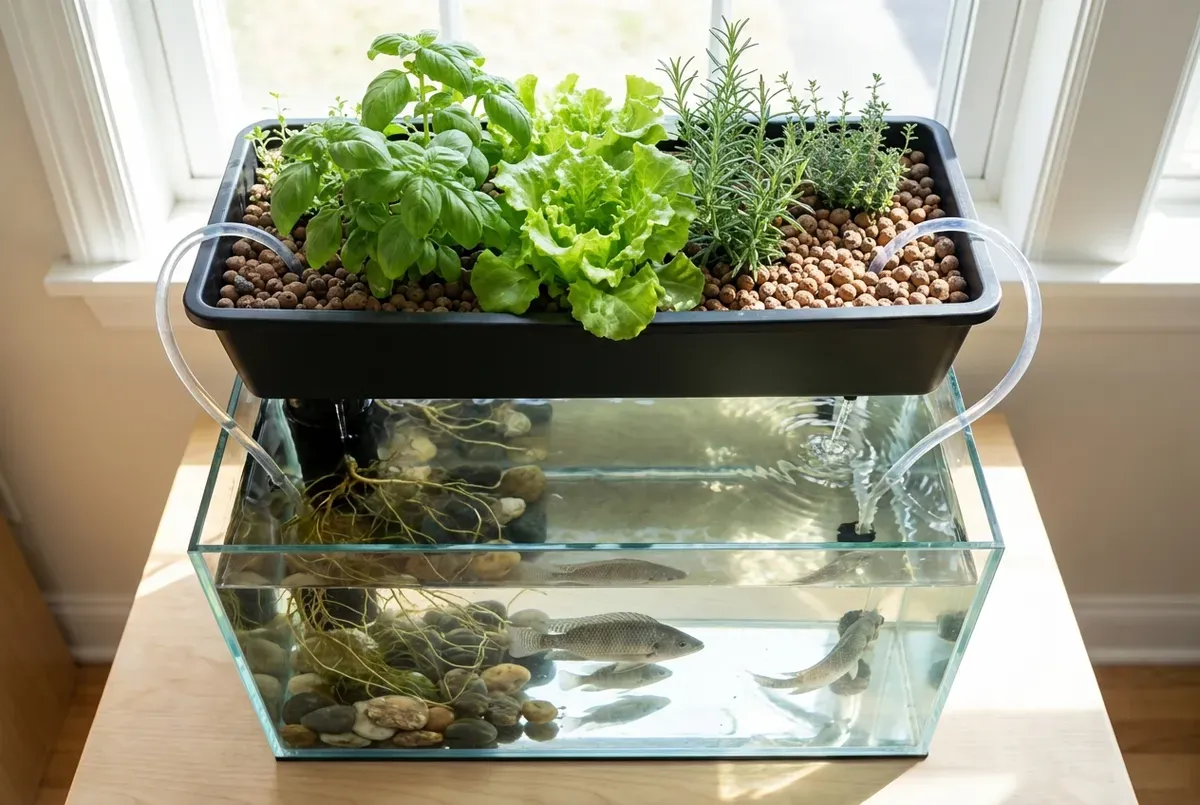
The Three Essential Players in Aquaponics Systems
| Component | Primary Function | Key Species/Types | Role in Nitrogen Cycle |
|---|---|---|---|
| Fish | Nutrient factory; consume feed and produce waste | Tilapia, goldfish, trout, catfish | Produce ammonia (NH3/NH4+) through gills and solid waste |
| Beneficial Bacteria | Convert toxic compounds into plant-available nutrients | Nitrosomonas (ammonia to nitrite), Nitrobacter (nitrite to nitrate) | Transform ammonia → nitrite → nitrate through biological oxidation |
| Plants | Biological filter; absorb nutrients and clean water | Lettuce, herbs, tomatoes, peppers, leafy greens | Remove nitrates from water, improving quality for fish while growing |
Step 1: Fish Produce Ammonia Through Waste
Fish excrete ammonia (NH3/NH4+) constantly through their gills and solid waste. This happens whenever fish breathe and digest food, it's unavoidable biology. Ammonia is highly toxic to fish, causing gill damage and stress at concentrations above 1 ppm.
New systems without established bacteria can see ammonia spike to 4-6 ppm within days of adding fish. You'll smell it, honestly, ammonia has a sharp, nose-burning odor. Test kits show ammonia levels through color changes, with readings above 2 ppm requiring immediate intervention through water changes or reduced feeding.
Step 2: Beneficial Bacteria Convert Ammonia to Nitrite
Nitrosomonas bacteria consume ammonia as their food source, converting it to nitrite (NO2-) through oxidation (University of Maryland Extension). These bacteria colonize wet surfaces anywhere water flows, grow bed media, tank walls, pipe interiors, and dedicated biofilter materials like lava rock or K1 micro media.
This conversion takes 10-15 days to establish in new systems. Nitrite is also toxic to fish, though slightly less dangerous than ammonia. During cycling, nitrite levels often spike to 5-10 ppm before the next bacterial population catches up. Surface area matters here, more colonization space means faster, more stable ammonia processing.
Step 3: More Bacteria Convert Nitrite to Nitrate
Nitrobacter bacteria consume nitrite and produce nitrate (NO3-) as their waste product. Nitrate is relatively harmless to fish at concentrations below 150 ppm, making it the safe end product of the nitrogen cycle. This bacterial population establishes slightly slower than Nitrosomonas, which explains why nitrite spikes occur in week three of cycling.
Once both bacterial colonies reach stable populations, ammonia and nitrite stay near zero while nitrate accumulates. This nitrate accumulation signals a healthy, cycled system ready for full plant and fish loads.
Step 4: Plants Absorb Nitrates and Clean the Water
Plant roots absorb nitrate molecules from the water, using the nitrogen to synthesize amino acids and proteins for growth. Fast-growing plants like lettuce and basil can remove 40-60 ppm of nitrate weekly in established systems. This natural filtration returns clean water to your fish tank, completing the cycle.
The balance between fish waste production and plant nutrient consumption determines your system's stability. Too many fish for your plant coverage creates nitrate buildup. Too few fish leaves plants nutrient-starved and yellowing. Most systems target 5-50 ppm nitrate as the sweet spot for both fish health and plant productivity.
How to Cycle a New Aquaponics System: The 4-6 Week Process
Cycling establishes the bacterial colonies that make aquaponics work. This patience period separates successful systems from crashed tanks and dead fish. The process takes 3-6 weeks regardless of system size (University of Maryland Extension), and rushing it causes more problems than it solves.
Aquaponics System Cycling Timeline and Key Milestones
| Time Period | Primary Processes | Water Chemistry Changes | System Status |
|---|---|---|---|
| Week 1-2 | Establishing ammonia levels and initial bacteria colonization | Ammonia rises to 4-6 ppm; bacteria begin colonizing surfaces | Establishing foundation; fish added; bacteria populations growing |
| Week 3-4 | Nitrosomonas bacteria convert ammonia to nitrite | Ammonia decreases; nitrite spikes (nitrite peak); pH may drop | Patience period; nitrite becomes toxic; system still immature |
| Week 5-6 | Nitrobacter bacteria convert nitrite to nitrate; system stabilization | Nitrite decreases; nitrate increases; ammonia and nitrite near zero | System stabilized and ready; plants can be added; cycle complete |
You have two cycling approaches: fishless cycling using an ammonia source, or fish-in cycling with hardy starter fish. Fishless cycling is safer and faster because you can add higher ammonia concentrations without risking livestock.
Week 1-2: Establishing Ammonia and Initial Bacteria
Start by adding an ammonia source to reach 2-4 ppm. Pure ammonia solution (without surfactants) works fastest, add a few milliliters, test, and adjust until your kit shows the target range. Fish food decomposition works too but takes longer and creates more mess.
Test daily during this phase. Ammonia should stay steady for 5-7 days, then begin dropping as Nitrosomonas bacteria colonize your system. Water temperature affects colonization speed, bacteria establish faster at 75-80°F than at 65°F. You might see slight cloudiness as bacterial biofilm forms on surfaces.
When ammonia starts declining and nitrite appears on your test kit (usually day 8-12), the first bacterial population has established. Keep adding ammonia to feed these bacteria and prevent colony die-off.
Week 3-4: The Nitrite Spike and Patience Period
Nitrite levels spike dramatically during week three, often reaching 5-15 ppm as Nitrosomonas bacteria work faster than Nitrobacter can keep pace. Your test kit shows deep purple instead of light pink. This is normal, well, expected really, every system goes through this phase.
Resist the urge to do large water changes unless nitrite exceeds 20 ppm. Diluting nitrite slows Nitrobacter colonization by reducing their food source. Instead, maintain system temperature, ensure strong aeration, and keep adding small amounts of ammonia.
The nitrite spike lasts 7-14 days. You'll know it's ending when nitrite readings begin dropping and nitrate appears for the first time. Once you see nitrate accumulating, you're on the home stretch.
Week 5-6: System Stabilization and Readiness Tests
A cycled system processes ammonia to nitrate within 24 hours. Test this by adding ammonia to 2 ppm, then testing again 24 hours later. If ammonia and nitrite both read zero while nitrate has increased, your bacteria can handle the bioload.
Run this test twice, three days apart, before adding your full fish load. Many growers discover their system needs another week when the first test still shows 0.5 ppm nitrite lingering. That's fine, patience here prevents fish losses later.
pH should stabilize between 6.8-7.0 in a cycled system (University of Hawaii). If pH drops below 6.5, the nitrification process slows significantly. Add calcium carbonate or potassium carbonate to raise pH gradually.
Key Components That Keep the Cycle Running Smoothly
The biological cycle depends on physical components that move water, provide bacterial habitat, and support plant growth. Each piece serves a specific function in maintaining the nitrogen transformation process.
The Fish Tank: Sizing and Stocking Density
Fish tank volume determines your system's total production capacity. A common starting ratio is 1 pound of fish per 5-10 gallons of water, though this varies by species and system maturity. Tilapia tolerate higher densities than trout.
Tank shape matters for water circulation and waste removal. Round tanks create circular flow patterns that concentrate solids in the center for easy removal. Rectangular tanks work but require more attention to dead zones where waste accumulates.
Start with 50-100 gallon tanks for first systems. Larger volumes buffer against parameter swings better than small tanks, giving you more reaction time when problems develop.
Grow Beds and Biofilters: Where the Magic Happens
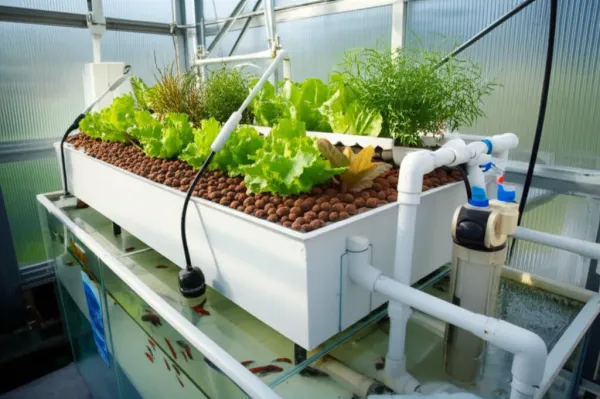
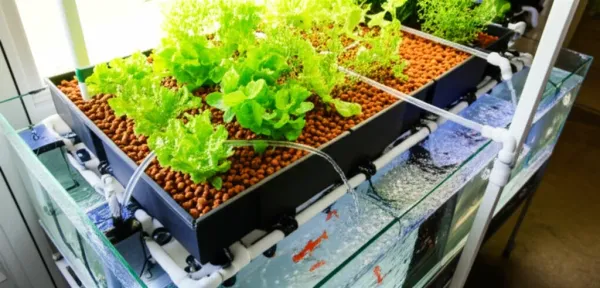
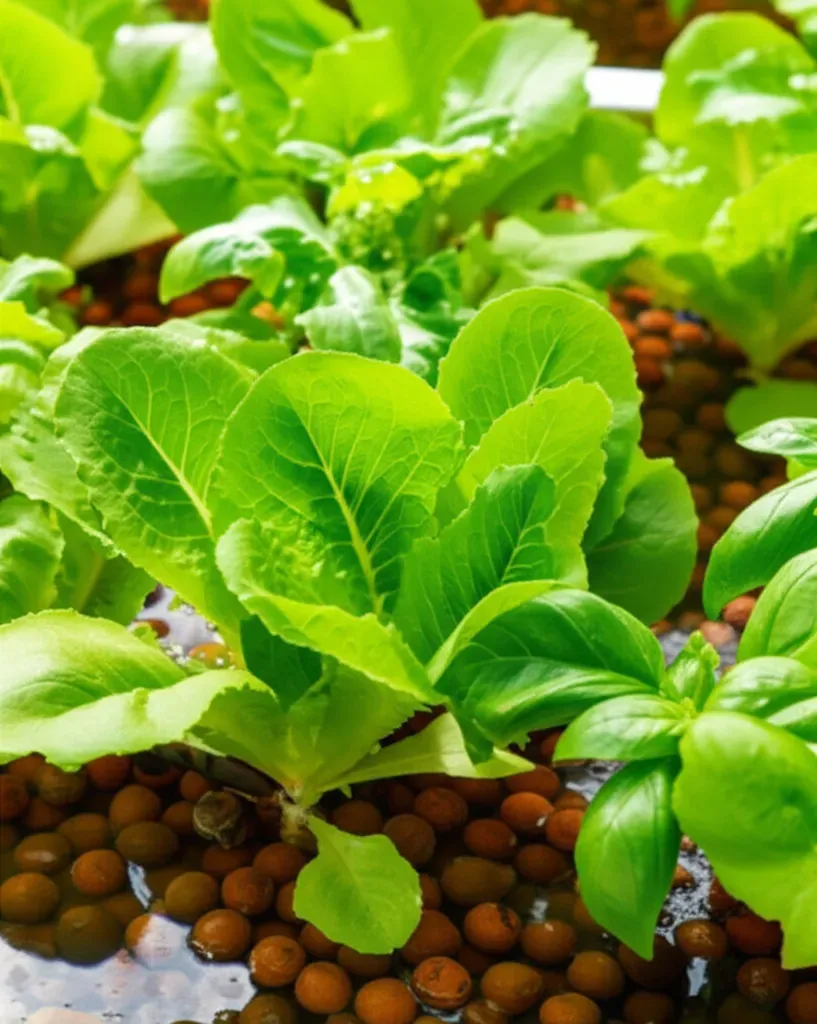
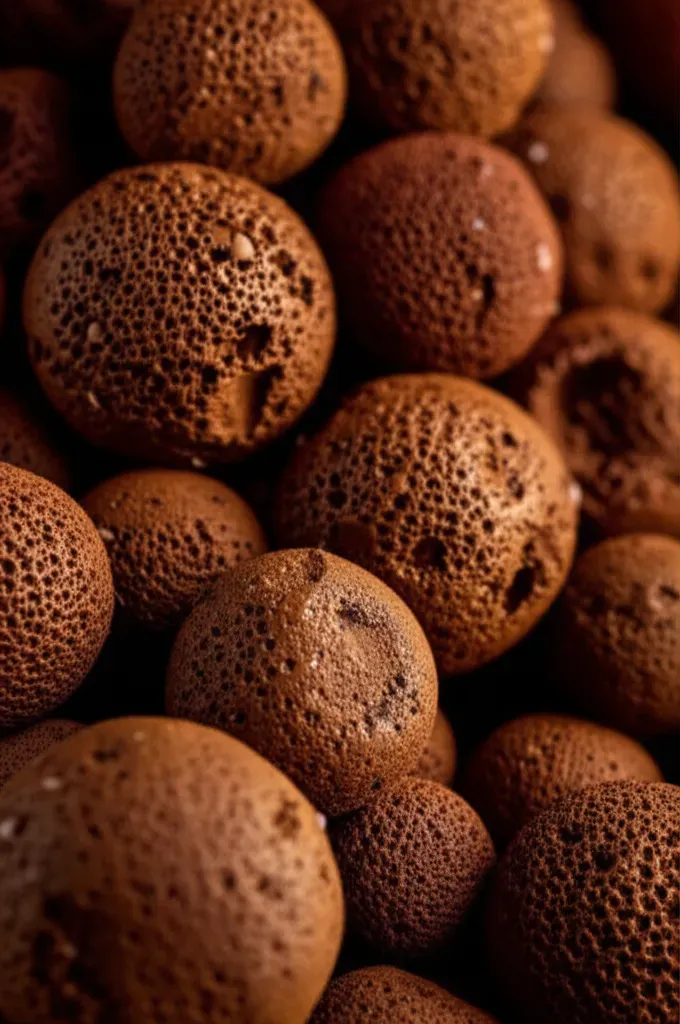
Grow beds filled with expanded clay pebbles or gravel serve double duty as plant support and biofilter. The media provides massive surface area for bacterial colonization, a cubic foot of clay pebbles offers 250-300 square feet of colonization space.
Media-based systems flood and drain using bell siphons or timers, exposing bacteria to both water (for nutrient processing) and air (for oxygen). This wet-dry cycle supports larger bacterial populations than constantly submerged media.
Size your grow beds to match fish tank volume using a 1:1 ratio as baseline. A 100-gallon fish tank pairs with 100 gallons of grow bed volume. Increase this ratio to 2:1 if growing heavy-feeding plants like tomatoes or if stocking fish densely.
Water Pumps, Aeration, and Flow Rates
Your water pump circulates the entire tank volume once per hour minimum. A 100-gallon system needs a pump rated for 100+ gallons per hour (GPH). Submersible pumps work for small systems, while external pumps handle larger volumes more efficiently.
Pump failure kills fish within hours by stopping the nitrogen cycle and depleting oxygen. Keep a backup pump on hand, or invest in a battery backup system if you live in areas with frequent power outages.
Air pumps and airstones maintain dissolved oxygen above 5 ppm for fish health and bacterial activity. Nitrifying bacteria need oxygen to function, low oxygen levels slow or stop the nitrogen cycle regardless of other conditions. Size air pumps to provide 0.5-1 watt per gallon of fish tank volume.
Maintaining Your System's Cycle Long-Term
A cycled system still needs regular attention to maintain bacterial populations and water quality. Daily feeding, weekly testing, and monthly maintenance keep the biological balance stable for years.
Daily and Weekly Monitoring Tasks
Feed fish once or twice daily, removing any uneaten food after 5 minutes. Excess food decays into ammonia faster than your bacteria can process, spiking toxicity. Adjust portions based on water temperature, fish eat less in cold water below 60°F.
Check water temperature daily and observe fish behavior. Gasping at the surface indicates low oxygen or high ammonia. Clamped fins or lethargy suggest nitrite problems or pH swings. Visual inspection catches problems before test kits confirm them.
Test pH, ammonia, nitrite, and nitrate weekly once your system stabilizes. Record results to spot trends. Gradually rising nitrates suggest you need more plant coverage. Declining pH indicates you need to add buffer minerals. Sudden ammonia or nitrite readings mean something disrupted your bacterial colonies.
Managing pH and Water Chemistry
pH naturally declines in aquaponics systems as nitrification produces hydrogen ions. Target 6.8-7.0 for balanced fish, bacteria, and plant health (University of Hawaii). Below 6.5, bacteria slow down. Above 7.5, iron and other micronutrients become unavailable to plants.
Raise pH using calcium carbonate (crushed oyster shells), calcium hydroxide (hydrated lime), or potassium carbonate. Add small amounts, test after 24 hours, and adjust gradually. Rapid pH swings stress fish more than slightly low pH.
Top off evaporated water weekly to maintain consistent water levels. Use dechlorinated tap water or collected rainwater. Some growers discover their tap water's high pH helps buffer the system naturally, while others need to treat alkaline water before adding it.
Troubleshooting Common Cycle Disruptions
Ammonia or nitrite spikes in established systems signal bacterial die-off from medication use, pH crashes below 6.0, or oxygen depletion. Stop feeding fish immediately to reduce waste input. Increase aeration. Test every 12 hours and perform partial water changes if ammonia exceeds 1 ppm.
Power outages lasting more than 4 hours can crash your cycle by stopping water circulation and aeration. Bacteria survive without flow for 24-48 hours if media stays wet, but fish suffer faster. Battery-powered air pumps keep fish alive during outages, and the bacterial colony recovers within a week once power returns.
Overcleaning removes beneficial bacteria along with debris. Never scrub grow bed media or biofilter materials with tap water, chlorine kills your bacterial colonies. Rinse media in system water only, and leave some biofilm in place during maintenance.
Seasonal Adjustments and Long-Term Success
Cold weather slows bacterial activity and fish metabolism. Reduce feeding rates by 30-50% when water temperatures drop below 65°F. Fish waste production decreases, which means less nutrients for plants, expect slower growth in winter without supplemental heating.
Hot weather above 85°F stresses both fish and bacteria while reducing dissolved oxygen levels. Increase aeration, add shade cloth to fish tanks, or use evaporative cooling to maintain 70-78°F. Some growers switch to heat-tolerant fish species like tilapia for summer production.
Plan fish and plant harvests to maintain system balance. Removing half your fish population without reducing plant coverage creates nutrient deficiency. Harvesting plants without adjusting fish feed creates nitrate buildup. Match your bioload to your filtration capacity as both components change over time.
I learned about seasonal timing the hard way during my second summer when I harvested thirty tilapia for a community dinner without reducing my leafy green beds. Within two weeks, my lettuce showed the telltale pale green of nitrogen deficiency, and I watched my nitrate levels drop from 40 ppm to barely 10. I had to quickly add more fingerlings and wait six weeks for them to reach productive size—a gap that cost me three successive plantings and taught me to stagger harvests across both fish and plants.
The nitrogen cycle is your aquaponics system's foundation, converting fish waste into plant nutrients through bacterial transformation. Master this biological process by cycling new systems patiently, testing water parameters consistently, and maintaining the physical components that support bacterial colonization. Start with a simple media-based system to build your understanding, then expand as you gain confidence in managing this living ecosystem. Your first harvest of lettuce grown from fish waste confirms what the test kits have been telling you, the cycle works.
Frequently Asked Questions
How long does it take to get an aquaponics system up and running?
A new aquaponics system typically takes 4-6 weeks to cycle before you can safely add plants and fish. During this period, beneficial bacteria colonies establish themselves, ammonia and nitrite levels spike and stabilize, and water chemistry balances out. Testing water parameters during this time ensures your system is ready for full operation.
What types of fish work best in an aquaponics system?
Tilapia, goldfish, trout, and catfish are ideal choices for aquaponics systems. These species tolerate crowding well, convert feed efficiently into waste (your nutrient source), and thrive in recirculating systems. Choose based on your climate—tilapia prefer warmer water, while trout need cooler temperatures.
Do I need to change the water in an aquaponics system?
No, aquaponics systems are closed-loop and require minimal water changes. You only need to top off water lost to evaporation and plant uptake. This is one of the major advantages over traditional gardening, saving thousands of gallons of water annually while eliminating the need to dispose of nutrient-rich water.
Can I grow any vegetables in an aquaponics system?
Most vegetables thrive in aquaponics, but leafy greens like lettuce and herbs grow fastest and require lower nutrient levels. Fruiting plants like tomatoes and peppers need higher nutrient concentrations and longer growing periods. Root vegetables and heavy feeders may struggle due to space and nutrient availability limitations.
What happens if beneficial bacteria die in my system?
If bacteria colonies die, ammonia and nitrite will accumulate to toxic levels, potentially killing your fish and halting plant growth. This disrupts the nitrogen cycle and requires re-cycling the system (4-6 weeks). Common causes include pH swings, temperature extremes, chlorinated water, or antibiotics—maintain stable conditions to prevent bacterial die-off.
How much space do I need for a home aquaponics system?
A basic home aquaponics system can fit in a basement corner or small greenhouse, requiring as little as 4x4 feet of floor space. Larger systems for serious food production need more room, but even compact setups can produce significant vegetables and fish year-round with proper component sizing.
What water chemistry parameters should I monitor regularly?
Monitor pH (ideal range 6.8-7.0), ammonia, nitrite, and nitrate levels at minimum. These parameters indicate whether your nitrogen cycle is functioning properly and whether your system is balanced for fish and plant health. Weekly testing during the cycling phase and monthly testing afterward helps catch problems early.
Is aquaponics suitable for people with physical limitations?
Yes, aquaponics is ideal for people over 55 or those with mobility issues because plants grow in waist-high beds eliminating kneeling and bending. Watering is automatic, weeding is unnecessary, and the system requires less physical labor than traditional soil gardening while producing year-round harvests.