Aquaponics Fish Tank Systems: Choosing & Setting Up Your Tank
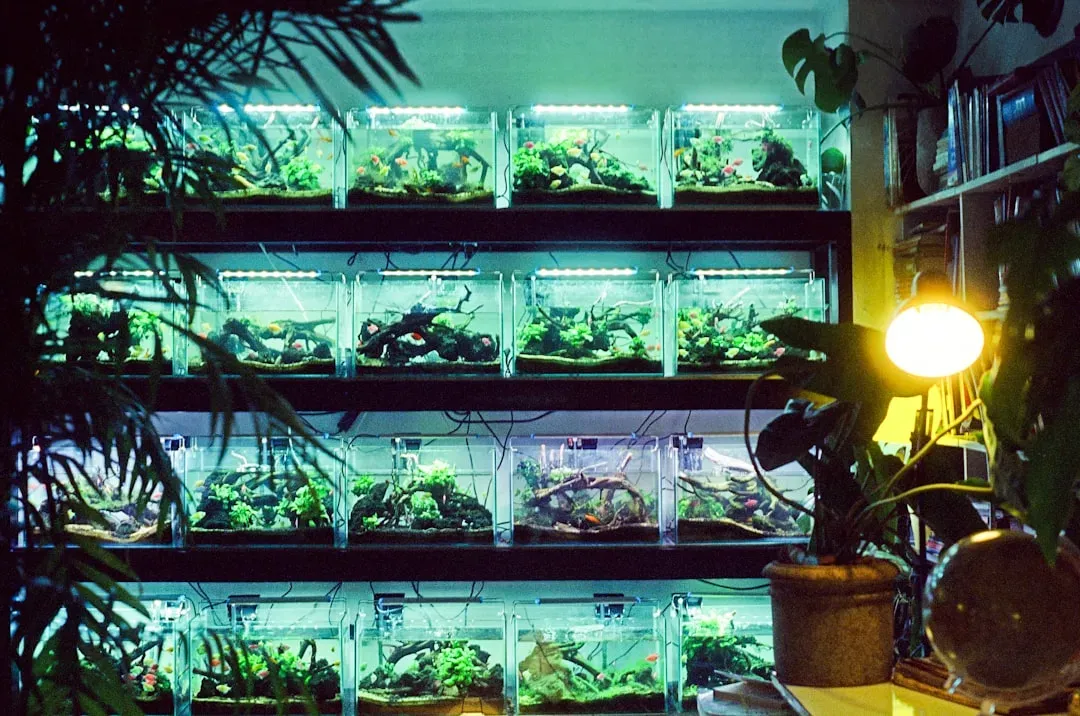
Your fish tank determines the health of your entire aquaponics system, it's where beneficial bacteria convert toxic fish waste into nutrients that feed your plants. The right tank provides stable water chemistry, adequate oxygen exchange, and enough volume to buffer against the temperature and pH swings that kill fish and crash systems. Most beginners underestimate tank size and overestimate their ability to manage small volumes, which is why experienced growers recommend starting with at least 100 gallons for your first build. (Source: The Aquaponics Association)
Table of Contents
- Understanding Aquaponics Fish Tanks: The Foundation of Your System
- How Aquaponics Fish Tanks Differ from Standard Aquariums
- The Role Your Tank Plays in System Health
- Key Tank Specifications That Matter Most
- Choosing the Right Tank Type for Your Needs and Budget
- IBC Totes: The Popular Budget-Friendly Choice
- Stock Tanks and Rubbermaid Containers: The Accessible Middle Ground
- Glass Aquariums and Premium Tanks: When to Invest More
- Essential Equipment and Components for Your Fish Tank
- Aeration and Oxygenation Equipment
- Water Circulation and Pumping Systems
- Temperature Control and Monitoring Tools
- Step-by-Step Tank Setup and System Integration
- Selecting and Preparing Your Tank Location
- Tank Preparation and Initial Fill
- Connecting Your Tank to the Aquaponics System
- Cycling Your Tank and Introducing Fish Safely
Understanding Aquaponics Fish Tanks: The Foundation of Your System
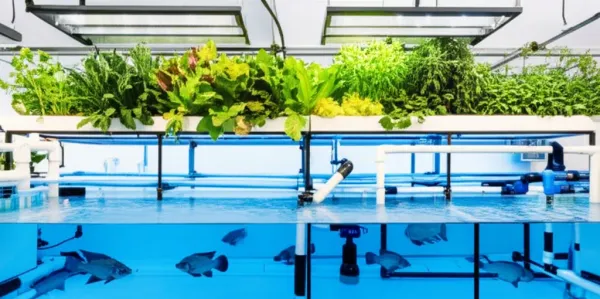
Aquaponics combines aquaculture with hydroponics in a symbiotic environment where fish waste provides nutrients for plants, while plants filter and clean water for fish (USDA National Agricultural Library). (Source: USDA National Agricultural Library) Your tank houses this living ecosystem, supporting fish populations while serving as the primary reservoir for the entire system's water volume.
How Aquaponics Fish Tanks Differ from Standard Aquariums
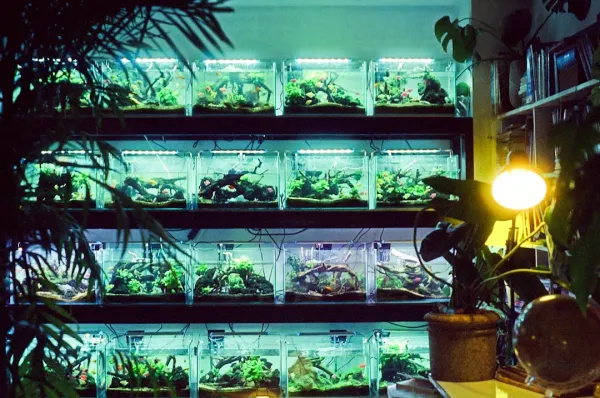
Standard aquariums prioritize visibility and aesthetics. Aquaponics tanks prioritize function, bioload capacity, and integration with pumps and plumbing. You'll need multiple inlet and outlet ports for water circulation, whereas decorative aquariums typically have a single filter intake.
The bioload, total waste produced by fish, runs much higher in aquaponics than ornamental setups. You're stocking for food production, not display, which means more fish per gallon than traditional aquarium guidelines allow. This works because your grow beds act as massive biological filters, something standard aquarium filters can't match.
Water flow patterns matter differently too. Aquaponics tanks need consistent circulation to prevent dead zones where waste accumulates, but they don't require the aesthetic water clarity that aquarium hobbyists chase with expensive filtration.
The Role Your Tank Plays in System Health
Tank volume directly affects your system's stability. Larger volumes resist temperature swings, dilute waste concentrations, and give you more time to correct problems before they become catastrophic. A 50-gallon tank might shift 5°F in an hour during summer heat, a 250-gallon tank takes all day to move that much.
Consider the tank your insurance policy against beginner mistakes. Overfeeding once won't spike ammonia to lethal levels if you have adequate water volume. A pump failure gives you hours to respond instead of minutes. I learned this lesson the hard way when my first 75-gallon system crashed during a power outage in July. The temperature spiked 8°F in just three hours, and I watched my tilapia gasping at the surface despite the backup aerator running full blast. When I upgraded to a 300-gallon tank the following year, that same summer heat barely nudged the temperature 2°F over an entire afternoon—the fish didn't even notice, and I finally stopped checking my phone every hour when I left the house.
The nitrogen cycle, where beneficial bacteria convert ammonia to nitrites and then nitrates, depends on stable conditions (University of Hawaii). (Source: University of Hawaii) Bigger tanks provide the consistency these bacterial colonies need to thrive, which is why experienced growers tell newcomers that tank size is the one place you shouldn't cut corners.
Key Tank Specifications That Matter Most
Minimum volume for a stable beginner system starts at 100 gallons, though 200-300 gallons gives you substantially more margin for error. Surface area matters as much as depth because oxygen exchange happens at the water's surface. A shallow, wide tank supports more fish than a tall, narrow one with equivalent volume.
Depth requirements vary by species. Most common aquaponics fish (tilapia, goldfish, koi) thrive in 18-24 inches of water. (Source: University of the Virgin Islands Agricultural Experiment Station) Trout need deeper, cooler water, at least 30 inches, to maintain the temperature gradients they prefer. (Source: NOAA Fisheries)
Shape affects maintenance access. Round tanks eliminate corners where waste collects and create natural circulation patterns that keep solids suspended until they exit to your filtration. Rectangular tanks work fine but require more attention to flow design and regular cleaning of corners.
Choosing the Right Tank Type for Your Needs and Budget
Your tank choice balances cost, durability, weight, and how much physical effort you're willing to invest in preparation. Each option serves different priorities, and honestly, the best tank is the one you can afford and position safely where you need it.
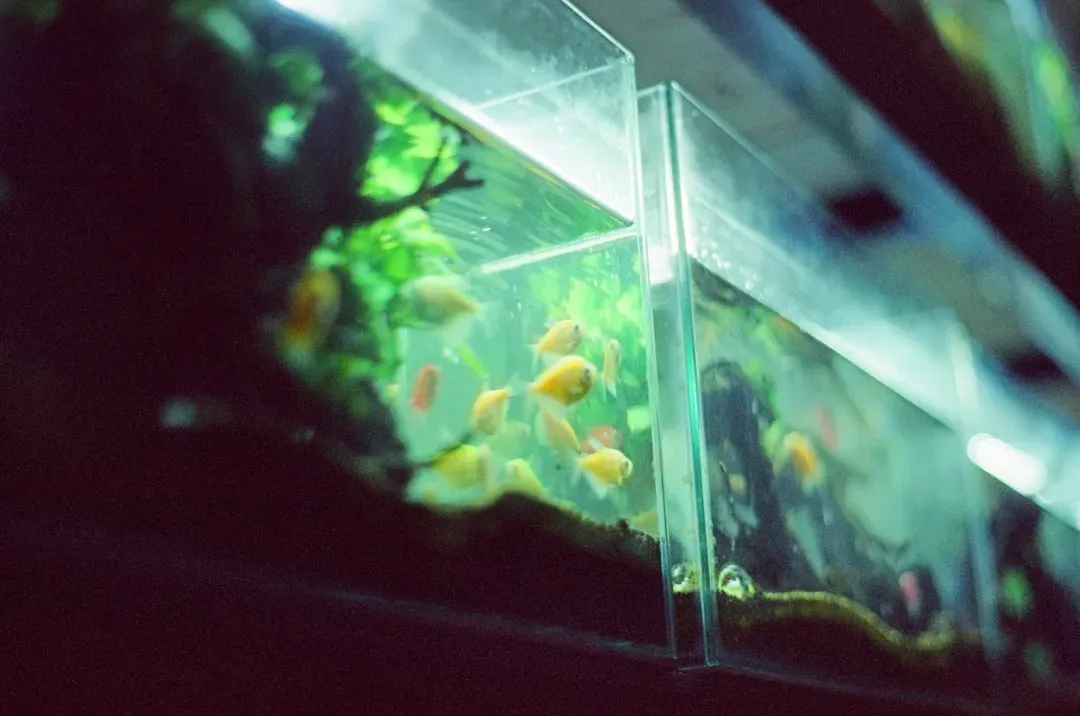
Fish Tank Type Comparison for Aquaponics Systems
| Tank Type | Volume | Cost Range | Durability | Maintenance | Best For |
|---|---|---|---|---|---|
| IBC Totes | 275 gallons | $50-150 | Good (5-7 years) | Moderate - corners need attention | Budget-conscious beginners |
| Stock Tanks (Metal) | 100-300 gallons | $150-400 | Very Good (10+ years) | Low - smooth sides | Long-term systems |
| Rubbermaid Containers | 100-200 gallons | $100-250 | Good (5-8 years) | Moderate | Medium budgets |
| Glass Aquariums | 50-150 gallons | $300-1,000+ | Excellent (20+ years) | Low - easy viewing | Premium/aesthetic priority |
| Fiberglass Tanks | 200-500 gallons | $400-800 | Excellent (15+ years) | Low - smooth surface | Serious hobbyists |
IBC Totes: The Popular Budget-Friendly Choice
Intermediate bulk containers hold 275 gallons and dominate DIY aquaponics because they cost $50-150 used and provide excellent volume for the price. These industrial shipping containers feature thick polyethylene wrapped in a protective metal cage that doubles as structural support.
The catch is weight and modification requirements. A filled IBC weighs 2,400 pounds, which means it stays wherever you place it, moving later requires emptying completely. You'll need to cut the top off for fish access and install bulkhead fittings for plumbing, tasks that require basic power tools and comfort working with plastic.
Buy only food-grade IBCs that previously held non-toxic liquids. Containers that shipped chemicals can leach contaminants even after thorough cleaning. Check the date stamp on the cage, older units may have UV-degraded plastic that becomes brittle. Many growers discover that cutting and fitting an IBC takes a full day of work, so factor in your physical capability and available help.
Stock Tanks and Rubbermaid Containers: The Accessible Middle Ground
Galvanized stock tanks and heavy-duty plastic containers offer the sweet spot between cost and convenience. They arrive ready to use, no cutting, no modifications beyond drilling holes for bulkhead fittings. Sizes range from 100 to 300 gallons, with prices from $150 to $400 depending on material and capacity.
Stock tanks are lighter than IBCs when empty, which gives you positioning flexibility before filling. The metal versions last decades outdoors and handle freeze-thaw cycles better than plastic. Rubbermaid structural foam tanks provide similar durability in a lighter package that's easier for one person to maneuver.
The main limitation is availability. Farm supply stores stock common sizes but specialty volumes require ordering, whereas used IBCs appear regularly on Craigslist and Facebook Marketplace. Budget an extra $50-75 for bulkhead fittings and plumbing connections regardless of which container you choose.
Glass Aquariums and Premium Tanks: When to Invest More
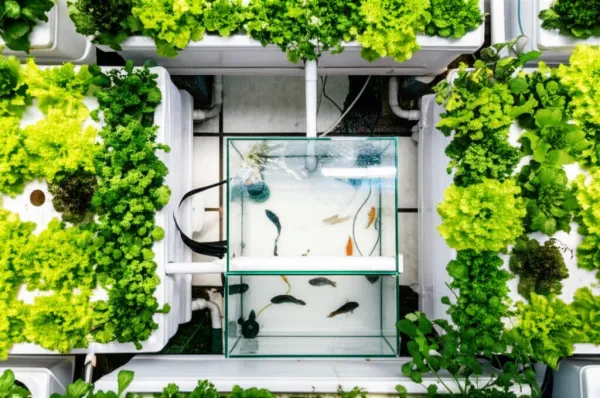
Glass aquariums make sense for indoor systems where viewing your fish matters, educational setups where observation drives learning, or small-scale experiments under 100 gallons. They provide unmatched clarity and aesthetic appeal but cost $200-1000+ depending on size and quality.
Weight becomes the limiting factor quickly. A 125-gallon glass aquarium weighs 200 pounds empty and 1,250 pounds filled, requiring reinforced stands and careful floor load calculations. Most residential floors handle 40 pounds per square foot, a large aquarium concentrates 150+ pounds per square foot onto its stand footprint.
Premium fiberglass tanks split the difference, offering durability and reasonable weight at $400-800 for 200-300 gallon models. They're worth considering if your budget allows and you're building a permanent indoor installation where the tank becomes a design feature rather than purely functional equipment.
Essential Equipment and Components for Your Fish Tank
Your tank needs support equipment to maintain the dissolved oxygen, water circulation, and temperature stability that keep fish healthy and bacteria colonies active. Reliability matters more than features here, you want components that run continuously without attention.
Aeration and Oxygenation Equipment
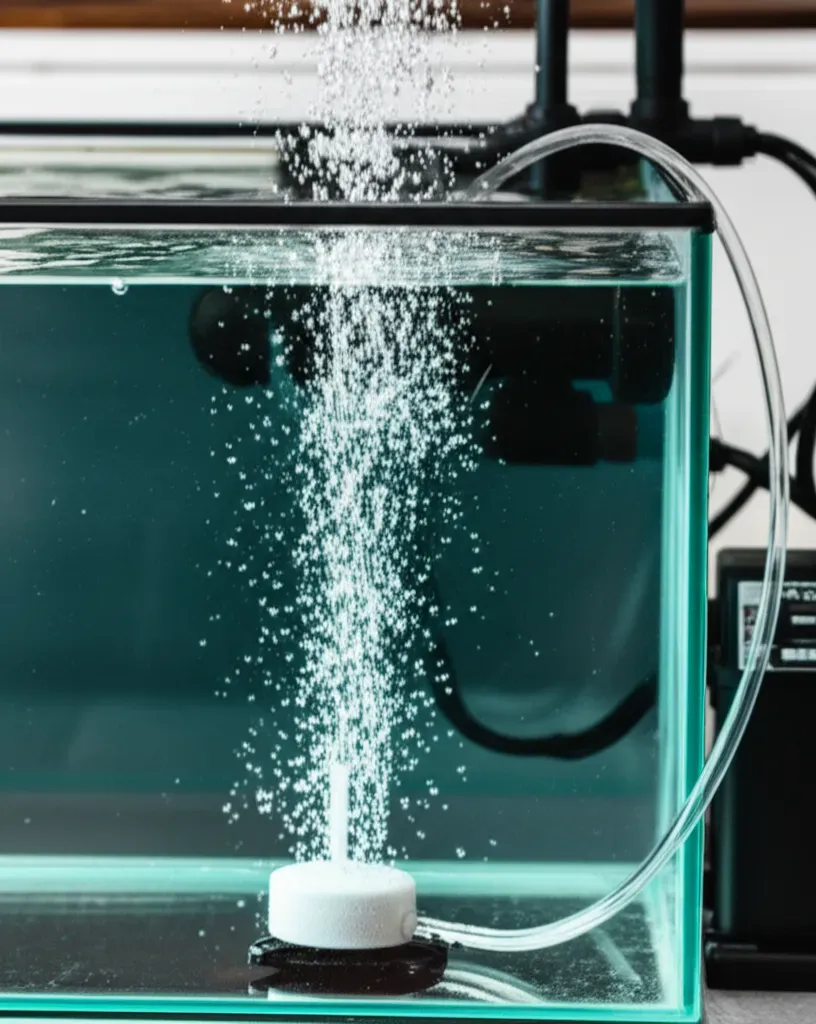
Fish require dissolved oxygen levels above 5 mg/L for optimal health (University of Maryland Extension). Air pumps and air stones provide this by creating thousands of small bubbles that increase surface area for gas exchange. Size your pump to deliver at least 3-5 watts per 100 gallons of tank volume.
Commercial air pumps designed for ponds work better than aquarium models because they're built for continuous outdoor operation. Expect to spend $40-80 on a quality pump that will run 24/7 for years. Position air stones near the tank bottom to create upward circulation that moves water from depths to the surface.
Backup aeration is worth the investment. A battery-powered aerator ($30-50) keeps your fish alive during power outages, which otherwise can kill your entire stock in 4-6 hours depending on temperature and stocking density. Many growers discover this need after losing fish, not before.
Water Circulation and Pumping Systems
Your pump should cycle the entire system volume every 1-2 hours to maintain water quality and nutrient distribution. Calculate total system volume (tank plus grow beds plus plumbing), then select a pump rated for 50-100% of that volume per hour. A 300-gallon system needs a 150-300 GPH pump.
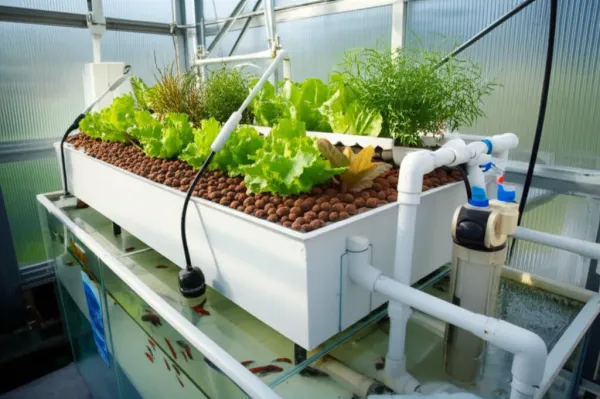
Submersible pumps live in your fish tank and push water to grow beds, while external pumps sit outside the tank and pull water through. Submersibles cost less ($50-150) and install easily but add heat to your water and can't be serviced without tank access. External pumps ($150-300) run cooler and allow maintenance without disturbing fish.
Energy efficiency matters for equipment running continuously. Look for pumps rated at 50-100 watts for typical home systems, higher wattage means higher monthly electric bills. Keep a backup pump on hand, when your primary pump fails at 2 AM on Sunday, you'll be grateful you can swap it immediately rather than waiting for stores to open.
Temperature Control and Monitoring Tools
Most aquaponics fish thrive between 68-78°F, a range that requires heating in winter and sometimes cooling in summer. Aquarium heaters sized at 5 watts per gallon maintain temperature in indoor systems. A 200-gallon tank needs a 1000-watt heater, though many growers use two 500-watt units for redundancy.
Digital thermometers ($10-20) with remote probes give you accurate readings without opening lids or disturbing fish. Mount the probe mid-depth in a high-flow area for readings that represent actual tank conditions rather than surface temperatures.
pH test kits and ammonia test strips provide essential water quality monitoring. Test pH weekly once your system stabilizes, it should stay between 6.8-7.2 for optimal nutrient availability. Test ammonia and nitrites daily during cycling, then weekly after your bacteria colonies establish. Simple color-comparison tests work fine, you don't need expensive electronic meters for home systems.
Key Tank Specifications by Fish Species
| Specification | Tilapia | Goldfish | Koi | Trout |
|---|---|---|---|---|
| Minimum Depth | 18-24 inches | 18-24 inches | 18-24 inches | 30+ inches |
| Water Temperature Range | 77-86°F | 65-72°F | 59-77°F | 50-65°F |
| Stocking Density | 1 lb per 5-10 gallons | 1 lb per 10-20 gallons | 1 lb per 20-30 gallons | 1 lb per 10-15 gallons |
| Oxygen Requirements | Moderate | Moderate | Moderate-High | High |
| System Complexity | Beginner-friendly | Beginner-friendly | Intermediate | Advanced |
Step-by-Step Tank Setup and System Integration
Proper installation prevents the leaks, structural failures, and access problems that turn maintenance into a frustrating chore. Take time during setup to make your system easy to manage long-term.
Selecting and Preparing Your Tank Location
Water weighs 8.34 pounds per gallon, so a 250-gallon system puts 2,085 pounds on your floor (Alabama Cooperative Extension System). Indoor installations require concrete floors or reinforced joists rated for concentrated loads. Outdoor setups need level, compacted ground or a concrete pad that prevents settling and stress cracks.
Position tanks within 15 feet of electrical outlets to avoid extension cord tangles and voltage drops that damage pumps. Proximity to a water source simplifies top-offs and water changes. South-facing locations maximize natural light for plants but may require shade cloth to prevent summer overheating.
Leave 3-4 feet of access space on at least two sides for maintenance, feeding, and harvesting. You'll appreciate this clearance when you're reaching in to catch fish or cleaning grow beds. Well, I've watched too many people build themselves into corners where simple tasks become exhausting gymnastics.
Tank Preparation and Initial Fill
New tanks need rinsing with plain water to remove manufacturing residue. Used tanks require more thorough cleaning, scrub with water and white vinegar, then rinse multiple times until no odor remains. Never use soap or detergents, residue will kill fish even after rinsing.
Food-grade liners provide insurance for tanks with questionable history. EPDM pond liner or food-grade polyethylene sheeting costs $50-100 for a 250-gallon tank and eliminates concerns about chemical leaching. Fit the liner loosely, allow it to settle naturally as you fill rather than stretching it tight.
Fill slowly while checking for leaks around bulkhead fittings and seams. Municipal water contains chlorine or chloramine that kills beneficial bacteria and fish, remove it with dechlorinator products ($15-20) following package directions. Well water typically doesn't need treatment but should be tested for pH and hardness before use.
Connecting Your Tank to the Aquaponics System
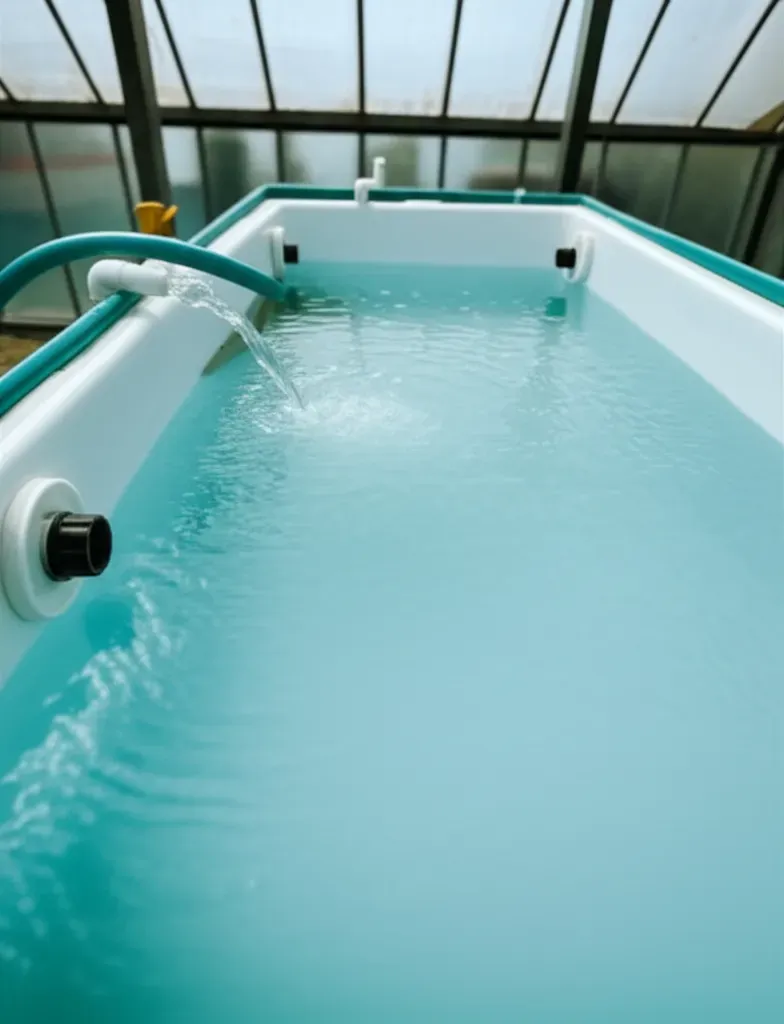
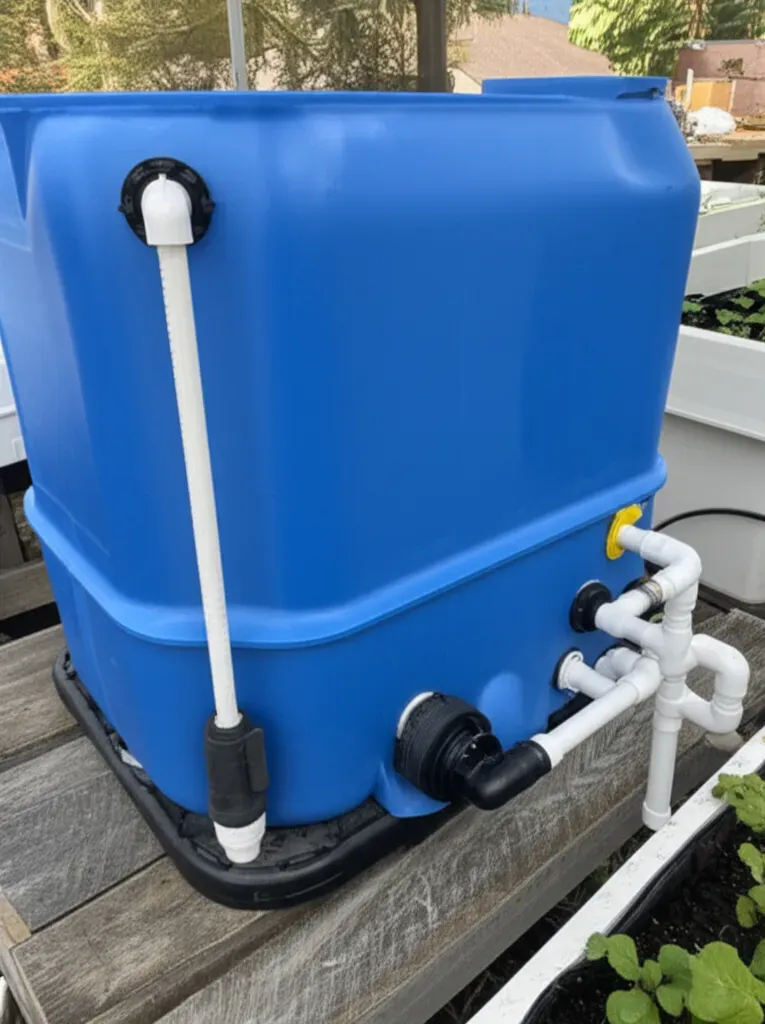
Install bulkhead fittings 4-6 inches below your target water level for pump intake and near the top for overflow protection. Bulkheads create watertight pass-throughs using rubber gaskets and threaded compression, tighten firmly but not enough to crack plastic tanks.
Your pump pushes water to grow beds through PVC or flexible tubing. Size plumbing to match pump output, 1-inch pipe handles up to 300 GPH while 1.5-inch pipe manages 600 GPH. Undersized plumbing creates back-pressure that burns out pumps prematurely.
Return lines from grow beds should enter the tank below water level to reduce splashing and noise. Install a valve on return lines so you can slow flow for maintenance without shutting down the entire system. Test all connections under pressure for 24 hours before adding fish, leaks are far easier to fix in an empty system.
Cycling Your Tank and Introducing Fish Safely
The nitrogen cycle must establish before fish arrive. Beneficial bacteria colonies that convert ammonia to nitrites and then nitrates generally take 3-6 weeks to develop (University of Hawaii). Rushing this process kills fish and forces you to start over.
Fishless cycling uses pure ammonia solution to feed bacteria without risking livestock. Add ammonia to reach 2-4 ppm, then test daily. When ammonia drops to zero and nitrites spike then fall, your bacteria colonies are established. This typically takes 4-6 weeks at 70-75°F, longer in cooler water.
Start with hardy fish at low densities, half your planned final stocking. Goldfish, koi, and mosquito fish tolerate the minor fluctuations that occur as your system matures. Add fish gradually over 4-6 weeks, allowing bacterial populations to expand with increasing bioload. "The cycling process is the foundation of a healthy aquaponics system—there's simply no shortcut that doesn't compromise fish welfare," says Dr. James Rakocy, retired Professor of Aquaponics and former Director of the Agricultural Experiment Station at the University of the Virgin Islands.
Monitor ammonia and nitrites daily for the first month. Any reading above 0.25 ppm nitrite or 0.5 ppm ammonia means you're overloading your biofilter, stop feeding and allow bacteria to catch up. Most beginners lose fish to overfeeding, not underfeeding, your fish can survive days without food but die within hours in toxic water.
Feed lightly at first, only what fish consume in 5 minutes, once daily. Uneaten food decays into ammonia faster than bacteria can process it. Gradually increase feeding as your system stabilizes and plant growth accelerates. You'll know your system has matured when nitrate levels stay steady at 40-80 ppm and ammonia remains at zero despite regular feeding.
Your aquaponics fish tank forms the biological heart of your food production system. Choose adequate volume, install reliable equipment, and allow proper cycling time, these fundamentals prevent the water quality crashes that discourage new growers. Research from the University of the Virgin Islands Aquaponics Program found that properly cycled systems take 4-6 weeks to establish stable nitrifying bacteria colonies, with Nitrosomonas species colonizing first (converting ammonia to nitrite) followed by Nitrobacter species (converting nitrite to nitrate). A 2019 study published in Aquaculture Engineering documented that systems cycled with fish present experienced 23% higher mortality rates compared to fishless cycling methods using pure ammonia sources. The same research showed that biofilter maturation accelerates significantly when water temperatures remain between 77-86°F, as nitrifying bacteria reproduction rates double with every 10°F increase within this range. Once established, your tank requires minimal intervention beyond feeding and occasional testing, freeing you to focus on the harvest that makes all this effort worthwhile.
Related Articles
- Best Fish for Aquaponics Systems: Complete Species Guide
- Aquaponics System Design: Planning Your Perfect Setup
- Aquaponics System Parts & Components: Complete Checklist
- How Does an Aquaponics System Work? The Complete Cycle Explained
- DIY Aquaponics Systems: Complete Build Guide for Beginners
- Indoor Aquaponics Systems: Complete Setup & Maintenance Guide
Frequently Asked Questions
What's the minimum tank size I should start with for aquaponics?
Start with at least 100 gallons, though 200-300 gallons is recommended for better stability and margin for error. Larger tanks resist temperature swings, dilute waste concentrations, and give you more time to correct problems before they become catastrophic.
Can I use a standard aquarium for aquaponics?
Standard aquariums aren't ideal for aquaponics because they prioritize aesthetics over function. Aquaponics tanks need multiple inlet and outlet ports for water circulation, higher bioload capacity for food production, and consistent water flow patterns that decorative aquariums aren't designed for.
Why does surface area matter more than just tank depth?
Oxygen exchange happens at the water's surface, so a shallow, wide tank supports more fish than a tall, narrow tank with the same volume. This is why surface area is as important as total volume when choosing your tank.
What water depth do most aquaponics fish need?
Most common aquaponics fish like tilapia, goldfish, and koi thrive in 18-24 inches of water depth. Different species have different requirements, so verify depth needs for your specific fish choice.
How does a larger tank prevent system crashes?
Larger tanks act as insurance against beginner mistakes by resisting temperature swings, diluting waste concentrations, and giving you hours instead of minutes to respond to problems like pump failures or overfeeding. A 250-gallon tank takes all day to shift 5°F, while a 50-gallon tank might shift that much in just one hour.
What are the most budget-friendly tank options for aquaponics?
IBC totes are the most popular budget-friendly choice, while stock tanks and Rubbermaid containers offer an accessible middle ground between cost and durability. Glass aquariums and premium tanks are better for those with larger budgets.
How does tank volume affect the nitrogen cycle?
The nitrogen cycle, where beneficial bacteria convert ammonia to nitrites and nitrates, depends on stable water conditions. Larger tanks provide the consistency these bacterial colonies need to thrive, which is why tank size is critical for system health.