Aquaponics System Components: Essential Parts Explained
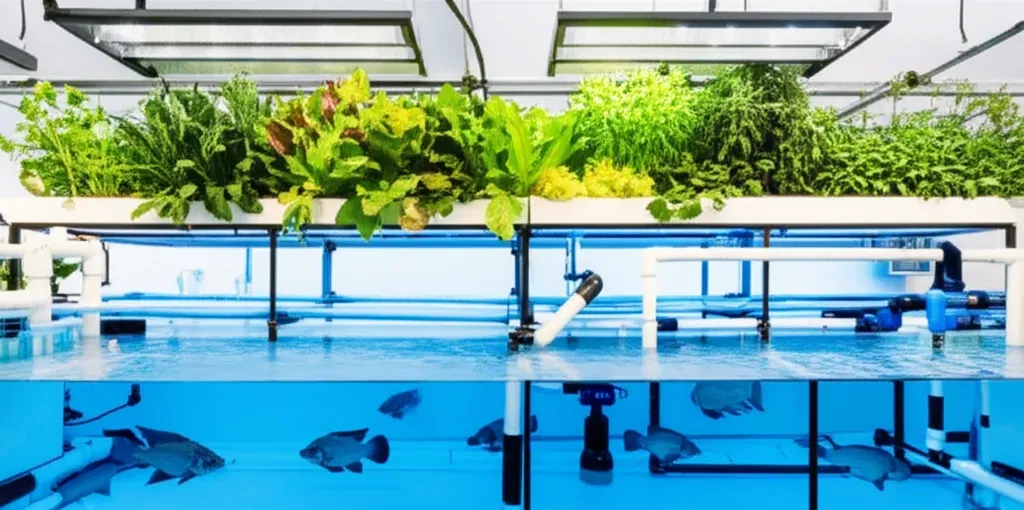
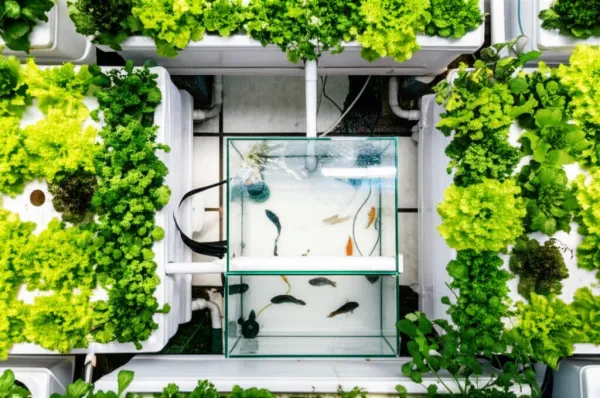
Your aquaponics system needs six core components working in harmony: a fish tank, grow beds with medium, a water pump, filtration equipment, aeration devices, and environmental controls. Each part supports the nitrogen cycle that converts fish waste into plant nutrients while maintaining water quality for both organisms.
Table of Contents
- Understanding How Aquaponics Components Work Together
- The Three-Part Ecosystem: Fish, Bacteria, and Plants
- Water Circulation: The Lifeblood of Your System
- Fish Tank: Housing Your Aquatic Livestock
- Sizing Your Fish Tank Correctly
- Tank Materials and Durability Considerations
- Essential Tank Features: Drains, Overflows, and Access Points
- Grow Beds and Growing Medium
- Choosing Between Media Beds, Raft Systems, and NFT
- Growing Medium Selection Guide
- Proper Grow Bed Depth and Drainage Systems
- Water Pumps and Circulation Equipment
- Calculating Required Pump Capacity
- Submersible vs. External Pumps: Which to Choose
- Energy Efficiency and Backup Planning
- Filtration and Water Quality Management Components
- Mechanical Filtration: Removing Solid Waste
- Biological Filtration: Housing Beneficial Bacteria
- Water Testing and Monitoring Equipment
- Aeration, Heating, and Environmental Control Systems
- Air Pumps and Diffusers for Oxygen Management
- Temperature Control: Heaters and Chillers
- Lighting and Climate Control for Indoor Systems
Understanding these components transforms aquaponics from a mysterious concept into a manageable project you can build and maintain. The pieces fit together like a puzzle, well, more like an ecosystem where each element depends on the others to function properly.
Understanding How Aquaponics Components Work Together
Before you buy a single tank or pump, grasp how the complete system operates as a biological unit. Your mechanical components exist solely to support three living elements: fish producing waste, bacteria converting that waste, and plants absorbing the converted nutrients (University of Hawaii CTAHR). This isn't just plumbing. It's cultivating a miniature ecosystem in your backyard or basement.
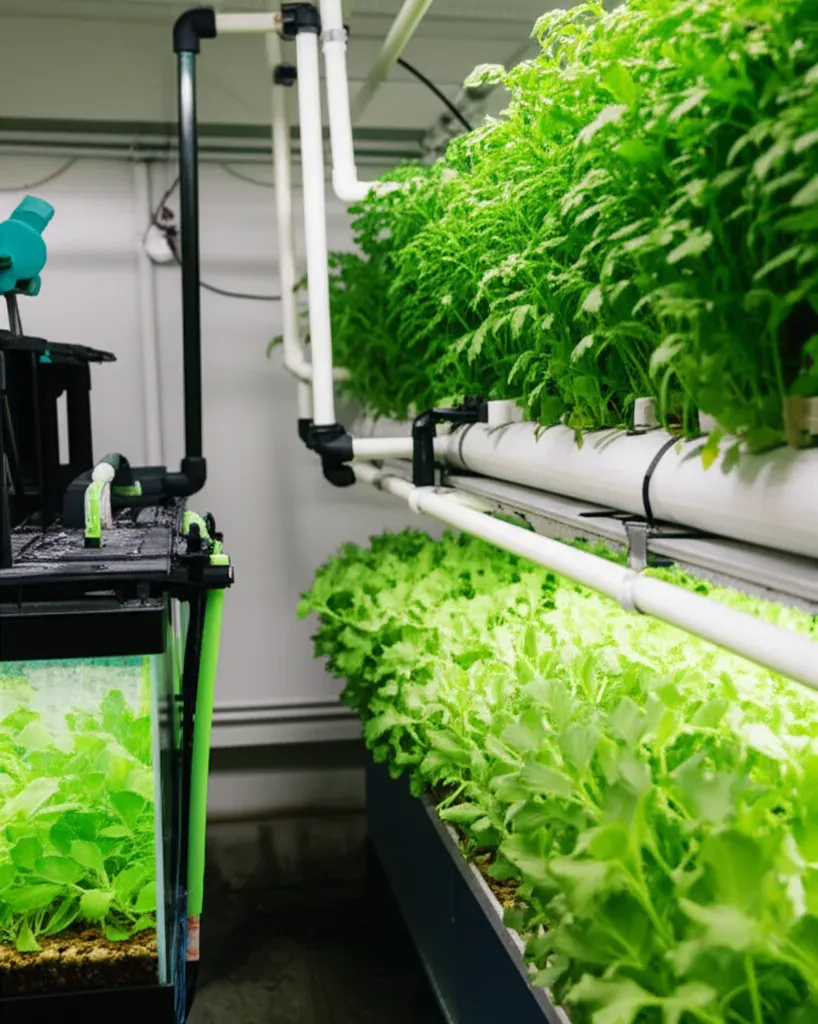
The Three-Part Ecosystem: Fish, Bacteria, and Plants
Fish excrete ammonia through their gills and waste, creating a toxic compound that would quickly poison them in a closed system. Beneficial bacteria colonize every wet surface in your setup, particularly in grow beds and biofilters, converting ammonia first into nitrites then into nitrates (Alabama Cooperative Extension System). Plants absorb these nitrates as their primary nitrogen source, cleaning the water before it returns to the fish tank.
This nitrogen cycle typically takes 4-6 weeks to establish in new systems. During this cycling period, your bacteria populations grow from nothing to billions of microscopic workers processing waste continuously. I spent my first three months obsessing over water chemistry, testing pH twice daily and panicking over every ammonia spike. Then one morning I watched a tomato plant's roots trailing into crystal-clear water while tilapia circled below, and the interconnection finally clicked—I wasn't managing three separate systems, I was stewarding one living cycle where each element existed to serve the others. The mechanical components you install create the physical environment where this biological magic happens, providing surface area for bacterial colonies and ensuring water reaches every part of the cycle.
Each organism has different pH preferences: fish thrive at 7.0-8.0, plants prefer 5.5-6.5, and nitrifying bacteria work best at 7.0-8.0 (Oklahoma State University Extension). Your system components must maintain a compromise pH of 6.8-7.2 where all three can survive, if not thrive in their ideal range.
Water Circulation: The Lifeblood of Your System
Water carries dissolved oxygen to fish gills, transports ammonia away from the tank, delivers nutrients to plant roots, and maintains consistent temperatures throughout your system. Without continuous circulation, ammonia concentrations spike in the fish tank while plants in distant grow beds starve for nutrients.
The complete system volume should cycle at least once per hour, meaning your 100-gallon setup needs a pump moving at least 100 gallons per hour (Oklahoma State University Extension). Faster circulation generally improves system stability by preventing localized nutrient depletion or waste accumulation. Look, this constant movement also prevents temperature stratification where warm water floats above cold layers, stressing fish adapted to uniform conditions.
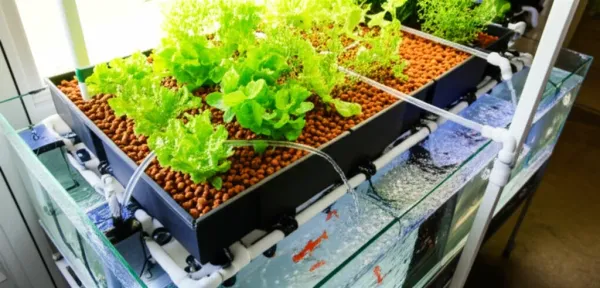
Gravity becomes your silent partner in system design. Water pumped upward into grow beds drains naturally back to the fish tank, creating a rhythm of flood and drain cycles that alternately feed plant roots and expose them to oxygen. This passive drainage reduces electrical components and failure points compared to systems requiring powered drainage.
Fish Tank: Housing Your Aquatic Livestock
Your fish tank determines the scale of your entire operation since every other component sizes proportionally to fish waste production. Choose a tank based on your target fish species, available space, and how much produce you want to harvest weekly.
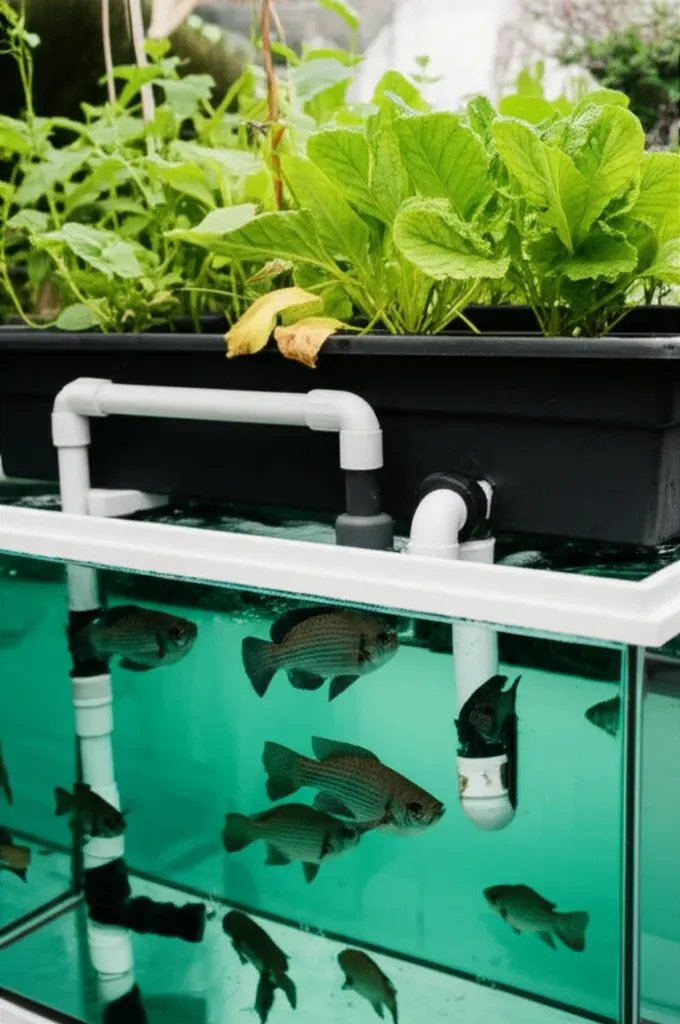
pH Preferences Across Aquaponics Organisms
| Organism | Ideal pH Range | Function in System |
|---|---|---|
| Fish | 7.0–8.0 | Primary livestock; produce waste ammonia |
| Nitrifying Bacteria | 7.0–8.0 | Convert ammonia to nitrite, then nitrate |
| Plants | 5.5–6.5 | Absorb nitrates; filter water for fish |
| System Operating Range | 6.8–7.2 | Compromise pH where all organisms survive |
Sizing Your Fish Tank Correctly
Conservative stocking density runs 1 pound of fish per 5-10 gallons of water, preventing ammonia buildup that overwhelms your bacterial colonies and filtration capacity (Oklahoma State University Extension). A 100-gallon tank safely houses 10-20 pounds of fish at maturity, which translates to roughly 10-15 tilapia or 20-30 goldfish depending on species and growth stage.
Beginners often overstock tanks because fingerlings look tiny in a large volume. Remember those 2-inch tilapia reach 1-2 pounds within 6-9 months under good conditions. Research from the University of the Virgin Islands Aquaponics Program demonstrates that proper tank sizing directly impacts system productivity—their commercial-scale trials showed that systems maintaining fish biomass below 0.5 pounds per gallon achieved 15-20% higher plant yields compared to overstocked systems, primarily due to more stable water chemistry and dissolved oxygen levels. The same research found that beginner systems performing best started with conservative ratios (1 pound per 8-10 gallons) during the first 6 months, then gradually increased density as bacterial colonies matured and growers developed monitoring skills. Tank shape matters too: their data indicated that cylindrical or rounded rectangular tanks with center drains removed solid waste 30% more efficiently than square corners where debris accumulated, reducing the filtration burden on your grow beds. Plan for adult size, not juvenile dimensions, unless you're prepared to harvest or relocate fish as they grow.
Tank volume also determines your grow bed capacity. The standard ratio runs 1:1 or 1:2 fish tank to grow bed volume, meaning your 100-gallon fish tank supports 100-200 gallons of growing space (University of Hawaii CTAHR). Larger grow bed ratios provide more biological filtration and plant production but require proportionally larger pumps and more floor space.
Tank Materials and Durability Considerations
Food-grade polyethylene tanks, IBC totes, and fiberglass containers all work reliably for aquaponics. Avoid galvanized metal tanks that leach zinc into water, harming fish at concentrations plants barely notice. Stock watering troughs from farm supply stores offer affordable options in 100-300 gallon sizes with proven outdoor durability.
IBC totes provide excellent value at 275-330 gallons for $50-150 used, though their rectangular shape creates dead zones in corners where solid waste accumulates. Round tanks promote better circulation as water naturally spirals, concentrating solids in the center where drains easily remove them. UV-resistant plastics last 10-15 years outdoors while untreated materials become brittle within 3-5 years under direct sunlight.
Honestly, tank color matters more than most growers expect. Dark blue or black tanks prevent algae growth by blocking light while helping maintain stable temperatures. White or translucent tanks require shading or paint to prevent photosynthesis in the water column, which competes with plants for nutrients.
Essential Tank Features: Drains, Overflows, and Access Points
Bottom drains positioned at the tank's lowest point remove settled solids continuously, preventing anaerobic pockets that produce hydrogen sulfide and harm fish health. Bulkhead fittings installed 2-3 inches above the bottom allow solid waste to concentrate in a small area you can siphon weekly during water changes.
Overflow protection saves systems when pumps fail or drains clog. A standpipe or secondary drain positioned 2-4 inches below the tank rim prevents flooding your space if water returns faster than the primary drain handles. Top access openings at least 12 inches wide let you net fish for harvest, remove debris, and observe behavior patterns indicating stress or disease.
Grow Beds and Growing Medium
Grow beds house plant roots while providing massive surface area for beneficial bacteria colonization. Your choice between media-filled beds, raft systems, and NFT channels determines which plants thrive and how much maintenance your system demands.
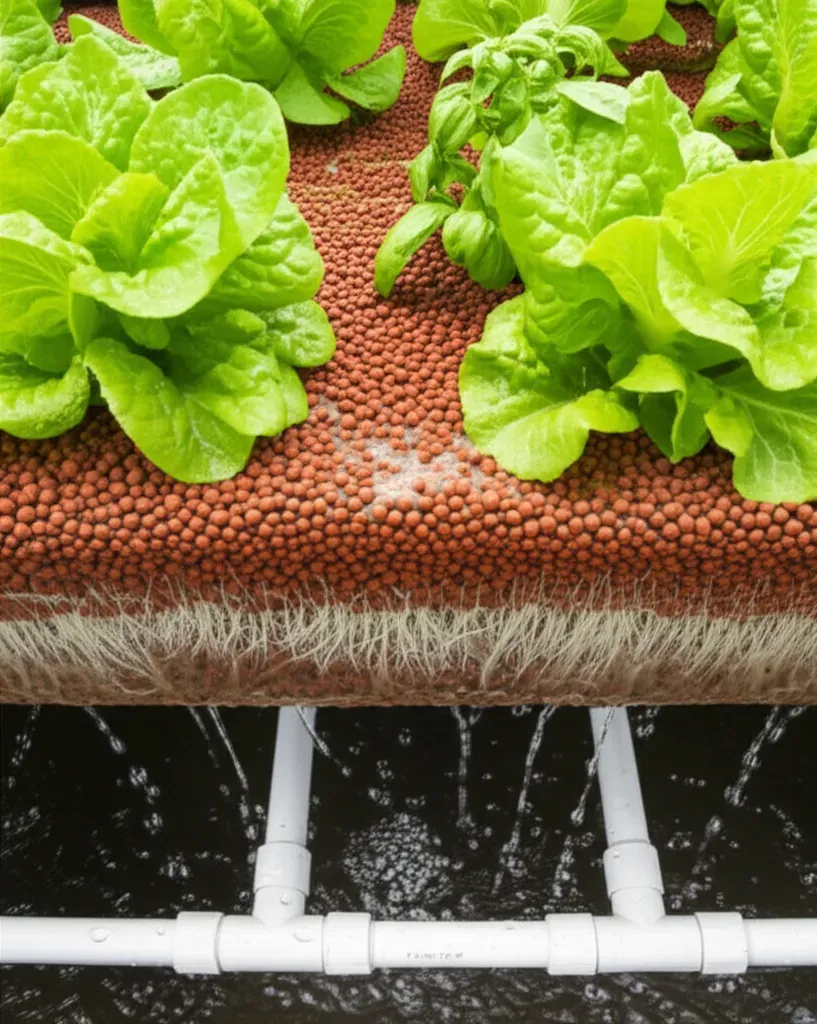
Choosing Between Media Beds, Raft Systems, and NFT
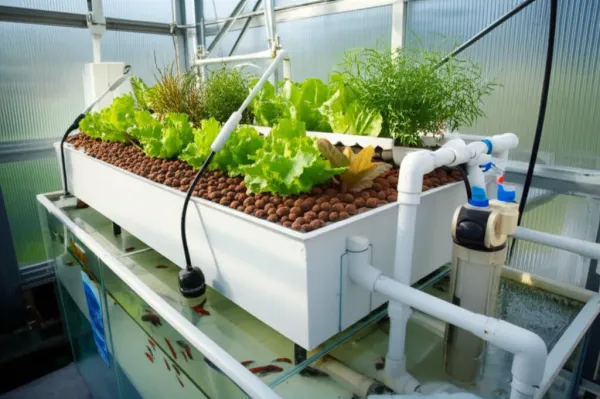
Media-filled beds use gravel or expanded clay to support plants while hosting bacterial colonies throughout the substrate. These beds excel at growing fruiting crops like tomatoes and peppers that need strong root anchoring and handle root vegetables better than other methods. The flood-and-drain cycle in media beds alternately saturates roots then exposes them to oxygen, promoting vigorous growth.
Deep water culture (DWC) or raft systems float plants on foam boards above constantly aerated water. Leafy greens like lettuce and herbs thrive in rafts, growing 20-30% faster than media beds due to constant nutrient access (ScienceDirect). However, rafts require separate biofilters since they provide minimal surface area for bacterial colonization compared to media beds.
Nutrient film technique (NFT) channels run a thin film of water past bare roots in enclosed tubes or gutters. NFT works brilliantly for lightweight crops like basil and strawberries but struggles with heavy fruiting plants that tip over without substrate support. To be fair, NFT systems require the most precise flow rate management, any pump failure or clog causes rapid root drying within 30-60 minutes.
Growing Medium Selection Guide
Expanded clay pebbles (hydroton or LECA) offer the gold standard for media beds: pH neutral, lightweight, excellent drainage, and massive surface area for bacterial growth. The porous structure traps fish waste particles while allowing water to flow freely, preventing anaerobic conditions. Clay pebbles cost $30-60 per cubic foot but last indefinitely with occasional rinsing.
Pea gravel runs $20-40 per cubic foot and provides similar drainage at lower cost, though its smooth surface offers less bacterial colonization area than clay's porous texture. River rock works well for larger systems where media cost becomes prohibitive. Avoid limestone-based gravels that raise pH above the 6.8-7.2 target range.
Lava rock delivers exceptional surface area and bacterial capacity at moderate cost, but its sharp edges can damage roots during transplanting and its irregular sizes create inconsistent drainage patterns. Many growers discover lava rock works best mixed 50/50 with smoother media to balance surface area against handling convenience.
Proper Grow Bed Depth and Drainage Systems
Twelve inches of media depth provides adequate root zone for most vegetables while ensuring the bottom 2-3 inches stays constantly wet, supporting bacteria that die when exposed to air (University of Hawaii CTAHR). Shallower beds limit plant size while deeper beds increase media costs without proportional production gains.
Bell siphons automate flood-and-drain cycles using water weight and air pressure, no timers or valves required. As water fills the grow bed, it rises inside a bell-shaped cover until reaching a siphon tube outlet. The siphon breaks when the bed drains below the tube inlet, stopping flow until the next cycle begins. "The depth of your grow bed is critical—you need at least 12 inches to support a healthy root zone and maintain the anaerobic layer at the bottom where essential bacteria thrive," says Dr. James Rakocy, retired Professor of Aquaculture and former Director of the Agricultural Experiment Station at the University of the Virgin Islands, whose research established foundational design standards for commercial aquaponics systems.
Water Pumps and Circulation Equipment
Pumps form the mechanical heart of your system, running 24/7 to maintain the circulation that keeps fish alive and plants fed. Selecting the right pump capacity and type prevents the most common system failures.
Calculating Required Pump Capacity
Start with your total system volume in gallons, then multiply by 1-2 to determine gallons per hour (GPH) pump capacity. A 200-gallon system (100-gallon tank plus 100 gallons in grow beds) needs a 200-400 GPH pump to cycle water every 30-60 minutes (Oklahoma State University Extension).
Head height reduces actual pump output significantly. For every foot you lift water vertically, subtract roughly 10% from the rated GPH at zero head height. A pump rated 400 GPH at zero head might deliver only 280 GPH when lifting water 3 feet to elevated grow beds, check manufacturer curves showing output at various heights before purchasing.
Tubing diameter affects flow rates almost as much as pump capacity. Half-inch tubing restricts flow regardless of pump size while 1-inch or larger tubing allows rated capacity up to reasonable distances. I've seen growers buy oversized pumps trying to compensate for undersized plumbing, wasting electricity and money when $5 of larger tubing would solve the problem.
Submersible vs. External Pumps: Which to Choose
Submersible pumps sit directly in the fish tank, offering simple installation and quiet operation at the cost of adding heat to the water. In summer or indoor systems, this heat transfer can push temperatures above the 75-80°F range most fish prefer. Submersibles excel in smaller systems under 300 gallons where heat gain stays manageable and the simplified plumbing justifies the tradeoff.
External inline pumps mount outside the tank, eliminating heat transfer while providing easier maintenance access and typically longer lifespans of 5-7 years versus 2-4 years for submersibles. The tradeoff involves more complex plumbing with potential leak points and louder operation that matters in living spaces. External pumps require priming on startup, submersibles self-prime automatically.
Magnetic drive pumps cost 30-50% more than direct drive models but run cooler, quieter, and more efficiently. The investment pays back through lower electricity bills and extended replacement intervals.
Energy Efficiency and Backup Planning
Pumps running continuously consume 50-150 watts depending on capacity, translating to $5-15 monthly at average electricity rates. Energy-efficient models with variable speed drives reduce consumption 20-40% while maintaining adequate flow. Calculate annual operating costs before choosing the cheapest pump, a $50 premium for efficiency pays back within 12-18 months.
Backup power systems prevent total loss during outages. A basic battery backup running your pump for 4-8 hours costs $100-200 and protects hundreds of dollars in fish and established bacterial colonies. My first system ran a bargain pump that radiated enough heat to warm my hand from six inches away, adding two degrees to my tank temperature during summer months. After replacing it with a magnetic drive model, I noticed my fish became visibly more active in the cooler water, and my electricity meter confirmed what I'd suspected—that hot-running pump had been costing me an extra $8 monthly while slowly cooking itself toward failure.
Pump Capacity Requirements by System Volume
| Total System Volume | Minimum Pump Capacity (GPH) | Recommended Pump Capacity (GPH) | Turnover Rate |
|---|---|---|---|
| 50 gallons | 50 GPH | 75–100 GPH | 1–2 cycles/hour |
| 100 gallons | 100 GPH | 150–200 GPH | 1–2 cycles/hour |
| 250 gallons | 250 GPH | 375–500 GPH | 1–2 cycles/hour |
| 500 gallons | 500 GPH | 750–1000 GPH | 1–2 cycles/hour |
Filtration and Water Quality Management Components
Filtration removes solid waste before it decomposes into ammonia faster than your bacteria can process it. Mechanical and biological filtration work together to maintain the water clarity and chemistry that keep fish healthy and plants productive.
Mechanical Filtration: Removing Solid Waste
Swirl filters use centrifugal force to separate solid particles from water flow, concentrating waste at the bottom of a cylindrical tank where you drain it weekly. Water enters tangentially near the top, spirals downward, and exits from the center while solids settle along the outer wall. These passive filters require no power and minimal maintenance while removing 40-60% of suspended solids.
Settling tanks provide simple mechanical filtration by slowing water velocity enough for particles to drop out of suspension. A chamber 2-3 times wider than your inlet pipe and positioned before the pump gives solids time to settle where they won't clog impellers or grow beds.
Biological Filtration: Housing Beneficial Bacteria
Biofilters provide dedicated surface area for nitrifying bacteria beyond what your grow beds offer. Moving bed biofilters use small plastic media pieces that tumble in aerated water, maximizing bacterial contact with ammonia while preventing clogging. The constant movement keeps biofilm thickness optimal, old bacteria slough off as new colonies grow.
Media-filled grow beds function as combined biological filters and growing space, their substrate hosting billions of bacteria per cubic foot. This dual purpose makes media beds more space-efficient than separate biofilters, though systems using rafts or NFT require standalone biological filtration to process fish waste adequately.
Water Testing and Monitoring Equipment
Test kits measuring pH, ammonia, nitrite, and nitrate form your early warning system for problems developing before they kill fish. Liquid reagent tests provide more accurate readings than test strips, particularly for ammonia and nitrite where precision matters at low concentrations. Test new systems daily for the first 6 weeks, then weekly once the nitrogen cycle stabilizes.
Digital pH meters cost $30-100 and deliver faster, more precise readings than chemical tests. Calibrate monthly using buffer solutions to maintain accuracy.
Temperature monitoring matters more than many beginners realize, a simple aquarium thermometer shows whether your system stays in the 65-80°F range where most species and bacteria thrive.
Aeration, Heating, and Environmental Control Systems
Dissolved oxygen supports fish respiration and beneficial bacteria metabolism. Environmental controls maintain the temperature and light conditions that optimize both fish health and plant growth across seasons.
Air Pumps and Diffusers for Oxygen Management
Air pumps pushing oxygen through diffuser stones maintain dissolved oxygen at 5-8 mg/L for most species (University of Hawaii CTAHR). Size air pumps to provide 0.5-1.0 cubic feet per minute (CFM) per 100 gallons of fish tank volume, more in heavily stocked systems or warm water where oxygen solubility drops.
Fine bubble diffusers create smaller bubbles with more surface area per volume, transferring oxygen more efficiently than large bubble airstones. Position diffusers at the tank bottom where rising bubbles contact the maximum water column. Multiple smaller diffusers distributed around the tank work better than one large unit in the center.
Temperature Control: Heaters and Chillers
Aquarium heaters maintain minimum temperatures for warm-water species like tilapia that stop eating below 65°F and die under 50°F. Titanium heaters resist corrosion better than glass in aquaponics systems where minerals accumulate on heating elements. Size heaters at 3-5 watts per gallon for indoor systems, more for outdoor or poorly insulated setups.
Chillers become necessary when summer temperatures exceed 80°F and you're raising cold-water species like trout. These expensive units ($400-1500) work like air conditioners, removing heat from water through refrigeration cycles. Passive cooling through shade cloth, evaporative cooling, or locating systems in basements often proves more cost-effective than active chilling.
Insulating fish tanks with foam board reduces both heating and cooling costs by 30-50%.
Lighting and Climate Control for Indoor Systems
Full-spectrum LED grow lights provide the 6-8 hours of daily light most vegetables need for photosynthesis and fruiting. Modern LEDs consume 30-50 watts per square foot of growing space while producing minimal heat compared to older fluorescent or HID systems. Position lights 12-24 inches above plant canopies, adjusting as plants grow to prevent burning or stretching.
Start with the essential components, add complexity only as your experience and production goals demand it. A functioning system with basic filtration and aeration outperforms an over-engineered setup that never gets built because the component list overwhelmed you. Master the fundamentals first, then optimize based on what your specific fish species, plant varieties, and climate conditions actually require rather than what sounds impressive in planning stages.
Related Articles
- How Does an Aquaponics System Work? The Complete Cycle Explained
- Aquaponics System Design: Planning Your Perfect Setup
- DIY Aquaponics Systems: Complete Build Guide for Beginners
- Best Fish for Aquaponics Systems: Complete Species Guide
- Complete Guide to Aquaponics Systems: How They Work & Getting Started
- Aquaponics System Design: Components, Planning & Implementation
Frequently Asked Questions
How long does it take for an aquaponics system to be ready for fish and plants?
The nitrogen cycle typically takes 4-6 weeks to establish in new systems. During this cycling period, beneficial bacteria populations grow from nothing to billions, learning to convert fish waste into plant-available nutrients. You should monitor water chemistry during this time before adding fish.
What is the ideal pH level for an aquaponics system?
While fish prefer 7.0-8.0, plants prefer 5.5-6.5, and bacteria work best at 7.0-8.0, you need to maintain a compromise pH of 6.8-7.2 where all three organisms can survive. This balanced range ensures your entire ecosystem functions properly.
How fast should water circulate through my aquaponics system?
Your system should complete at least one full water cycle per hour. For example, a 100-gallon system needs a pump moving at least 100 gallons per hour. Faster circulation generally improves stability by preventing nutrient depletion and waste accumulation in specific areas.
What are the six core components every aquaponics system needs?
The essential components are: a fish tank, grow beds with growing medium, a water pump, filtration equipment, aeration devices, and environmental controls. These six elements work together to support the nitrogen cycle that converts fish waste into plant nutrients.
Why is water circulation so critical in aquaponics?
Water circulation delivers dissolved oxygen to fish, transports ammonia away from the tank, delivers nutrients to plant roots, and maintains consistent temperatures throughout the system. Without continuous movement, ammonia concentrations spike near the fish tank while distant plants starve for nutrients.
What role do beneficial bacteria play in an aquaponics system?
Beneficial bacteria colonize wet surfaces throughout your system and convert toxic ammonia (from fish waste) first into nitrites, then into nitrates that plants can absorb. These bacteria are essential for the nitrogen cycle that keeps the water clean and safe for fish.
Should I choose a submersible or external pump for my system?
The article mentions both options exist but doesn't detail their specific advantages. Consider factors like your system size, noise tolerance, maintenance accessibility, and energy efficiency when deciding between submersible and external pumps.