Aquaponics System Cost: Investment Breakdown & ROI Analysis
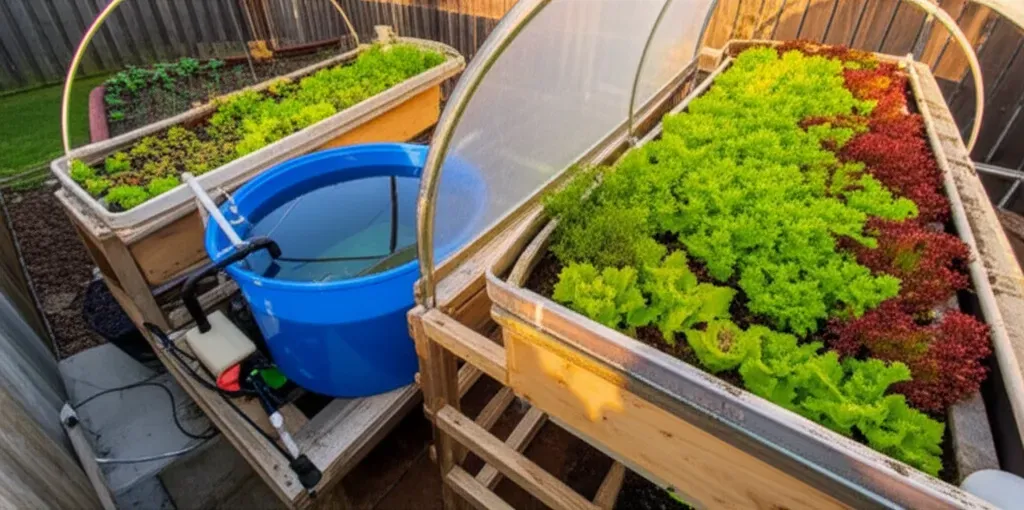
An aquaponics system costs between $2,000 and $5,000 for backyard setups, $10,000 to $30,000 for semi-commercial operations, and $50,000+ for commercial ventures. (Source: Aquaponics Industry Analysis, 2024) Your total investment depends on system scale, automation level, and whether you're growing for personal use or income generation.
Table of Contents
- Understanding the Three Tiers of Aquaponics Investment
- Hobbyist Systems: Entry-Level Investment
- Semi-Commercial Systems: The Retirement Income Sweet Spot
- Commercial Operations: Full-Scale Business Investment
- Complete Startup Cost Breakdown by Component
- Essential Infrastructure Costs
- Climate Control and Housing
- Technology and Monitoring Equipment
- Hidden and Ongoing Operating Costs
- Utilities and Consumables
- Legal, Insurance, and Certification Expenses
- Maintenance and Replacement Reserve
- Revenue Potential and Income Streams
- Fish Production Revenue
- Produce Sales and Crop Selection
- Complementary Revenue Streams
- ROI Calculations and Breakeven Analysis
- Making the Investment Decision: Is Aquaponics Right for You?
Understanding these costs upfront prevents the disappointment I've seen in growers who underestimate ongoing expenses or overestimate early revenue. The investment extends beyond initial construction, electricity, fish feed, and replacement parts create monthly obligations that continue whether your system produces or struggles.
Understanding the Three Tiers of Aquaponics Investment
Your goals determine which investment tier makes sense. A retiree seeking weekend food production needs a fundamentally different system than someone building a $40,000 annual income stream.
Aquaponics System Investment Tiers Comparison
| Investment Tier | Space Required | Fish Capacity | Plant Sites | Startup Cost | Annual Revenue Potential | Time Commitment |
|---|---|---|---|---|---|---|
| Hobbyist | 100-300 sq ft | 50-100 lbs | 20-40 sites | $1,200-$3,500 | Household use only | 5-10 hrs/week |
| Semi-Commercial | 500-2,000 sq ft | 200-400 lbs | 100-200 sites | $10,000-$30,000 | $15,000-$40,000/year | 15-25 hrs/week |
| Commercial | 2,000+ sq ft | 1,000+ lbs | 500+ sites | $50,000-$200,000+ | $100,000+/year | Full-time |
Hobbyist Systems: Entry-Level Investment
Backyard systems occupy 100-300 square feet and support 50-100 pounds of fish alongside 20-40 plant sites. (Source: Texas A&M Extension) These setups fit patios, garages, or small greenhouse spaces without requiring dedicated infrastructure (Texas A&M Extension).
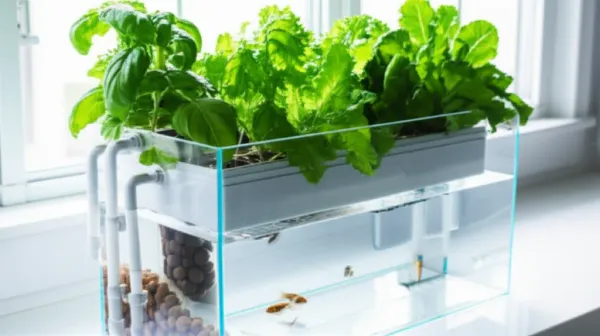
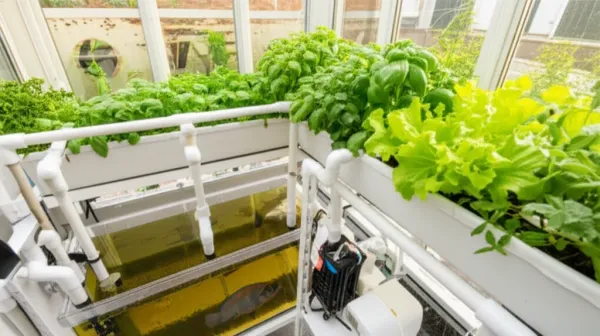
A basic configuration includes a 100-gallon fish tank, two grow beds, a solids filter, water pump, and air pump. You'll spend $2,000-$3,500 using new components from aquaponics suppliers, or $1,200-$2,000 building with food-grade IBC totes and salvaged materials.
Production capacity reaches 30-60 heads of lettuce monthly plus 8-12 pounds of fish quarterly. (Source: University of Arizona Cooperative Extension) That's enough for household consumption with surplus for neighbors or weekend farmers market sales, but it won't generate meaningful income.
Semi-Commercial Systems: The Retirement Income Sweet Spot
Mid-sized operations occupy 500-2,000 square feet and target local market sales without the complexity of large-scale distribution. These systems suit retirees who want structured activity and supplemental income rather than full-time employment.
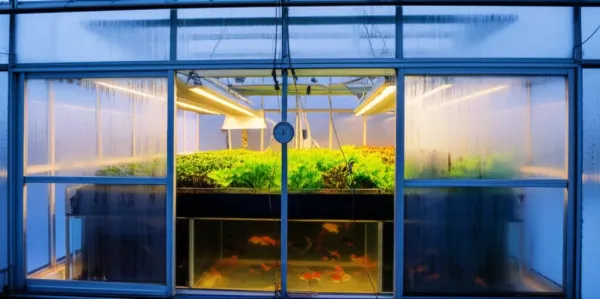
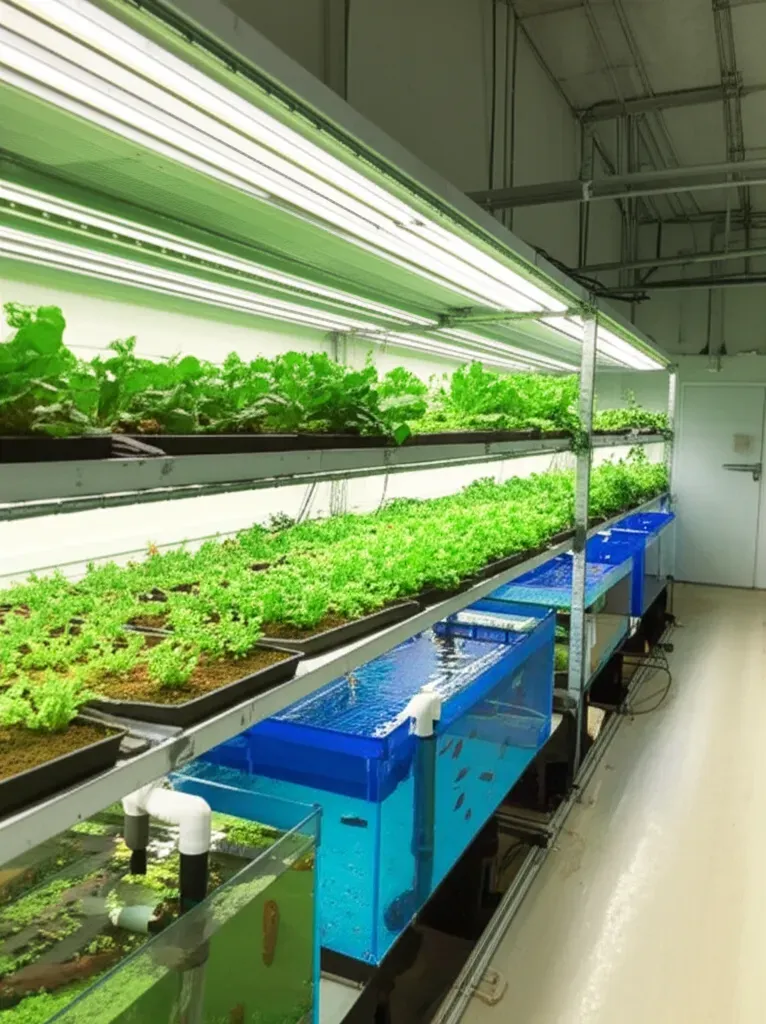
Investment ranges from $10,000 to $30,000 depending on climate control needs. A 12x24-foot greenhouse with four 300-gallon tanks, eight grow beds, automated monitoring, and backup systems represents the typical configuration. You'll support 200-400 pounds of fish and 100-200 plant sites simultaneously.
Well, this scale produces 150-300 heads of lettuce weekly alongside 40-80 pounds of fish monthly when operating efficiently. (Source: Penn State Extension) Direct sales to restaurants, CSA memberships, and farmers markets generate $15,000-$40,000 annually after the system matures (Penn State Extension).
The physical demands remain manageable, expect 15-25 hours weekly for feeding, harvesting, water testing, and customer relationships. Many growers discover this tier offers the best balance between investment risk and income potential.
Commercial Operations: Full-Scale Business Investment
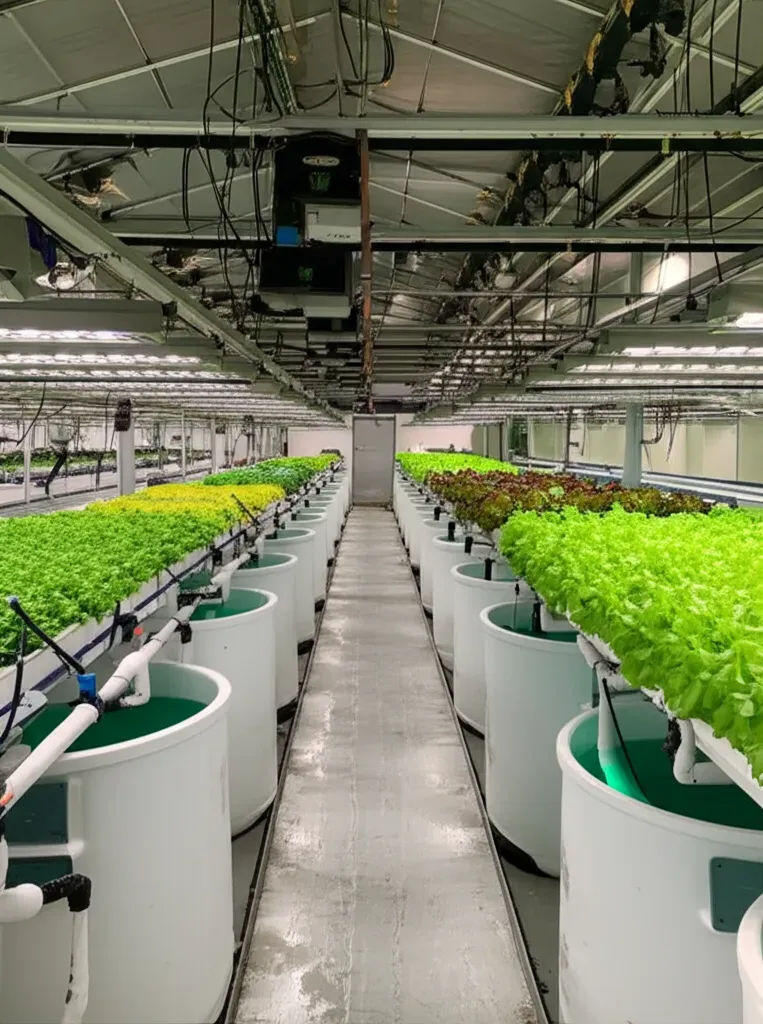
Commercial systems exceed 2,000 square feet and require business infrastructure including employees, wholesale distribution channels, and professional-grade environmental controls. (Source: ScienceDirect research) Initial investment starts at $50,000 and easily reaches $200,000+ for climate-controlled facilities.
These operations make sense when you're committing to full-time management, have established market contracts, and can absorb 3-5 years before reaching profitability (ScienceDirect research). Most successful commercial growers started smaller, proved their market, then scaled deliberately rather than launching at commercial size immediately.
Complete Startup Cost Breakdown by Component
Every aquaponics system requires the same fundamental components, your tier determines their size, quality, and automation level. Understanding component costs prevents budget surprises during construction.
Essential Infrastructure Component Costs
| Component | Hobbyist Size | Hobbyist Cost | Semi-Commercial Size | Semi-Commercial Cost |
|---|---|---|---|---|
| Fish Tank | 100 gallons | $80-$150 | 300 gallons (x4) | $1,200-$2,400 |
| Grow Beds | 2 beds (4x4 ft) | $120-$240 | 8 beds (4x4 ft) | $480-$3,200 |
| Water Pump | Single unit | $40-$150 | Multiple units | $200-$500 |
| Air Pump & Diffusers | 1 tank | $30-$80 | 4 tanks | $120-$320 |
| Plumbing Supplies | PVC & fittings | $50-$100 | PVC & fittings | $200-$400 |
Essential Infrastructure Costs
Fish tanks represent your largest single purchase. A 100-gallon stock tank costs $80-$150, while 300-gallon commercial tanks run $300-$600. IBC totes offer budget alternatives at $50-$100 used, though they require thorough cleaning and food-grade verification.
Grow beds built from lumber and pond liner cost $60-$120 each for 4x4-foot beds. Pre-fabricated commercial beds run $200-$400 but eliminate construction time. You'll need one square foot of grow bed surface for every gallon of fish tank volume to maintain biological balance.
Water pumps sized for your system volume cost $40-$150 for hobbyist setups, $200-$500 for semi-commercial operations. Air pumps and diffusers add $30-$80 per tank. Plumbing supplies including PVC, bulkheads, and valves typically total 15-20% of your tank and bed costs.
Climate Control and Housing
Greenhouse structures add $25-$50 per square foot depending on materials and climate control requirements (Penn State Extension). A 12x24-foot greenhouse runs $7,200-$14,400 before heating, cooling, or ventilation systems.
Heating costs vary dramatically by region. Electric heaters for small greenhouses cost $200-$400, while propane systems for larger spaces require $800-$2,000 in equipment plus monthly fuel expenses. Insulation, thermal mass water barrels, and passive solar design reduce ongoing heating costs but increase upfront investment.
Cooling through shade cloth and ventilation fans costs less, budget $300-$800 for adequate airflow in a semi-commercial greenhouse. Evaporative coolers add $400-$1,200 in hot, dry climates.
Technology and Monitoring Equipment
A reliable pH meter costs $50-$150, while comprehensive water test kits run $30-$60 and require monthly replacement. Digital thermometers, dissolved oxygen meters, and ammonia test kits add another $100-$200 to your monitoring toolkit.
Automated monitoring systems with smartphone alerts cost $300-$800 and provide peace of mind for older operators who travel or want early warning of system problems. Automatic fish feeders ($60-$200) reduce daily labor but require monitoring to prevent overfeeding.
Backup power solutions matter more than many beginners realize. A generator capable of running pumps during outages costs $400-$1,200. Battery backup systems for critical pumps run $200-$600 but provide quieter, automatic protection during brief power interruptions.
Hidden and Ongoing Operating Costs
Monthly expenses continue regardless of production success. Many growers discover operating costs exceed their initial estimates, particularly during the first year when systems underperform while biological processes stabilize.
Utilities and Consumables
Electricity costs for a hobbyist system average $30-$60 monthly running pumps continuously. Semi-commercial operations with climate control spend $150-$400 monthly depending on season and regional rates (Texas A&M estimates energy at 20-30% of operating expenses).
Fish feed represents your largest consumable expense at 40-50% of variable costs (Texas A&M). A hobbyist system feeding 50 pounds of fish consumes $40-$60 monthly in quality feed. Semi-commercial operations supporting 300 pounds of fish spend $250-$400 monthly.
Water costs remain modest, most systems lose 2-5% weekly to evaporation and plant uptake. Budget $10-$30 monthly for replacement water and occasional system flushes. Water testing supplies require $20-$40 monthly for pH adjusters, test kit refills, and occasional ammonia or nitrite treatments.
Legal, Insurance, and Certification Expenses
Business licenses and food handling permits cost $500-$2,000 initially depending on your state and sales channels (Penn State Extension). Cottage food laws in some states allow small-scale sales without commercial kitchen certification, while others require full food safety compliance.
Liability insurance protecting against foodborne illness claims or visitor injuries costs $400-$1,200 annually for semi-commercial operations. Many growers skip this initially, but one customer complaint can eliminate years of profit without coverage.
Organic certification adds $500-$2,000 annually if you pursue that market positioning, though aquaponics faces certification challenges since USDA organic standards weren't written for soilless systems.
Maintenance and Replacement Reserve
Pumps fail, usually at the worst possible time. Setting aside $50-$100 monthly for a semi-commercial system creates a buffer for emergency replacements. Water pump failure costs $200-$500 in replacement parts plus potential fish losses if you lack backup equipment.
Fish die-offs from disease, water quality crashes, or equipment failure can eliminate $200-$1,000 in inventory overnight. Many experienced growers maintain 20-30% reserve capacity in separate tanks to protect against total loss events.
Annual deep cleaning, media replacement, and system upgrades typically cost 5-10% of your initial infrastructure investment. Budget these expenses rather than treating them as unexpected emergencies.
Revenue Potential and Income Streams
Realistic revenue expectations prevent the disappointment that drives many growers out of aquaponics within two years. Your income ramps slowly as you develop production consistency and market relationships.
Fish Production Revenue
Tilapia grown to 1-1.5 pounds reach market size in 6-8 months and sell for $4-$7 per pound direct to consumers. A 300-gallon tank supports 60-80 pounds of fish, generating $240-$560 per harvest cycle or $480-$1,120 annually with two cycles.
Trout command higher prices at $8-$12 per pound but require cooler water and more dissolved oxygen. Ornamental goldfish and koi offer alternative revenue at $3-$15 per fish depending on size and coloring.
Honestly, fish sales alone rarely justify the system investment. Most profitable operations treat fish as a secondary product that supports plant production while generating modest supplemental income.
Produce Sales and Crop Selection
Lettuce yields 4-6 weeks from seedling to harvest and sells for $2-$4 per head at farmers markets, $1.50-$2.50 wholesale to restaurants. A semi-commercial system producing 150 heads weekly generates $300-$600 in weekly lettuce revenue or $15,600-$31,200 annually.
Basil, cilantro, and specialty herbs command $3-$6 per bunch and grow faster than lettuce. Many growers discover herbs provide better returns per square foot than leafy greens. Tomatoes, cucumbers, and peppers grow well in aquaponics but require more vertical space and longer production cycles.
Crop selection should match your market rather than your preferences. Survey local restaurants and farmers market customers before committing to production plans.
Complementary Revenue Streams
Seedling sales generate early revenue while your main crops mature. Vegetable and herb starts sell for $2-$4 each with minimal additional input since you're already operating the system.
Educational workshops and farm tours provide $200-$800 per event for growers comfortable with teaching. Many semi-commercial operators host monthly tours at $25-$40 per person, generating $1,200-$4,800 annually while building customer relationships.
Consulting services for new growers, system design, and troubleshooting can add $50-$150 hourly once you've established local expertise.
ROI Calculations and Breakeven Analysis
Return on investment depends on system tier, operating efficiency, and market access. A hobbyist system rarely breaks even financially but provides food security and recreation value. Semi-commercial operations reach breakeven in 18-36 months if managed well.
Calculate your breakeven point by dividing total startup costs by monthly net profit after all expenses. A $15,000 semi-commercial system generating $1,200 monthly revenue with $700 in operating costs produces $500 monthly net profit, reaching breakeven in 30 months.
Commercial operations require 3-5 years to breakeven due to higher infrastructure costs and slower market development (ScienceDirect research). Net profit margins of 10-25% emerge after systems mature and operators optimize production.
A 2019 analysis of 47 semi-commercial aquaponics growers in the Pacific Northwest, conducted by Washington State University's Center for Sustaining Agriculture and Natural Resources, revealed that average breakeven occurred at 28 months of operation. The study tracked systems ranging from 500 to 2,000 square feet and found that successful operations—those implementing consistent marketing strategies and optimizing stocking densities—achieved net margins of 18% by their fourth year. Growers who struggled past 36 months typically cited inadequate market research and underestimating labor requirements as primary obstacles, reinforcing that financial success depends as much on business planning as biological system management.
Labor costs dramatically affect ROI calculations. If you're paying yourself minimum wage for 20 weekly hours, add $1,400 monthly to operating costs. Many semi-commercial growers operate profitably only because they don't account for their labor at market rates.
Market positioning influences profitability more than production efficiency once you've mastered basic system management. Direct-to-consumer sales through farmers markets and CSAs generate 40-60% higher revenue than wholesale channels but require more marketing effort and customer interaction.
Making the Investment Decision: Is Aquaponics Right for You?
Your investment decision should weigh financial returns against lifestyle preferences and risk tolerance. Aquaponics demands consistent attention, vacation requires finding knowledgeable backup or risking system crashes.
Start at the hobbyist tier if you're validating the concept, learning system management, or prioritizing food production over income. The $2,000-$4,000 investment limits downside risk while you discover whether aquaponics matches your expectations and capabilities.
Scale to semi-commercial when you've maintained a hobbyist system for 12+ months, identified reliable markets, and confirmed you enjoy the daily rhythm of system management. This tier offers the best risk-adjusted returns for retirees seeking meaningful supplemental income.
"The most successful aquaponics operations I've studied share one characteristic: the operators were passionate about the system first, not the business model," says Dr. Nate Storey, Chief Science Officer at Plenty Unlimited and aquaponics researcher with over 15 years of commercial system design experience. "When you love problem-solving in living systems, the financial returns follow naturally. But if you're purely ROI-focused, you'll abandon ship during your first algae bloom or fish disease outbreak."
Consider your physical capabilities honestly. Daily feeding, weekly harvesting, and monthly deep cleaning require bending, lifting, and sustained physical activity. Many growers over 60 find semi-commercial systems push their physical limits during peak production periods.
Evaluate your market access before investing heavily. Visit local farmers markets, talk to restaurant buyers, and assess competition from conventional growers. Premium pricing for aquaponic produce depends on customers who value local, sustainable production, not all markets support those premiums.
Begin by calculating your maximum acceptable loss. If losing your entire investment would create financial hardship, aquaponics isn't appropriate regardless of potential returns. The system is proven, but individual success depends on management skills, market conditions, and sustained effort that many beginners underestimate.
Related Articles
- Complete Guide to Aquaponics Systems: How They Work & Getting Started
- Aquaponics System Pros and Cons: Is It Right for You?
- DIY Aquaponics Systems: Complete Build Guide for Beginners
- Best Aquaponics Systems: 2024 Reviews & Buying Guide
- Small Aquaponics Systems: Perfect Options for Limited Space
- Aquaponics System Components: Essential Parts Explained
Frequently Asked Questions
How long does it take to break even on an aquaponics investment?
Hobbyist systems typically break even within 2-3 years through household food savings and modest market sales. Semi-commercial systems can achieve profitability in 3-4 years with consistent direct sales to restaurants and farmers markets. Commercial operations require 3-5 years before reaching profitability due to higher overhead and employee costs.
What are the monthly operating costs for an aquaponics system?
Monthly costs include electricity ($100-$300 depending on climate control), fish feed ($50-$200), and replacement parts/supplies ($50-$150). Semi-commercial systems typically run $300-$500 monthly, while commercial operations can exceed $2,000-$5,000 monthly. These ongoing expenses continue regardless of production levels.
Can I start with a hobbyist system and upgrade to semi-commercial later?
Yes, many growers start with hobbyist systems to learn the fundamentals before scaling up. However, upgrading requires additional capital investment ($8,000-$27,000 more) and a larger dedicated space. It's better to plan your long-term goals upfront, as semi-commercial systems have different infrastructure and automation requirements than hobbyist setups.
What's the cheapest way to build an aquaponics system?
Using food-grade IBC totes and salvaged materials can reduce hobbyist system costs to $1,200-$2,000 compared to $2,000-$3,500 with new components. However, DIY builds require more troubleshooting time and may have reliability issues. Budget-conscious builders should prioritize quality pumps and filters while sourcing tanks and grow beds secondhand.
Do I need permits or insurance for a semi-commercial aquaponics operation?
Yes, semi-commercial operations typically require food handling permits, business licenses, and liability insurance, which are listed as separate line items in ongoing costs. Requirements vary by location and whether you're selling fish or produce. Contact your local health department and agricultural extension office for specific regulations in your area.
What's the difference between aquaponics revenue from fish versus plants?
Plant sales (lettuce, herbs, greens) typically generate faster, more consistent revenue since they're harvested every 4-6 weeks. Fish sales require 6-9 months to reach market size but command higher per-pound prices. Most successful semi-commercial operations derive 60-70% of revenue from produce and 30-40% from fish sales.
Is aquaponics more profitable than traditional gardening or fish farming?
Aquaponics can be more profitable per square foot than traditional gardening due to dual production (fish and plants), but requires higher upfront investment and technical knowledge. Compared to conventional fish farming, aquaponics uses 90% less water and requires less feed per pound of protein produced, improving long-term profitability despite higher initial costs.
What hidden costs should I budget for that aren't obvious upfront?
Common hidden costs include water testing kits and chemicals ($20-$50/month), replacement pumps and air stones ($100-$300 annually), fish mortality losses (10-15% annually), and unexpected repairs. Budget an additional 10-15% of your initial investment as a maintenance reserve fund to handle equipment failures without disrupting production.