Aquaponics Fish Farming: Commercial Production Guide
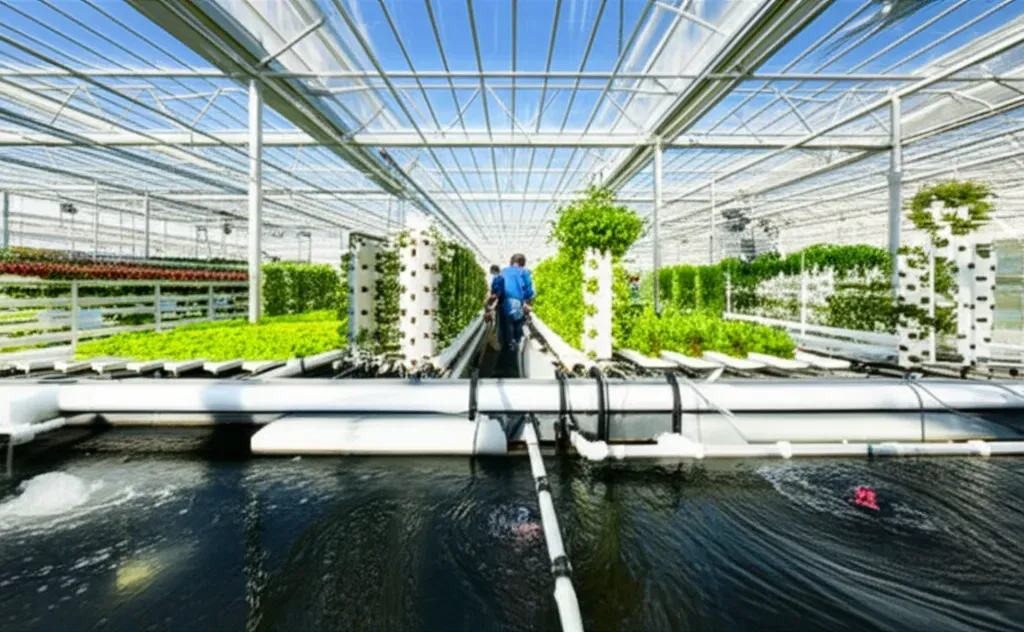
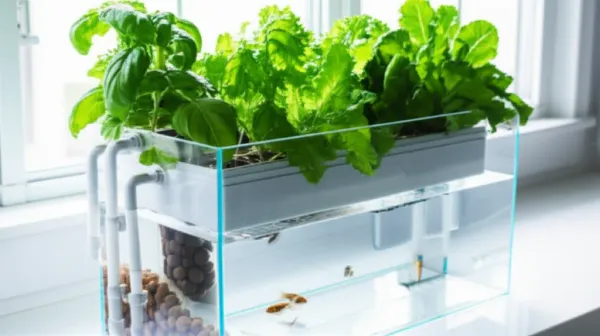
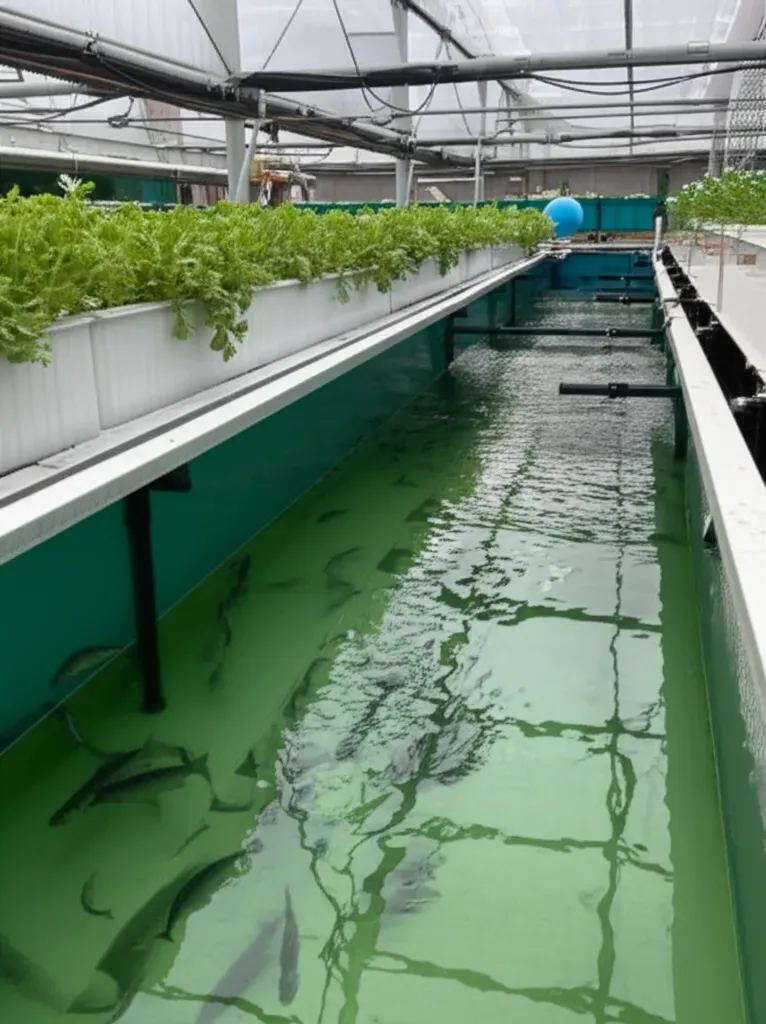
Commercial aquaponics fish farming combines fish production with vegetable growing in a recirculating system where fish waste provides nutrients for plants while plants filter water for fish. This dual-revenue model uses approximately 90% less water than conventional agriculture while producing both protein and produce from the same infrastructure (Purdue University Extension). The system creates two income streams from one facility, making it financially attractive for farmers seeking sustainable, space-efficient food production.
Table of Contents
- Understanding Commercial Aquaponics Fish Farming
- What Makes Aquaponics Commercially Viable
- Commercial vs. Backyard Systems
- System Design and Infrastructure Requirements
- Choosing Your Commercial System Type
- Critical Equipment and Technology
- Facility Layout and Space Planning
- Fish and Plant Selection for Commercial Production
- Best Commercial Fish Species
- High-Value Crops for Aquaponics
- Financial Planning and Startup Costs
- Initial Investment Breakdown
- Operating Costs and Revenue Projections
- Funding Options and Financial Strategy
- Regulatory Compliance and Business Setup
- Licenses and Permits Required
- Food Safety and Quality Standards
- Operations Management and Marketing Strategy
The symbiotic relationship at commercial scale operates on the same biological principles as backyard systems but demands precision management. Fish excrete ammonia through their gills and waste, beneficial bacteria convert that ammonia into nitrites then nitrates, and plants absorb those nitrates as fertilizer (USDA). Well, at commercial volumes, this nitrogen cycle processes pounds of waste daily rather than ounces, requiring robust filtration and careful monitoring to prevent system crashes that could kill hundreds of fish overnight.
Understanding Commercial Aquaponics Fish Farming
Commercial operations differ fundamentally from hobby setups in their financial stakes and operational complexity. Your backyard system might support a family's salad needs, a commercial facility must generate consistent revenue to cover lease payments, utilities, labor, and loan obligations while maintaining food safety standards that satisfy health inspectors and wholesale buyers.
What Makes Aquaponics Commercially Viable
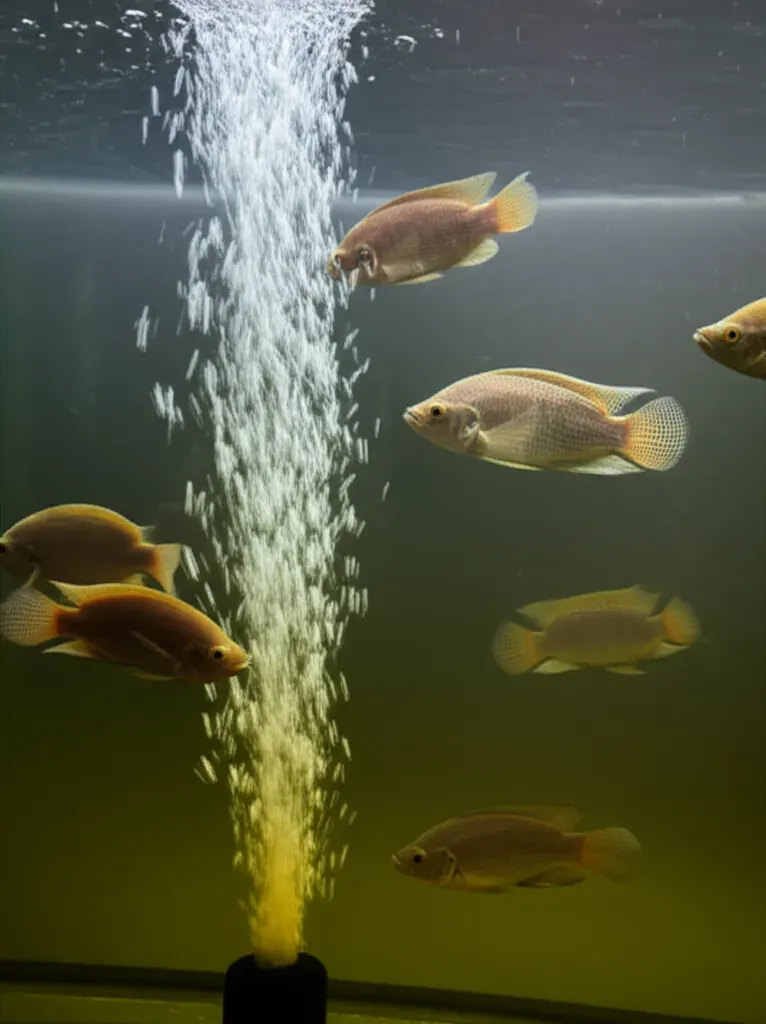
The business case rests on four economic advantages that traditional farming cannot match. Dual revenue streams let you sell both fish and vegetables from the same square footage, essentially doubling your productive capacity compared to conventional greenhouse operations or fish-only aquaculture. Approximately 1-2 pounds of fish feed produce one pound of fish plus nutrients for 3-5 pounds of vegetables, creating remarkable input efficiency (Purdue University Extension).
Water conservation delivers cost savings in regions where irrigation expenses run high. The recirculating design replaces less than 1-2% of system volume daily compared to soil farming's constant irrigation demands. Consumer demand for sustainably-raised local food continues climbing, with European studies showing 44% of consumers willing to pay premium prices for aquaponics products (ScienceDirect research). Organic certification potential adds another revenue layer, though the certification path for aquaponics remains complex and varies by certifying agency.
Year-round production in climate-controlled greenhouses eliminates seasonal gaps that plague outdoor farming. Your harvest schedule becomes predictable, allowing you to secure contracts with restaurants and retailers who value consistent supply over sporadic abundance.
Commercial vs. Backyard Systems
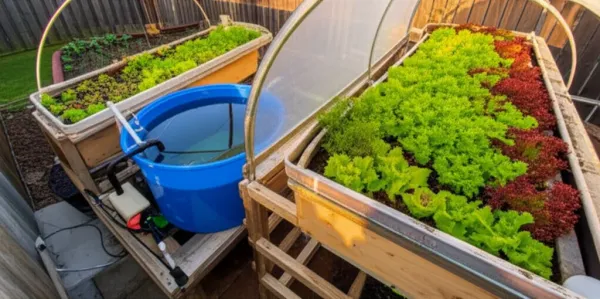
Scale changes everything about system management and business requirements. Backyard growers experiment with goldfish and lettuce, commercial operators must select species based on market pricing, growth rates, and regional demand patterns. Your home system might use a 275-gallon IBC tote, commercial fish tanks range from 500 to 5,000 gallons with multiple tanks to separate different age cohorts and maintain continuous production cycles.
Regulatory requirements multiply at commercial scale. You'll need aquaculture permits, food handling licenses, water discharge permits, business licenses, and potentially organic certification depending on your marketing strategy (USDA National Agricultural Library). Zoning laws may restrict aquaculture in certain areas, and some municipalities classify commercial aquaponics as agriculture while others call it aquaculture or even light manufacturing, each category carrying different tax implications and permit requirements.
Business planning becomes essential rather than optional. Commercial viability demands detailed financial projections, market analysis, production schedules, and contingency plans for equipment failures. I walked into my first commercial facility tour after running a successful backyard system for three years, confident I understood aquaponics. Within fifteen minutes, I realized my 300-gallon setup had taught me the biological principles but nothing about cohort management, harvest scheduling, or the reality that a single pump failure at 2 AM could cost $15,000 in lost fish. The owner showed me his permit binder—four inches thick—and I understood why he employed a part-time compliance manager just to track reporting deadlines. Insurance requirements alone, liability coverage, product insurance, property protection, can run several thousand dollars annually before you sell your first head of lettuce.
System Design and Infrastructure Requirements
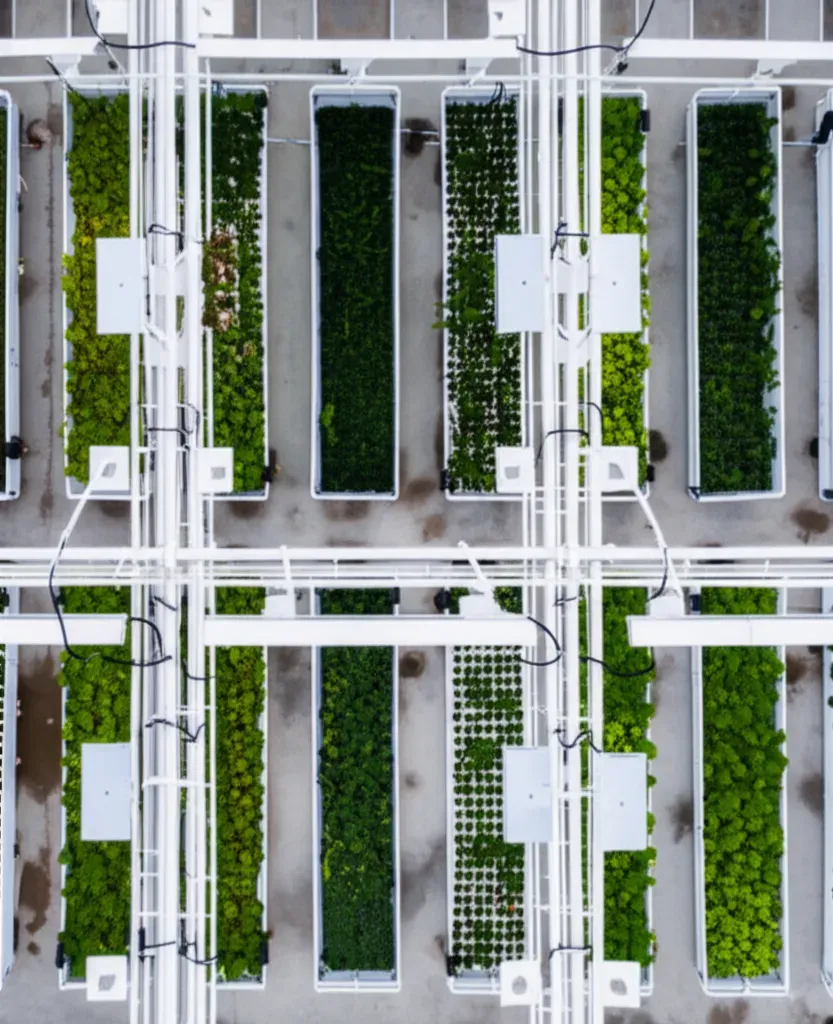
Your system architecture determines production capacity, labor efficiency, and crop options for the facility's entire lifespan. The three primary commercial designs, media-based, deep water culture, and nutrient film technique, each optimize for different products and management styles, and choosing poorly means expensive retrofitting later.
Commercial vs. Backyard Aquaponics Systems Comparison
| Aspect | Backyard System | Commercial System |
|---|---|---|
| Typical Fish Tank Size | 275 gallons (IBC tote) | 500-5,000 gallons (multiple tanks) |
| Fish Species Selection | Hobby species (goldfish) | Market-based selection (tilapia, trout, etc.) |
| Primary Purpose | Personal food production | Revenue generation |
| Regulatory Requirements | Minimal to none | Aquaculture permits, food handling licenses, water discharge permits, business licenses |
| Business Planning | Optional | Essential with financial projections and market analysis |
| Insurance Costs | Minimal or none | Several thousand dollars annually |
| Compliance Management | Self-managed | May require dedicated compliance manager |
| Risk of Equipment Failure | Minor financial impact | Up to $15,000+ in lost fish from single pump failure |
| Production Schedule | Sporadic/seasonal | Year-round, predictable harvest cycles |
Choosing Your Commercial System Type
Media-based systems use gravel or expanded clay to support plant roots and house beneficial bacteria, creating the most biologically stable environment. They handle solids filtration naturally as waste particles settle into the media where bacteria break them down, but the media weight limits vertical stacking and the beds require more floor space per plant than other designs. Best for fruiting crops like tomatoes and peppers that need root support.
Deep water culture (raft systems) float plants on styrofoam boards atop nutrient-rich water, maximizing space efficiency for leafy greens. Commercial operations favor DWC for lettuce and herbs because you can achieve high plant density, up to 20 plants per square foot, and harvesting simply means lifting the raft and cutting roots (USDA ARS categorization). However, DWC requires separate mechanical and biological filtration since you cannot allow solids into the plant rafts.
Nutrient film technique sends a thin film of water through channels where plant roots dangle, offering the fastest growth rates for leafy crops. NFT uses minimal water volume but demands careful slope calibration and constant flow, any pump failure means roots dry out within hours. Commercial NFT works well for baby greens and culinary herbs with short harvest cycles.
Critical Equipment and Technology
Reliable commercial operation requires redundancy in every critical system. Water pumps move thousands of gallons daily, so install backup pumps with automatic switching or at minimum keep spare pumps on-site with quick-connect fittings. Aeration systems must maintain dissolved oxygen above 5 ppm even during peak feeding times when fish consume oxygen rapidly, typically requiring multiple air stones or diffusers per tank plus backup blowers.
Power failures kill fish faster than disease in commercial systems. Battery backup systems or generators become mandatory rather than optional, sized to run pumps and aeration for at least 24 hours. Monitoring technology, pH meters, temperature sensors, dissolved oxygen probes, should log data continuously and send alerts when parameters drift outside safe ranges. A 2019 study published in Aquacultural Engineering found that dissolved oxygen levels below 4 ppm reduced tilapia feed conversion ratios by 23% and increased mortality rates threefold compared to systems maintaining 6-7 ppm. The research tracked 12 commercial operations over 18 months, revealing that farms with automated oxygen monitoring and backup aeration prevented an average of $8,400 in annual fish losses per 1,000-gallon system. Most critical failures occurred between 2-6 AM when biological oxygen demand peaked and staff weren't present to catch manual equipment failures.
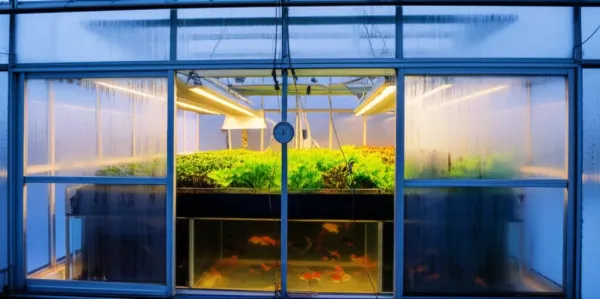
Climate control equipment represents your largest infrastructure investment. Greenhouse structures must withstand local wind and snow loads while maintaining temperature between 65-85°F year-round. Heating costs dominate winter expenses in northern climates, while southern operations battle cooling loads and humidity management during summer months.
Facility Layout and Space Planning
Efficient workflow prevents bottlenecks during harvest and packaging rushes. Position fish tanks where you can easily net harvest without disturbing other tanks, locate grow beds or rafts near packing areas to minimize transport distance for delicate greens. Optimal fish-to-plant ratios typically run 1 pound of fish per 5-7 gallons of grow bed media or 1 pound of fish supporting 1-2 square feet of raft space, though these ratios shift based on fish species and feeding rates (Purdue University Extension).
Workspace requirements extend beyond growing areas. You need dry storage for feed and supplies, cold storage for harvested fish and produce, packing stations with scales and labeling equipment, and office space for record-keeping that regulators will inspect. Many growers discover they need twice the square footage they initially planned once they account for walkways, maintenance access, and shipping/receiving areas.
Fish and Plant Selection for Commercial Production
Species selection determines your market positioning, production timeline, and operational complexity. The right combination matches your climate capabilities with local market demand and your management experience level, choosing wrong means growing products nobody wants to buy at prices that cover your costs.
Best Commercial Fish Species
Tilapia dominates commercial aquaponics because they tolerate crowding, resist disease, and grow to market size (1.5 pounds) in 6-8 months at temperatures between 75-85°F (USDA ARS). They thrive at stocking densities around 0.5 pounds per gallon (Purdue University Extension), allowing intensive production in limited space. Market prices range from $3-6 per pound depending on region and whether you sell whole, filleted, or live. The challenge is tilapia need warm water year-round, driving heating costs in temperate climates.
Catfish offer cold-tolerance advantages over tilapia, growing well at 70-80°F and surviving brief temperature drops that would stress tilapia. They reach 1-1.5 pounds in 6-9 months and command similar market prices. Channel catfish suit southern operations or facilities with lower heating budgets.
Trout require cold water (55-65°F) and high oxygen levels, limiting them to northern operations or facilities with chilling capacity. Rainbow trout grow to 1 pound in 12-14 months and sell for $6-10 per pound at farmers markets, attracting premium-paying customers. Honestly, trout production costs run higher due to cooling and aeration demands, but the price premium can justify the investment.
Barramundi and hybrid striped bass represent specialty options for growers targeting high-end restaurants. Both tolerate varying salinity and temperature ranges, grow rapidly, and command premium prices ($8-12 per pound), but fingerling costs run higher and market demand concentrates in coastal urban areas.
High-Value Crops for Aquaponics
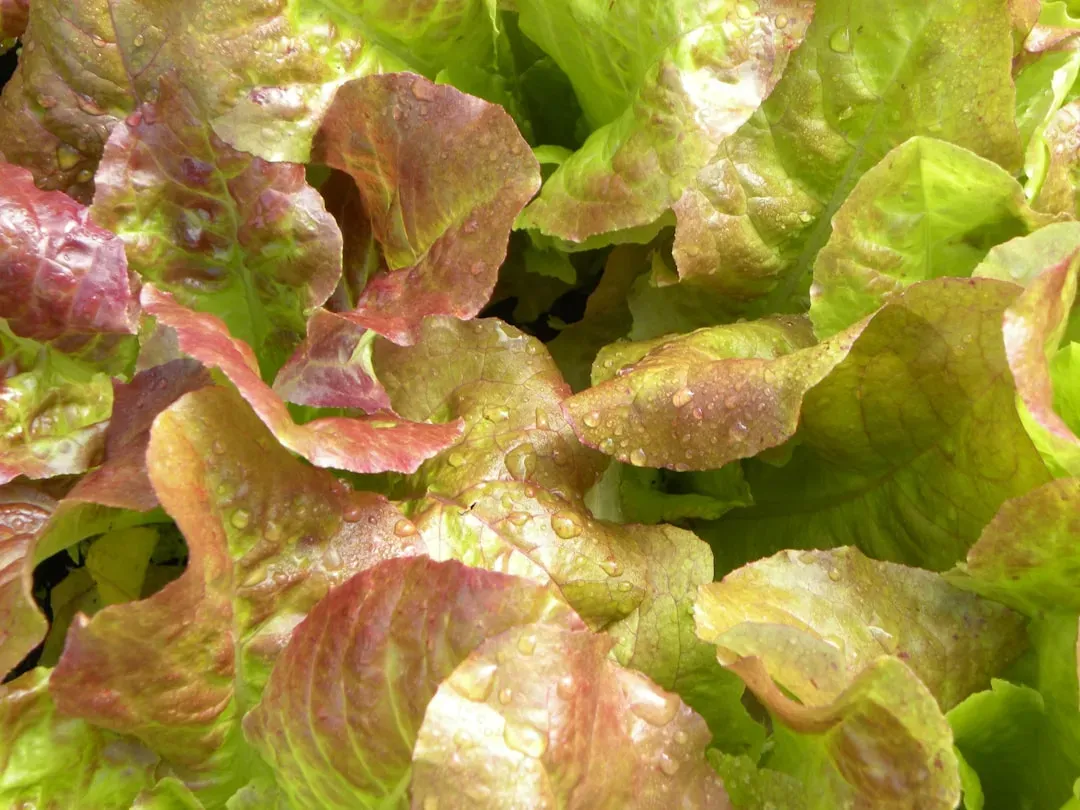
Leafy greens deliver the fastest return on investment with harvest cycles of 28-45 days from transplant. Butterhead and romaine lettuce, kale, chard, and Asian greens suit all three system types and sell readily at farmers markets and to restaurants. Wholesale prices range from $1-3 per head or $8-15 per pound for baby greens, with organic certification adding 20-40% price premium (USDA National Agricultural Library).
Culinary herbs, basil, cilantro, mint, parsley, generate higher revenue per square foot than lettuce despite similar growth rates. Basil wholesale prices reach $12-20 per pound, and restaurants buy herbs year-round. The challenge is herbs require more careful harvest and handling than lettuce to prevent bruising.
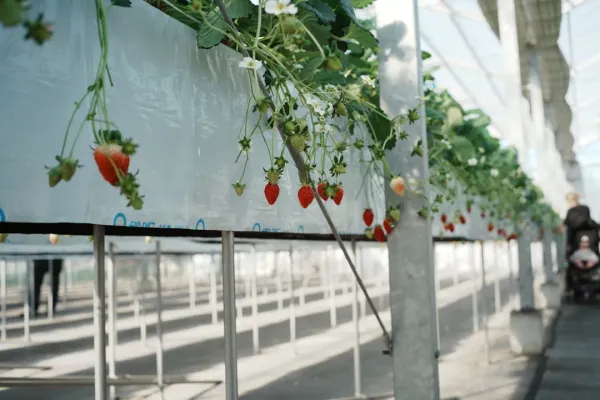
Fruiting crops like tomatoes, peppers, and cucumbers need 90-120 days to first harvest but produce continuously for months afterward. They require more nutrients than leafy greens, meaning higher fish stocking densities or supplemental fertilization. Cherry tomatoes and specialty peppers command better prices ($4-8 per pound) than commodity varieties and suit the premium positioning that aquaponics products naturally occupy.
Specialty crops, microgreens, edible flowers, gourmet mushrooms grown on fish solids, can differentiate your operation but require testing local market demand before committing significant growing space. "High-value crops like herbs and specialty vegetables can generate three to five times more revenue per square foot than lettuce in aquaponics systems," says Dr. Nate Storey, Chief Science Officer at Plenty Unlimited and aquaponics researcher. "The key is matching your crop selection to both your system's nutrient output and your market's willingness to pay premium prices for locally-grown, sustainable produce."
Financial Planning and Startup Costs
Realistic financial projections separate successful commercial ventures from expensive hobbies. The numbers vary dramatically based on system scale and location, but understanding the cost structure helps you build a viable business model rather than draining savings on an undercapitalized operation.

Initial Investment Breakdown
Small commercial operations (500-2000 square feet of growing space) typically require $50,000-100,000 in startup capital. Greenhouse structures run $15-25 per square foot for basic hoop houses with climate control, fish tanks and plumbing systems cost $10,000-20,000, and grow beds or raft systems add another $8,000-15,000. Equipment expenses, pumps, blowers, backup power, monitoring systems, consume $8,000-12,000 before you add shelving, harvest tools, and packing supplies.
Medium-scale facilities (2000-5000 square feet) push initial investment to $150,000-300,000 as you add automation, more sophisticated climate control, and commercial-grade processing equipment. Large operations exceeding 5000 square feet often require $400,000-800,000 including land preparation, multiple greenhouse bays, commercial kitchen facilities for value-added processing, and delivery vehicles.
Working capital requirements catch many growers unprepared. You need 6-12 months of operating expenses in reserve because fish take months to reach market size and plant production ramps up gradually. Initial fish fingerling stock costs $500-2000 depending on species and quantity, seed and transplant expenses run $200-500 monthly, and you must cover utilities and any labor costs before revenue begins flowing.
Operating Costs and Revenue Projections
Monthly operating expenses for a small commercial system typically include $400-800 for fish feed, $300-600 for electricity (heating and cooling dominate), $200-400 for seeds and growing supplies, and $500-1500 for labor if you hire help. Marketing costs, packaging materials, and maintenance supplies add another $200-500 monthly. To be fair, these numbers fluctuate seasonally, winter heating bills can double summer costs in cold climates.
Revenue potential depends on production capacity and market channels. A 1000-square-foot system producing lettuce can yield 200-300 heads weekly at maturity, generating $400-900 weekly revenue at $2-3 per head wholesale. Fish sales add $200-500 monthly once production cycles stabilize. Annual gross revenue for small operations typically ranges from $25,000-60,000, medium facilities can reach $100,000-200,000, and large professional operations may exceed $300,000 annually.
Break-even timelines realistically run 18-36 months for most commercial aquaponics ventures. The first year focuses on system optimization and building production capacity, the second year on market development and scaling output, profitability typically arrives in year three as you refine operations and secure reliable sales channels.
Funding Options and Financial Strategy
Small business loans through the USDA Farm Service Agency or local banks provide traditional financing, typically requiring 20-30% down payment and detailed business plans showing market research and financial projections. Agricultural grants from state departments of agriculture or sustainable agriculture programs can offset 10-40% of startup costs but involve competitive applications and specific project requirements.
Investor partnerships bring capital without debt service but mean sharing ownership and decision-making authority. Some growers use phased expansion, starting with minimal infrastructure to prove the concept and generate cash flow before scaling up. This approach reduces initial capital requirements to $20,000-40,000 but extends the timeline to full production capacity by 1-2 years. My bank loan officer asked pointed questions I hadn't anticipated: 'What happens to revenue if tilapia wholesale prices drop 20% next quarter?' and 'How will you maintain cash flow during the six-month gap between fingerling purchase and first harvest?' I'd built detailed spreadsheets showing profitability by month eighteen, but I hadn't modeled price volatility or planned a financial cushion for the learning curve tax every new operation pays. We restructured the loan with a twelve-month interest-only period and I took a part-time consulting job to cover living expenses—decisions that let me optimize the system without desperation driving premature sales.
Economic Advantages of Commercial Aquaponics
| Advantage | Description | Financial Impact |
|---|---|---|
| Dual Revenue Streams | Sell both fish and vegetables from same square footage | Doubles productive capacity vs. conventional greenhouse or fish-only operations |
| Feed Conversion Efficiency | 1-2 lbs fish feed produces 1 lb fish + nutrients for 3-5 lbs vegetables | Maximizes input efficiency and reduces feed costs |
| Water Conservation | Recirculating system replaces <1-2% of volume daily vs. constant irrigation | Significant cost savings in high-irrigation-cost regions |
| Premium Pricing Potential | 44% of European consumers willing to pay premium for sustainably-raised local aquaponics | Higher profit margins than conventional produce |
| Year-Round Production | Climate-controlled greenhouses eliminate seasonal gaps | Enables contract sales with restaurants/retailers requiring consistent supply |
| Organic Certification Path | Potential for organic certification (varies by agency) | Additional revenue layer and market differentiation |
Regulatory Compliance and Business Setup
The regulatory landscape for commercial aquaponics spans agriculture, aquaculture, and food safety jurisdictions, creating a complex web of requirements that vary by state and municipality. Navigating this maze before you build prevents expensive retrofitting or shutdown orders after you've invested in infrastructure.
Licenses and Permits Required
Aquaculture permits from state fish and wildlife agencies regulate fish production, stocking densities, and species allowed in your region. Applications typically require facility plans, water source documentation, and waste management protocols. Processing costs run $100-500 and approval timelines span 30-90 days (USDA National Agricultural Library).
Food handling licenses from county health departments cover produce and fish sales, requiring inspections of packing areas, cold storage, and water testing protocols. Business licenses from your municipality authorize commercial operations at your location, and zoning approval confirms your property allows agricultural or aquaculture activities. Water use permits or well permits regulate your water source, and some states require discharge permits even though aquaponics systems discharge minimal water.
The application process demands patience and documentation. Start 6-12 months before planned opening because agencies often request revisions or additional information. Many growers discover their initial facility plans need modification to meet setback requirements, waste handling standards, or accessibility codes.
Food Safety and Quality Standards
Good Agricultural Practices (GAP) certification demonstrates food safety compliance to wholesale buyers and retailers who increasingly require third-party verification. GAP audits examine water quality, worker hygiene, harvest procedures, and record-keeping systems. Certification costs $400-1200 annually plus any infrastructure improvements needed to meet standards.
Organic certification for aquaponics remains controversial because USDA organic standards were written for soil-based agriculture. Some certifiers approve aquaponics under hydroponic provisions, others reject it entirely. The certification process takes 3 years from application to full organic status and requires detailed input tracking, prohibited substance lists, and annual inspections costing $500-2000. Look, research your target certifier's aquaponics policy before building your business model around organic pricing.
Water quality testing requirements vary by state but typically mandate monthly testing for bacteria, nitrates, and pH with laboratory documentation. Record-keeping obligations span production logs, feed purchases, water test results, and sales documentation, and regulators can request these records during inspections with little notice.
Operations Management and Marketing Strategy
Daily management routines and effective marketing determine whether your commercial operation thrives or struggles despite sound system design. Successful growers develop standardized procedures that maintain water quality, optimize feeding schedules, and prevent small problems from becoming system crashes.
Water quality monitoring must happen daily, testing pH (target 6.8-7.2), ammonia (below 0.5 ppm), nitrite (below 0.5 ppm), and nitrate (20-40 ppm for plant growth). Temperature and dissolved oxygen checks occur twice daily, more frequently during heat waves or cold snaps. Feed fish 1-2% of their body weight daily, adjusting amounts based on water temperature and fish behavior, uneaten feed signals overfeeding or health problems that need immediate attention.
Plant maintenance includes transplanting seedlings at proper spacing, removing dead leaves that can decay in the system, and scouting for pests or disease weekly. Harvest scheduling should stagger plantings so you have continuous production rather than feast-or-famine cycles that overwhelm processing capacity then leave you with nothing to sell.
Marketing strategy must begin before your first harvest. Direct-to-consumer sales through farmers markets and farm stands capture retail pricing ($3-6 per lettuce head) but require weekend labor and customer interaction skills. Restaurant sales offer consistent volume and premium pricing for specialty items, but chefs demand reliability and specific products, missing a delivery damages relationships that took months to build.
Wholesale distribution to grocery stores or food co-ops moves larger volumes but at lower margins ($1-2.50 per head). Community Supported Agriculture (CSA) subscriptions generate advance capital and loyal customers but obligate you to weekly deliveries regardless of production challenges. Most successful operations diversify across 2-3 sales channels to balance volume, pricing, and risk.
Your sustainability story sells products in premium markets. Consumers willing to pay $4 for lettuce want to know about your water conservation, local production, and chemical-free growing methods. Social media presence, farm tours, and participation in local food networks build brand recognition that justifies premium pricing. The aquaponics method itself differentiates you from conventional greenhouse operations and soil farmers, use that distinction in your marketing rather than competing on price alone.
Start with realistic production goals and scale gradually. Many commercial aquaponics ventures fail by building too large initially, burning through capital before developing the management skills and market relationships that support profitable operation. Begin with a system size you can manage personally, prove your production and sales model, then expand with confidence backed by actual performance data rather than optimistic projections. Your path to commercial success runs through careful planning, adequate capitalization, regulatory compliance, and patient market development, not through shortcuts or underestimating the complexity of running a food production business.
Related Articles
- Best Fish for Aquaponics Systems: Complete Species Guide
- Types of Aquaponics Systems: Design Methods & Best Practices
- Growing Vegetables in Aquaponics: What Works Best & How
- Vertical Aquaponics Systems: Maximize Space & Yield
- How Does an Aquaponics System Work? The Complete Cycle Explained
- Aquaponics System Parts & Components: Complete Checklist
Frequently Asked Questions
How much initial capital do I need to start a commercial aquaponics farm?
Initial investment varies widely based on system size and location, typically ranging from $50,000 to $500,000+ for a small commercial operation. Costs include greenhouse construction, fish tanks (500-5,000 gallons), filtration systems, grow beds, monitoring equipment, permits, and working capital for the first 6-12 months before revenue begins. The article recommends developing detailed financial projections and exploring funding options tailored to your specific facility design.
Which fish species are best for commercial aquaponics production?
The article emphasizes selecting fish based on market pricing, growth rates, and regional demand patterns rather than hobby species like goldfish. Commercial operators should research local market preferences and wholesale buyer requirements, as species viability varies by region and target market (restaurants vs. retail).
Can I get organic certification for my aquaponics operation?
Yes, organic certification is possible but the path remains complex and varies significantly by certifying agency. The article notes this adds another revenue layer, so you should contact your local organic certifiers early in planning to understand their specific aquaponics requirements and timeline for approval.
What permits and licenses do I need for a commercial aquaponics farm?
You'll need aquaculture permits, food handling licenses, water discharge permits, business licenses, and potentially organic certification. Zoning laws and municipal classifications vary—some areas classify aquaponics as agriculture, others as aquaculture or light manufacturing—each with different tax and permit implications, so verify local requirements before starting.
How much water does a commercial aquaponics system use compared to traditional farming?
Commercial aquaponics uses approximately 90% less water than conventional agriculture, replacing less than 1-2% of system volume daily compared to soil farming's constant irrigation demands. This water efficiency delivers significant cost savings, especially in regions with high irrigation expenses.
What are the main operational challenges of scaling from backyard to commercial aquaponics?
Commercial systems process pounds of waste daily rather than ounces, requiring robust filtration and careful monitoring to prevent system crashes that could kill hundreds of fish overnight. You must also manage labor costs, maintain food safety standards for health inspectors and wholesale buyers, and develop contingency plans for equipment failures.
How much revenue can I expect from dual fish and vegetable production?
Approximately 1-2 pounds of fish feed produce one pound of fish plus nutrients for 3-5 pounds of vegetables, creating remarkable input efficiency. The dual revenue model lets you sell both products from the same square footage, essentially doubling productive capacity compared to conventional greenhouse or fish-only operations.
Is there consistent market demand for aquaponics products?
Yes, consumer demand for sustainably-raised local food is climbing, with European studies showing 44% of consumers willing to pay premium prices for aquaponics products. Year-round production in climate-controlled greenhouses also allows you to secure contracts with restaurants and retailers who value consistent supply.