Aquaponics Systems for Schools: Educational Setup Guide
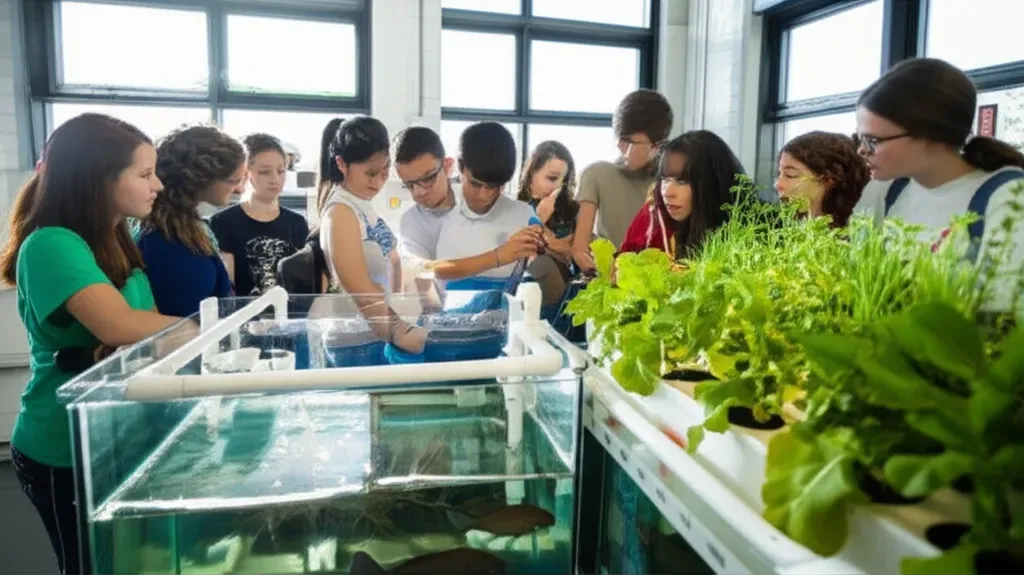
Aquaponics systems in schools combine fish-raising and soil-free plant growing into one closed-loop ecosystem that teaches biology, chemistry, environmental science, and responsibility through daily hands-on interaction. The fish waste feeds the plants, the plants clean the water for the fish, and students witness this symbiotic relationship firsthand, making abstract scientific concepts tangible and memorable (USDA). Well, if you're evaluating whether aquaponics fits your classroom or campus, you're asking the right questions about space, maintenance, and how to keep everything alive during summer break.
Table of Contents
- Why Aquaponics Systems Transform Educational Experiences
- Core Learning Objectives Aquaponics Addresses
- Age-Appropriate Applications by Grade Level
- Choosing the Right System Size and Type for Your School
- Small Classroom Systems (10-20 Gallon)
- Medium Educational Systems (50-100 Gallon)
- Large/Outdoor Systems for School-Wide Programs
- Step-by-Step Setup Process for Educational Aquaponics
- Pre-Setup Planning and Space Preparation
- The Cycling Process and Initial System Stabilization
- Introducing Fish and Plants Safely
- Managing Aquaponics Around School Schedules and Breaks
- Daily and Weekly Maintenance Routines
- Holiday and Summer Break Protocols
- Curriculum Integration and Lesson Planning
- Funding, Administration, and Long-Term Program Sustainability
This guide walks you through system selection, physical setup, schedule management around school calendars, curriculum integration, and funding strategies based on what actually works in educational environments.
Why Aquaponics Systems Transform Educational Experiences
Aquaponics delivers something textbooks can't: a living laboratory where students observe cause-and-effect relationships in real time. When students overfeed fish, they see ammonia levels spike. When they forget to check pH, plants show nutrient deficiency symptoms. These aren't hypothetical scenarios, they're immediate feedback loops that build scientific literacy and accountability.
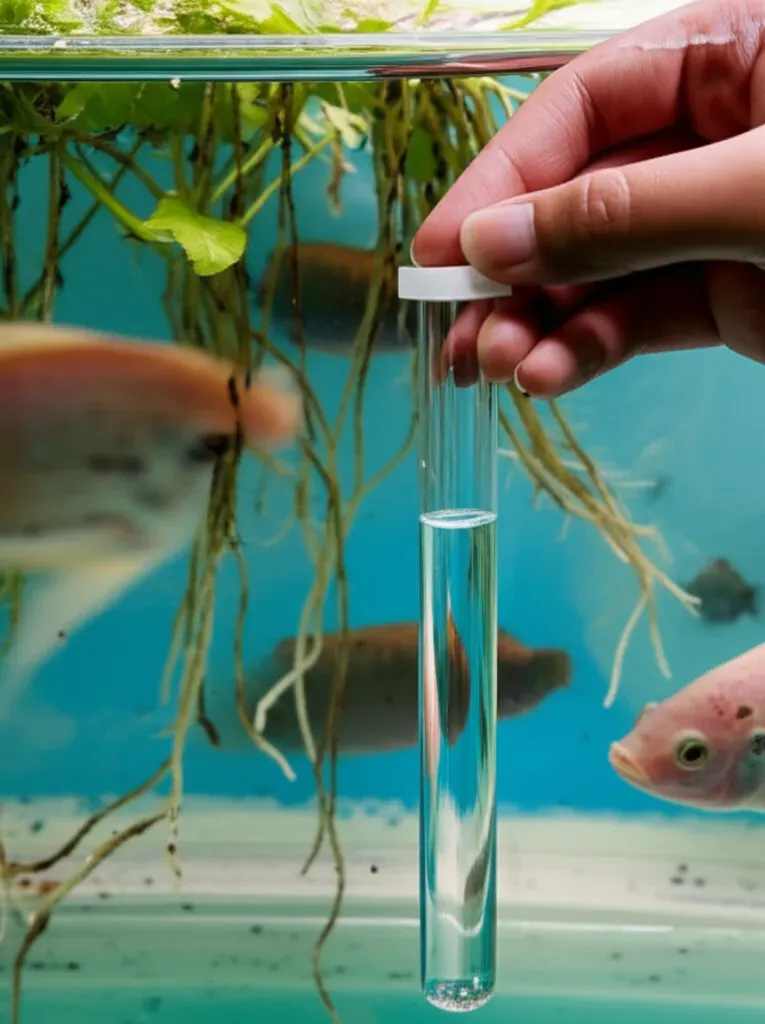
The system naturally integrates multiple disciplines without forced connections. Students measure water volume and calculate fish-to-plant ratios (mathematics), test pH and track nitrogen cycle progression (chemistry), observe ecosystem balance and organism interdependence (biology), and evaluate resource efficiency compared to conventional agriculture (environmental science). According to the University of Florida IFAS Extension, aquaponics offers students the ability to learn about biology, chemistry, physics, mathematics, and the environment through hands-on exploration.
Core Learning Objectives Aquaponics Addresses
The Next Generation Science Standards (NGSS) emphasize systems thinking and crosscutting concepts, exactly what aquaponics demonstrates daily. Students see energy flow through trophic levels, matter cycling through different chemical forms, and stability versus change in ecosystem dynamics. "Aquaponics systems align perfectly with Next Generation Science Standards, particularly the crosscutting concepts of systems thinking and cause-and-effect relationships," says Dr. Michael Timmons, Professor Emeritus of Biological and Environmental Engineering at Cornell University and co-author of Recirculating Aquaculture. "Students engage with authentic scientific practices—forming hypotheses, collecting data, and analyzing results—while managing a functioning ecosystem."
Beyond academic standards, aquaponics builds executive function skills that transfer across contexts. Students develop observation protocols, maintain data logs, troubleshoot system imbalances, and adjust feeding schedules based on evidence. They learn that living systems require consistent care regardless of personal convenience, a lesson that builds responsibility more effectively than any lecture.
Common Core mathematics standards come alive when students calculate dissolved oxygen saturation percentages, graph nitrate concentration over time, or determine optimal stocking density based on grow bed surface area. These aren't contrived word problems; they're necessary calculations that determine whether fish thrive or suffer.
Age-Appropriate Applications by Grade Level
Elementary students (grades K-5) focus on basic organism needs, life cycles, and simple cause-effect relationships. They feed fish on schedules, observe plant growth stages, and learn that animals produce waste that plants can use. The system complexity stays hidden, they experience wonder before mechanisms.
Middle school students (grades 6-8) dig into the nitrogen cycle, understanding how beneficial bacteria convert ammonia to nitrite to nitrate. They test water parameters, graph results, and begin connecting observations to underlying biological processes. This age group can handle weekly maintenance responsibilities with teacher oversight.
High school students (grades 9-12) analyze system efficiency, compare aquaponics to conventional agriculture using quantitative metrics, design experiments testing variables like fish species or plant density, and present findings using scientific communication standards. They can manage systems with minimal supervision and troubleshoot problems independently. A 2019 survey of 340 teachers implementing aquaponics across K-12 classrooms, conducted by the National Science Teaching Association, found that student engagement peaked in grades 6-8, with 87% of middle school teachers reporting increased participation in science activities compared to 64% in elementary grades. High school students (grades 9-12) demonstrated the strongest capacity for independent research, with 73% designing and executing original experiments within their aquaponics systems. The survey revealed that hands-on system responsibilities—rather than passive observation—drove engagement across all grade levels, with schools reporting 40% higher attendance rates in classes featuring active aquaponics management roles.
Choosing the Right System Size and Type for Your School
Your system size should match your program goals, available space, and realistic maintenance capacity, not your enthusiasm level during initial planning. A system that's too ambitious becomes a burden; one that's too small limits learning opportunities and student participation.
Age-Appropriate Aquaponics Learning Outcomes and Responsibilities by Grade Level
| Grade Level | Primary Focus | Key Learning Objectives | System Responsibilities | Teacher Oversight Required |
|---|---|---|---|---|
| Elementary (K-5) | Basic organism needs and life cycles | Organism needs, life cycles, simple cause-effect relationships | Feed fish on schedules, observe plant growth stages | High - constant supervision |
| Middle School (6-8) | Nitrogen cycle and water chemistry | Nitrogen cycle, water parameter testing, connecting observations to biological processes | Weekly maintenance, water testing, data logging | Moderate - weekly oversight |
| High School (9-12) | System efficiency and experimental design | Quantitative analysis, experimental design, scientific communication, system optimization | Independent system management, troubleshooting, original research experiments | Low - minimal supervision |
Consider how many students will interact with the system simultaneously. A 10-gallon desktop system works for teacher demonstrations but frustrates a class of 25 students who can't all observe water testing. A 100-gallon system accommodates small group rotations but requires dedicated floor space and stronger administrative commitment.
Small Classroom Systems (10-20 Gallon)
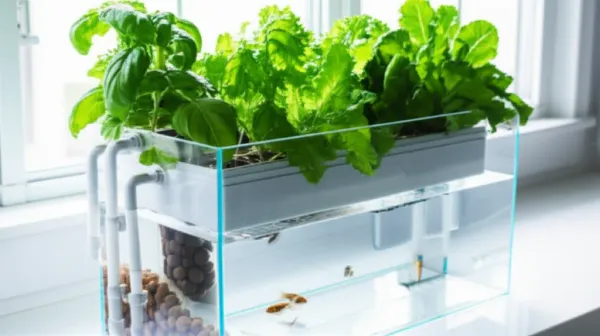
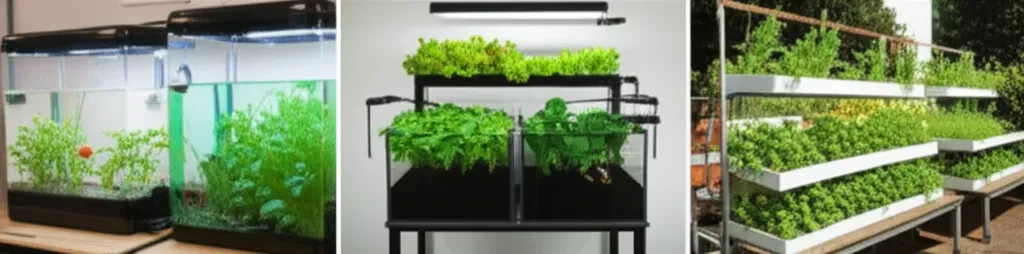
Desktop and countertop systems fit on sturdy tables in standard classrooms, requiring roughly 3-4 square feet of space. These systems typically cost $200-500 and include a small fish tank (5-10 goldfish capacity), a grow bed supporting 4-8 small plants, and a simple pump. They're excellent for testing program viability before larger investments.
The limitations matter, though. Small water volumes fluctuate rapidly in temperature and chemistry, making them less forgiving of missed feedings or maintenance lapses. You'll harvest lettuce and herbs, not tomatoes or peppers. Student participation maxes out at 3-4 active participants at once, so these work best for elementary classrooms with teacher-led demonstrations rather than independent student management.
Honestly, small systems teach the concepts but don't provide the robust, resilient ecosystem that handles the inevitable mistakes students make while learning. If your budget allows, skip directly to medium systems.
Medium Educational Systems (50-100 Gallon)
These systems occupy 10-15 square feet of floor space in dedicated science rooms or labs. Expect costs between $800-2000 depending on whether you build from components or purchase complete educational kits. A 75-gallon system comfortably supports 20-30 fish and 15-25 plant sites, creating enough biological activity that students see meaningful change week-to-week.
The larger water volume buffers against mistakes, if students forget weekend feeding, the system doesn't crash. You can grow substantial crops (peppers, tomatoes, cucumbers) that create tangible harvest events. Multiple student teams can rotate through maintenance responsibilities, and the system remains visible enough for whole-class observation during lessons.
Medium systems require dedicated space that won't be repurposed mid-year. You'll need floor load capacity for 700-900 pounds when filled, access to electrical outlets and water sources within 10 feet, and climate control maintaining 65-78°F year-round (North Dakota State University Extension).
Large/Outdoor Systems for School-Wide Programs
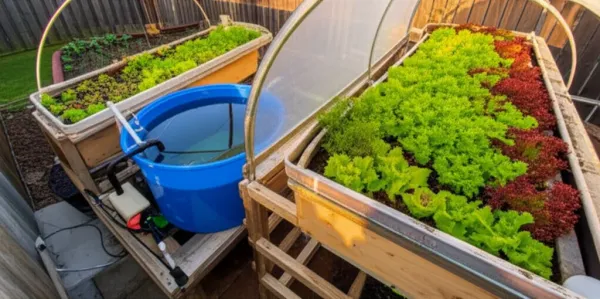
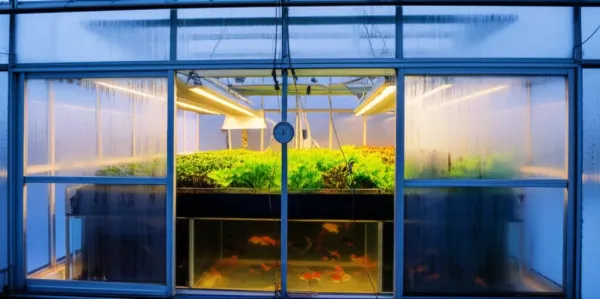
Systems exceeding 200 gallons typically live in greenhouses, outdoor enclosures, or dedicated aquaponics labs. These installations cost $3000-10,000+ and usually require grant funding or significant administrative commitment. They support school-wide programs where multiple classes rotate through, produce meaningful food quantities for cafeterias or donations, and create opportunities for student leadership roles.
The complexity increases substantially. You'll need backup systems for pumps and aeration, potentially aquaculture permits depending on your state, and year-round access for maintenance. Summer management becomes critical, these systems can't simply shut down for three months. I've watched three schools make this leap, and the pattern repeats: they run a successful 100-gallon classroom system for a year, then jump straight to a 500-gallon greenhouse without scaling their maintenance plan. The first school called me in November—their beautiful tilapia were gasping at the surface because nobody had established a weekend feeding rotation, and the single teacher champion was drowning in responsibility. We spent two months building a student leadership team and training facilities staff on emergency protocols before the system stabilized, lessons that now shape how I guide every school through this transition.
Step-by-Step Setup Process for Educational Aquaponics
Setup done right becomes a teaching opportunity; setup rushed becomes a crisis management exercise when students arrive. Plan for 4-6 weeks between physical assembly and student interaction with fish, the nitrogen cycle doesn't care about your curriculum calendar.
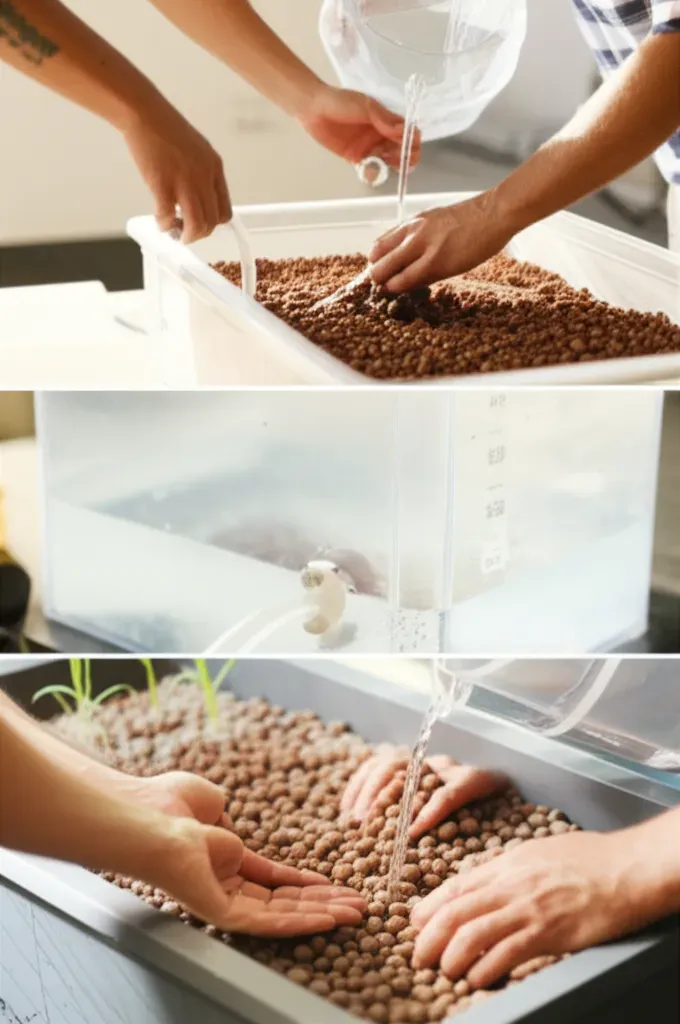
Involve students in appropriate phases, but handle the cycling process before students expect immediate results. Nothing deflates enthusiasm faster than announcing "we'll watch bacteria grow for six weeks" on day one.
Pre-Setup Planning and Space Preparation
Walk your facilities manager through the installation site before purchasing anything. You need electrical outlets within 6 feet (extension cords create trip hazards in classrooms), a water source for weekly top-offs within reasonable hose distance, and flooring that tolerates occasional spills. Tile and sealed concrete work; carpet becomes a mold risk.
Assess natural lighting honestly. South-facing windows provide supplemental light, but most classroom systems need grow lights running 12-14 hours daily. Calculate electrical load, a medium system draws 100-200 watts continuously. Get custodial buy-in early; they'll encounter the system during evening cleaning and need to understand it's not an aquarium they can unplug.
Temperature stability matters more than absolute temperature. A room that swings from 62°F overnight to 78°F during the day stresses fish and slows plant growth. According to North Dakota State University Extension, maintaining consistent water temperature between 70-78°F is crucial for both fish health and plant growth. Avoid locations near exterior doors, heating vents, or windows with direct afternoon sun.
The Cycling Process and Initial System Stabilization
The nitrogen cycle converts toxic ammonia (from fish waste) into nitrite (still toxic), then into nitrate (plant fertilizer). This transformation requires beneficial bacteria colonies that take 4-6 weeks to establish (University of Florida IFAS Extension). You can't skip this phase, but you can make it educational.
Use fishless cycling in school settings: add pure ammonia to the water, test levels every 2-3 days, and have students graph the progression. They'll see ammonia spike, then decline as nitrite appears, then nitrite decline as nitrate rises. This makes invisible microbiology visible through data, and students understand why we waited before adding fish.
Test kits become teaching tools. Students learn that pH between 6.8-7.2 keeps everyone happy, that ammonia above 0.5 ppm indicates problems, and that nitrate accumulation signals it's time to add more plants. Create data sheets that become part of the permanent system record.
Introducing Fish and Plants Safely
Goldfish tolerate beginner mistakes better than any other species, they handle temperature fluctuations, survive occasional overfeeding, and live for years with basic care. Tilapia grow faster and provide better yields, but they require consistent 75-78°F water and die quickly if heaters fail during winter breaks. Start with goldfish unless you have backup systems and year-round access.
Hardy plants for first installations include lettuce varieties, basil, swiss chard, and pak choi. These germinate quickly, tolerate pH variations, and produce harvests within 4-6 weeks. Save tomatoes and peppers for your second growing cycle after you've stabilized the system and built student confidence.
Make fish introduction ceremonial. Students name fish, discuss acclimation procedures (floating bags to temperature-match), and establish feeding protocols. Assign rotating fish monitors who check daily for signs of stress, unusual behavior, or uneaten food accumulation. This builds observation skills and shared responsibility.
Managing Aquaponics Around School Schedules and Breaks
Here's the thing: aquaponics systems don't care about school calendars. Fish need feeding seven days a week, plants require consistent light cycles, and beneficial bacteria die if water stops flowing. Your maintenance plan must address weekends, holidays, and summer break before you fill the first tank.
Most school aquaponics programs fail not from lack of educational value but from inadequate break planning. A system that thrives during the school week crashes over spring break, students return to dead fish and brown plants, and the program ends quietly.
Daily and Weekly Maintenance Routines
Daily tasks take 10 minutes: feed fish once (they'll beg for more, ignore them), observe fish behavior for signs of stress, check that pumps are running and water is flowing, and scan plants for wilting or discoloration. Rotate student teams weekly so everyone learns the routine, but designate a teacher backup who checks systems every afternoon before leaving.
Weekly maintenance requires 30 minutes: test pH, ammonia, nitrite, and nitrate levels, record results in the system log, top off water lost to evaporation and plant transpiration (expect 5-10% weekly), harvest mature plants, and trim dead leaves. This becomes Friday afternoon science lab when students run tests, interpret results, and determine if adjustments are needed.
Monthly deep cleaning includes inspecting pump intakes for debris, cleaning grow bed surfaces where salt deposits accumulate, checking airline connections for leaks, and evaluating fish growth rates against stocking density targets. Every Friday at 2:30 PM, I run what I call the "weekend insurance check"—a five-minute walkthrough that's prevented more disasters than any expensive monitoring equipment. I look for three things: pump vibration (place your hand on it, feel for that steady hum), water level in the sump tank (mark the normal line with tape), and the grow bed's moisture an inch below the surface (stick your finger in). That simple tactile routine caught a partially clogged intake valve one Friday that would've burned out the pump by Monday morning, and it's become the ritual my most successful school programs have adopted religiously.
Holiday and Summer Break Protocols
Two-week breaks (winter holidays, spring break) require automatic feeders programmed for once-daily feeding at reduced amounts. Fish can safely fast for 3-4 days, but longer periods stress them. According to North Dakota State University Extension, automatic fish feeders can be programmed to dispense food regularly during weekends and short school breaks. Reduce feeding to 75% of normal amounts since cooler buildings lower fish metabolism.
Recruit a staff member or parent volunteer for mid-break check-ins. They need a simple checklist: confirm pumps are running, verify automatic feeder is dispensing, top off water if needed, and contact you immediately if fish appear distressed or equipment has failed. Offer a small stipend or volunteer hours credit, this responsibility deserves recognition.
Summer break presents three options, and your choice depends on system size and available support. Complete shutdown works for small systems: harvest all plants, donate fish to students or local aquarium stores, drain and clean everything, and restart in September. Minimal maintenance requires weekly visits from summer staff or dedicated volunteers who feed fish and maintain basic functions, this works only if you have committed help. Summer program integration turns the system into a summer school or camp teaching tool, ideal for large systems that justify dedicated programming.
Plan summer strategy in March, not June.
Aquaponics System Size Comparison for Educational Settings
| System Type | Tank Volume | Best For | Space Requirements | Maintenance Time/Week | Student Capacity |
|---|---|---|---|---|---|
| Small Classroom | 10-20 gallons | Single classrooms, elementary observation | Desktop or small corner (2-3 sq ft) | 30-45 minutes | 15-25 students |
| Medium Educational | 50-100 gallons | Middle school programs, multiple classes | Classroom corner or small dedicated space (8-12 sq ft) | 1.5-2.5 hours | 30-60 students |
| Large/Outdoor | 200+ gallons | School-wide programs, campus integration | Dedicated greenhouse or outdoor area (20+ sq ft) | 3-5 hours | 100+ students across rotation |
Curriculum Integration and Lesson Planning
The most successful school aquaponics programs don't treat the system as an add-on but weave it into existing curriculum requirements. Students aren't just "doing aquaponics", they're meeting learning standards through aquaponics as the teaching tool.
Map your state's science standards to specific system observations and measurements. Photosynthesis becomes visible when students track plant growth rates under different light intensities. Ecosystem interdependence isn't abstract when students see how reduced fish feeding affects plant growth two weeks later. Chemical reactions matter when pH swings cause nutrient lockout and students must diagnose the problem.
Mathematics integration happens naturally through data collection and analysis. Students calculate fish feeding amounts as percentages of body weight, determine grow bed volume in gallons and liters, graph water parameter trends over time, and compute system efficiency by comparing input costs to harvest value. These aren't forced connections, they're necessary calculations for system management.
Create assessment rubrics that credit both process and outcomes. Students earn points for consistent data recording, accurate water testing, thoughtful troubleshooting hypotheses, and clear scientific communication, not just for keeping everything alive. Systems will experience problems; how students respond to challenges demonstrates deeper learning than perfect results.
Develop student roles that rotate monthly: system managers who oversee daily operations, data analysts who maintain logs and create graphs, harvest coordinators who determine when plants are ready and distribute produce, and equipment monitors who check pumps and lights. This distributes responsibility and ensures students experience different aspects of system management. Research from the University of Arizona's Controlled Environment Agriculture Center (2021) compared student learning outcomes between fixed-role assignments and weekly rotation schedules in 28 middle school aquaponics programs. Students in rotation systems demonstrated 34% higher retention of nitrogen cycle concepts and scored 28% better on water chemistry assessments than peers with fixed responsibilities. The study found that students who experienced all system roles—fish feeding, plant maintenance, water testing, and harvest—developed more comprehensive troubleshooting skills, correctly diagnosing system problems 2.3 times more often than students who specialized in single tasks. Rotation schedules also reduced absenteeism impact, as multiple students could cover each critical function when team members were absent.
Connect to broader food systems education by having students research where school cafeteria food originates, calculate water usage for conventional lettuce production versus aquaponics lettuce, or interview local farmers about sustainable agriculture practices. The aquaponics system becomes a springboard for understanding food security, resource conservation, and agricultural innovation.
Funding, Administration, and Long-Term Program Sustainability
Initial system costs represent only 40-50% of first-year expenses. Budget for fish food, replacement fish, seeds and seedlings, grow media, water testing supplies, electricity, and inevitable equipment replacements. A medium system costs $800-1200 annually to operate after initial setup.
Grant funding supports most school aquaponics installations. Look for opportunities through environmental education programs, STEM education initiatives, farm-to-school grants, and local agricultural extension offices. The USDA and state departments of agriculture often fund innovative agricultural education projects. Write grant applications emphasizing measurable learning outcomes, curriculum alignment, and student engagement rather than just describing the cool technology.
Administrative support determines program longevity more than any other factor. Schedule a presentation for principals and curriculum directors showing how aquaponics addresses multiple learning standards simultaneously, requires minimal classroom space compared to traditional labs, and creates unique student engagement opportunities. Bring data from existing programs showing improved science test scores and increased student interest in STEM fields. "The key to administrative approval is demonstrating how the program supports existing curriculum standards rather than adding another standalone project," says Sylvia Bernstein, founder of The Aquaponic Source and author of Aquaponic Gardening. "When principals see clear connections to required learning objectives and measurable assessment opportunities, aquaponics shifts from 'nice to have' to 'strategic educational investment.'"
Build sustainability into program design from the start. Train multiple teachers so the program doesn't collapse when one person leaves. Document all procedures in a shared manual that new staff can follow. Create student leadership positions where experienced students train incoming students. Establish relationships with local aquaponics practitioners or university extension agents who can provide technical support when problems arise.
Consider partnering with community organizations, local businesses, or parent groups who can provide volunteer support during breaks, donate supplies, or offer expertise. The system becomes a community asset rather than one teacher's project, creating resilience against staff changes and budget fluctuations.
Start small, document success, then expand. A thriving 20-gallon desktop system generates more administrative support for a future 100-gallon system than a struggling large installation that becomes a maintenance burden. Prove the educational value before scaling up, and you'll build the institutional support that sustains programs for decades.
Related Articles
- How Does an Aquaponics System Work? The Complete Cycle Explained
- DIY Aquaponics Systems: Complete Build Guide for Beginners
- Best Fish for Aquaponics Systems: Complete Species Guide
- Growing Vegetables in Aquaponics: What Works Best & How
- Aquaponics System Design: Planning Your Perfect Setup
- Aquaponics System Parts & Components: Complete Checklist
Frequently Asked Questions
How do I keep an aquaponics system running during summer break when students aren't at school?
Implement automated feeders and timers for water circulation, reduce fish stocking density before break to lower maintenance needs, and recruit volunteer staff or student leaders to check the system weekly. Alternatively, lower water temperature slightly to reduce fish metabolism and plant growth rates, minimizing daily care requirements during extended closures.
What's the minimum space required to set up an aquaponics system in a classroom?
A small 10-20 gallon system requires approximately 2-3 square feet of floor or table space and works well for classroom environments. Medium 50-100 gallon systems need 4-6 square feet, while larger outdoor systems require dedicated garden space but offer school-wide educational opportunities.
How long does it take for an aquaponics system to be ready for fish and plants?
The cycling process typically takes 4-6 weeks for beneficial bacteria to establish and stabilize nitrogen levels before introducing fish and plants. During this period, you'll monitor ammonia, nitrite, and nitrate levels daily to ensure the system is safe for aquatic life.
What grade levels are best suited for aquaponics education?
Elementary students (K-5) learn basic organism needs and life cycles, middle school students (6-8) explore the nitrogen cycle and water chemistry, and high school students can manage complex system optimization and environmental analysis. Each level engages with age-appropriate concepts while using the same system.
How much does it cost to set up an aquaponics system for a school?
Small classroom systems cost $300-800, while medium educational systems range from $1,500-3,500. Large outdoor systems can exceed $5,000, but grants from USDA programs, science education foundations, and local agriculture departments often cover 50-100% of startup costs.
What daily and weekly maintenance tasks are required to keep the system healthy?
Daily tasks include feeding fish on a consistent schedule and visually checking system components. Weekly tasks involve testing water pH and ammonia levels, removing dead plant material, and monitoring fish behavior for signs of stress or disease.
Can aquaponics systems align with Common Core and Next Generation Science Standards?
Yes, aquaponics directly supports NGSS crosscutting concepts like systems thinking and cause-and-effect relationships, while Common Core mathematics standards apply through calculations of dissolved oxygen saturation, graphing nutrient concentration data, and determining optimal stocking density.
What fish and plants work best for educational aquaponics systems?
Tilapia and goldfish are hardy, fast-growing fish suitable for educational settings, while leafy greens like lettuce, spinach, and basil thrive in aquaponics with minimal special care. Choose species that tolerate temperature fluctuations and provide visible growth results for student motivation.