Indoor Aquaponics Systems: Complete Setup & Maintenance Guide
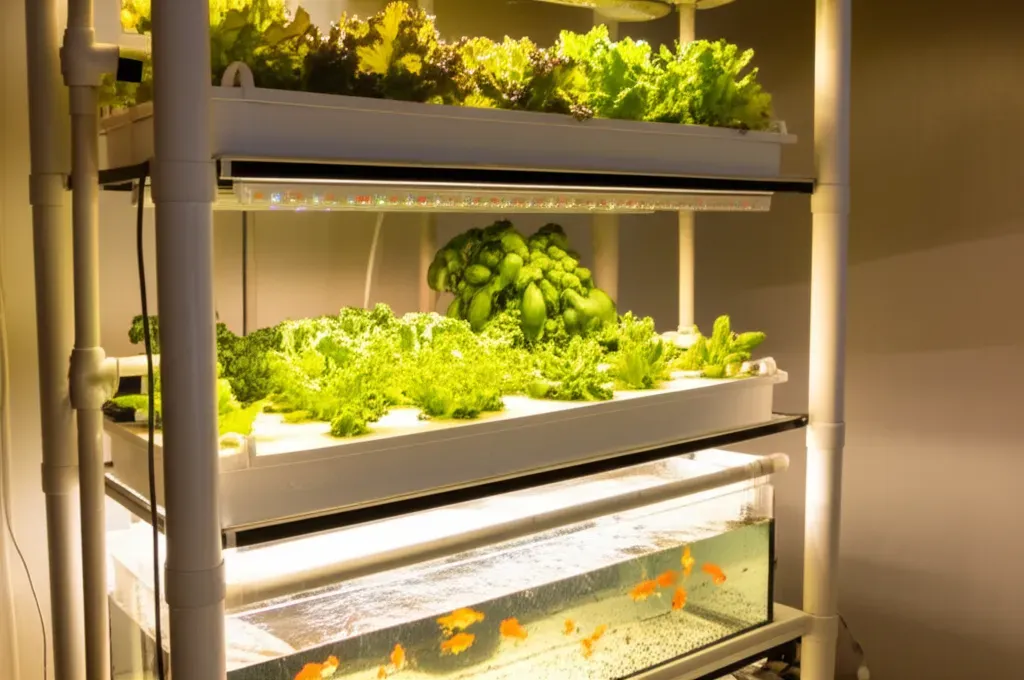
Indoor aquaponics systems combine fish farming and soilless plant cultivation in a closed-loop environment where fish waste feeds plants while plants filter water for fish. This guide walks you through selecting, assembling, and maintaining your first system with realistic timelines and beginner-friendly methods that work in spare rooms, basements, or sunrooms.
Table of Contents
- Understanding Indoor Aquaponics: How the System Works
- The Natural Cycle Explained Simply
- Why Indoor Aquaponics Appeals to Mature Gardeners
- Setting Realistic Expectations
- Planning Your First Indoor Aquaponics System
- Choosing the Right Location in Your Home
- System Size and Type Selection
- Budget Planning: What to Expect to Spend
- Complete Component List and Setup Instructions
- Essential Components You'll Need
- Step-by-Step Assembly Process
- Accessibility Modifications for Easier Maintenance
- Cycling Your System and Introducing Fish
- The Cycling Process: Building Beneficial Bacteria
- Selecting and Introducing Your First Fish
- Recognizing When Your System Is Ready for Plants
- Selecting Plants and Ongoing Maintenance Routines
- Best Plants for Beginning Indoor Systems
- Daily and Weekly Maintenance Tasks
- Feeding Schedules and Water Parameter Management
- Troubleshooting Common Problems and Long-Term Success
- Identifying and Fixing Water Quality Issues
- Dealing with Pests and Plant Diseases Indoors
- Expanding Your System and Advanced Techniques
Many growers discover that indoor systems offer advantages traditional gardening can't match, year-round harvests regardless of weather, no soil-borne diseases, and the satisfaction of producing both protein and vegetables from one integrated ecosystem.
Understanding Indoor Aquaponics: How the System Works
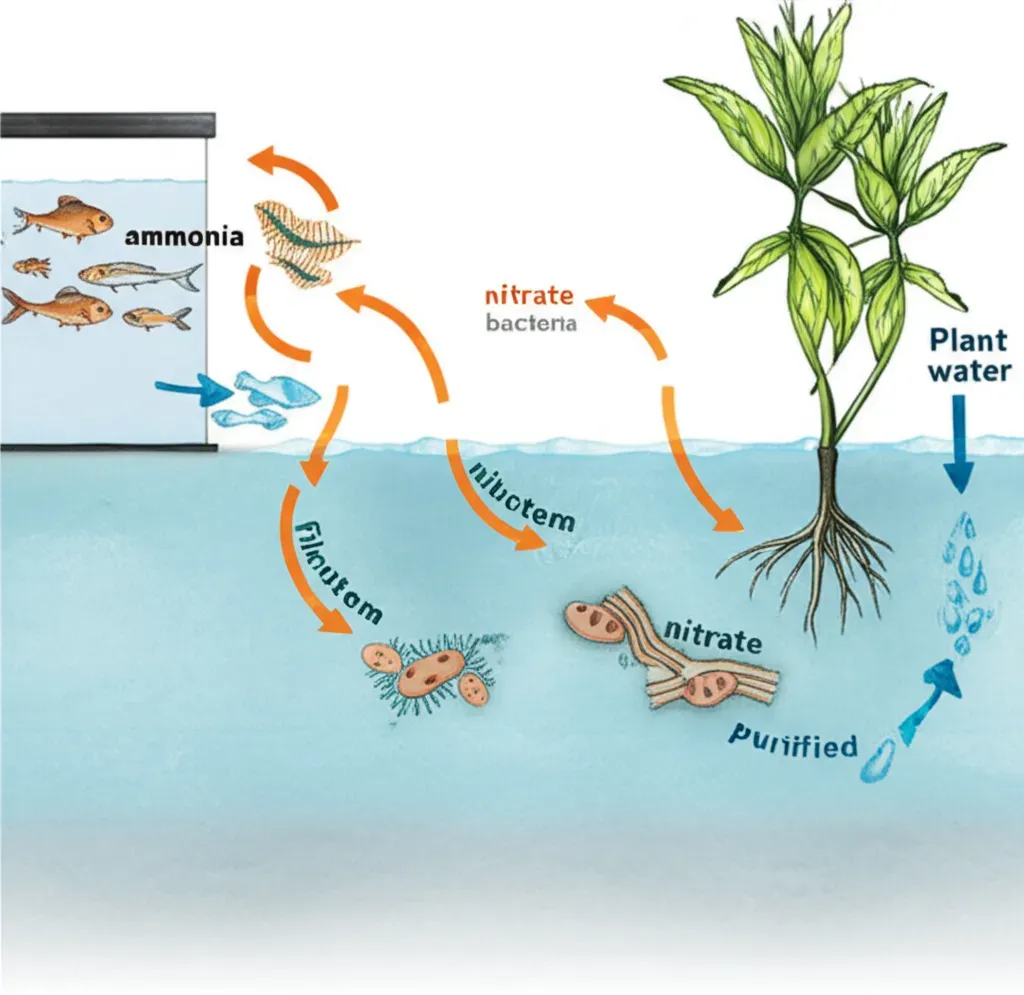
Aquaponics merges aquaculture (raising fish in tanks) with hydroponics (growing plants without soil) in a symbiotic environment where each component supports the others (USDA National Agricultural Library). Fish produce ammonia-rich waste through respiration and excretion, beneficial bacteria convert that ammonia into nitrates, and plants absorb those nitrates as fertilizer while simultaneously purifying the water that cycles back to the fish tank.
The Natural Cycle Explained Simply
Think of the nitrogen cycle as a three-stage relay race happening continuously in your system. Fish release ammonia into the water, the same compound that makes dirty aquariums smell sharp and burns fish gills at high concentrations. Nitrosomonas bacteria colonize every wet surface in your system and convert ammonia into nitrite, which is still toxic but less immediately dangerous. Then Nitrobacter bacteria complete the handoff by transforming nitrite into nitrate, the form of nitrogen that plants readily absorb through their roots.
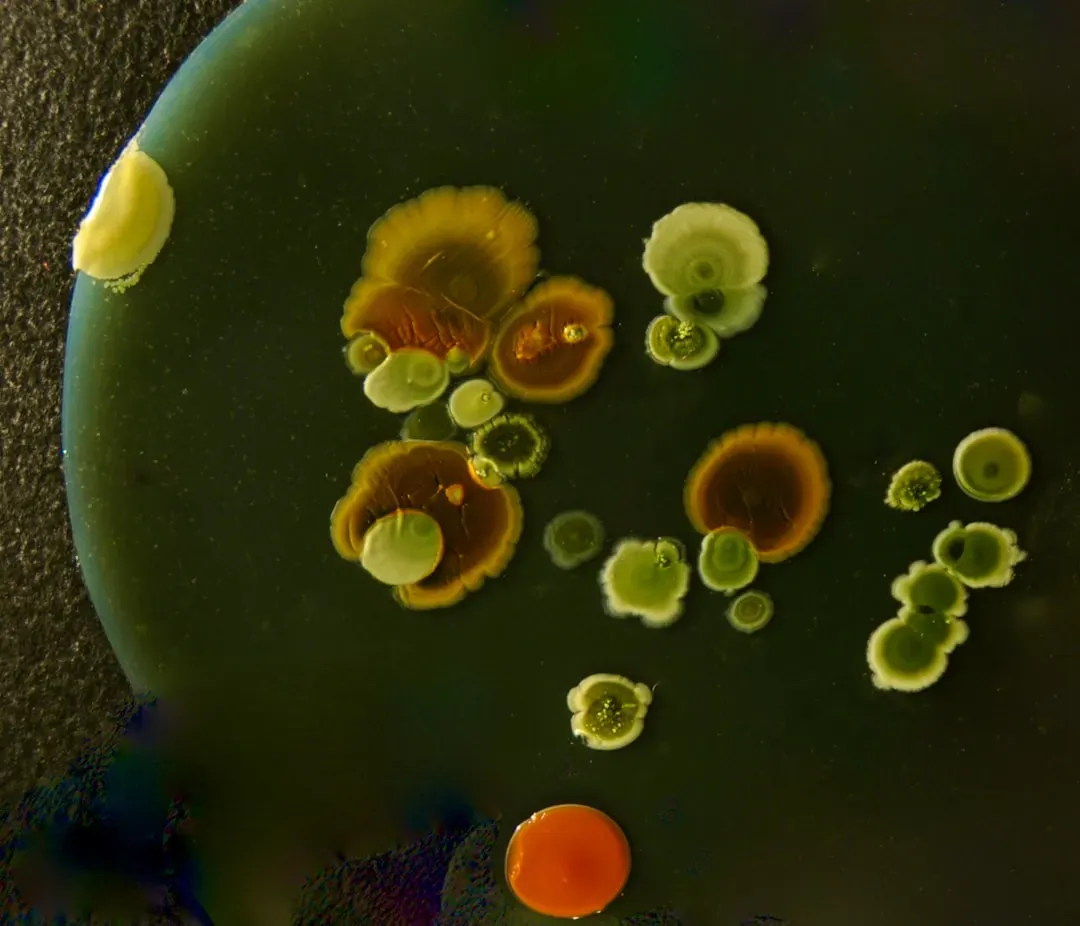
This biological filtration happens naturally in lakes and streams, you're simply concentrating it into a controlled indoor space. The bacteria form sticky biofilm colonies on your grow media, tank walls, and pipe surfaces, building an invisible workforce that processes waste 24 hours daily without electricity or intervention once established.
Why Indoor Aquaponics Appeals to Mature Gardeners
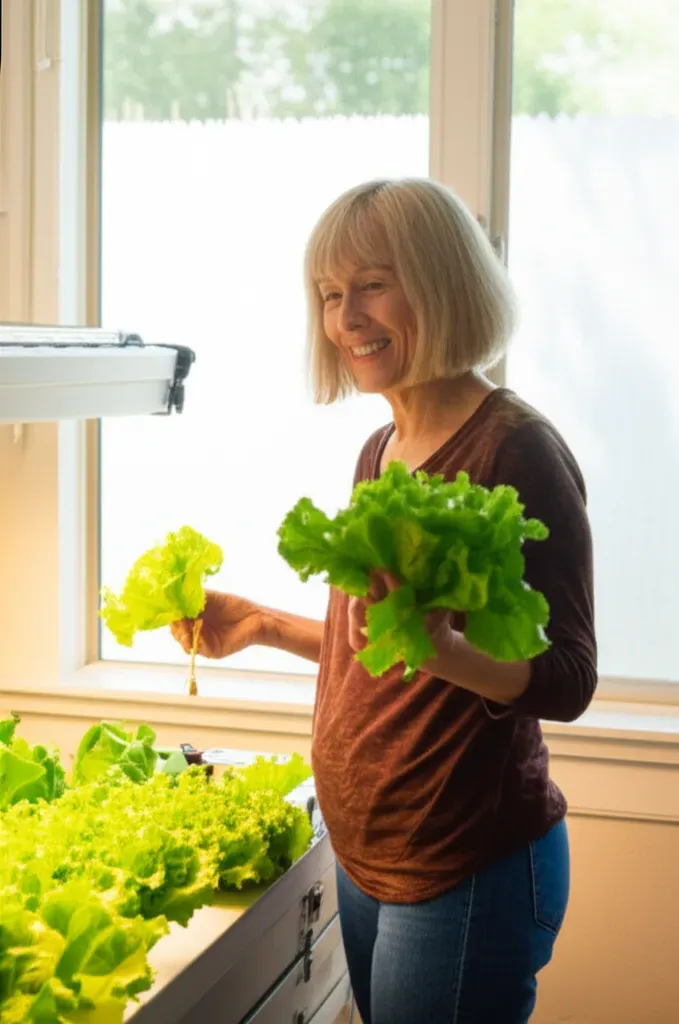
If you've spent decades hauling bags of potting soil or kneeling in garden beds, the ergonomic advantages become immediately apparent. Systems can be built at waist height to eliminate bending, well, and there's no seasonal shutdown forcing you to abandon your hobby for four months each winter. The water does the heavy lifting, literally circulating nutrients to plant roots without you mixing, spreading, or composting amendments.
Indoor climate control means you're growing basil in January and lettuce in July without fighting temperature extremes. The daily routine of checking fish behavior, testing water parameters, and harvesting mature plants provides cognitive engagement and physical activity without the joint stress of traditional gardening (University of Hawaii). I built my first waist-high system at 52 after my knees started protesting every spring planting session, and the difference felt revolutionary within a week. No more crawling between rows or struggling upright with a hand trowel—I now harvest lettuce and check fish health while standing comfortably, coffee cup in hand, exactly as I'd examine houseplants on a shelf.
Setting Realistic Expectations
Your system won't produce harvestable vegetables for 6-8 weeks after you fill the tank, 4-6 weeks for bacterial cycling plus 2-4 weeks of plant growth (University of Hawaii). First-year yields typically run 30-40% below what experienced growers achieve because you're still learning to read your system's signals and optimize feeding schedules.
A 20-gallon starter system occupies about 4 square feet of floor space and might yield 2-3 pounds of lettuce monthly once established, not the grocery-replacing quantities some promotional materials suggest. These are functional food gardens, not commercial operations, and setting modest initial goals prevents the discouragement that causes many beginners to quit before their systems mature.
Planning Your First Indoor Aquaponics System
Location selection determines whether your system becomes a daily joy or a maintenance burden you avoid. The right spot balances structural requirements, environmental conditions, and your own access patterns, because a system placed inconveniently gets neglected even when it's performing perfectly.
Choosing the Right Location in Your Home
Basements offer temperature stability and floor strength for larger systems, but consider whether you'll actually visit daily if it requires descending stairs with feed buckets and harvest containers. Spare bedrooms provide convenient access but may need floor reinforcement, a 50-gallon system weighs 450+ pounds when filled, exceeding the load capacity of some second-story floors built to minimum code.
Sunrooms deliver free lighting but create temperature swings that stress both fish and plants unless you add supplemental climate control. Evaluate electrical outlet locations before committing to a spot, your pump and aerator run continuously and extension cords across walkways create tripping hazards. Proximity to a water source matters more than you'd expect, carrying 5-gallon buckets for weekly top-offs gets old quickly, especially if your system is two rooms away from the nearest sink.
System Size and Type Selection
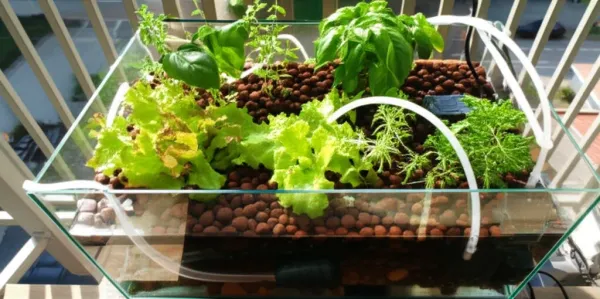
Media bed systems are generally recommended for beginners because they provide biological filtration, mechanical filtration, and plant support in one simple component (University of Maryland Extension). The grow bed filled with expanded clay pebbles or gravel sits above the fish tank, water pumps up to flood the media, then drains back down carrying dissolved oxygen to the fish.
Start with a 10-20 gallon fish tank paired with an equal-volume grow bed, compact enough to manage easily but large enough that water parameters remain stable. Deep water culture (DWC) systems where plant roots float in rafts look appealing but require separate filtration components, and nutrient film technique (NFT) systems with plants in channels demand precise flow rates that frustrate beginners troubleshooting their first setup.
Budget Planning: What to Expect to Spend
A functional starter system costs $200-400 if you source components individually, $400-600 for a complete kit with instructions and properly sized parts. That initial investment includes the tank, grow bed, water pump ($30-50), air pump and stones ($20-30), plumbing fittings ($25-40), grow media ($30-60), and water testing kit ($25-35).
Ongoing monthly costs run $15-25 for fish food, $3-5 for electricity to run pumps continuously, and occasional replacement of testing reagents. Many growers discover that starting seeds indoors and using collected rainwater for top-offs reduces recurring expenses significantly, though municipal tap water works fine if you let chlorine dissipate for 24 hours before adding it to the system.
Complete Component List and Setup Instructions
Gathering all components before starting assembly prevents frustrating mid-project trips to hardware stores. Organizing parts by installation sequence and working at comfortable table height makes the process manageable even if you've never assembled aquarium equipment or plumbing connections.
Indoor Aquaponics System Size and Yield Comparison
| System Size | Floor Space Required | Fish Capacity | Monthly Lettuce Yield | Setup Cost Range | Best For |
|---|---|---|---|---|---|
| 20-gallon starter | 4 sq ft | 4-6 fish | 2-3 lbs | $300-500 | First-time growers, limited space |
| 50-gallon intermediate | 9-12 sq ft | 10-15 fish | 5-8 lbs | $600-1000 | Experienced beginners, families |
| 100-gallon advanced | 16-20 sq ft | 25-30 fish | 12-18 lbs | $1200-2000 | Serious hobbyists, commercial interest |
Essential Components You'll Need
The fish tank forms your system's foundation, a 20-gallon aquarium provides adequate volume for 3-5 goldfish while remaining light enough to move when empty. Your grow bed should match or slightly exceed tank volume and needs drainage holes drilled in the bottom if you're repurposing a storage container rather than buying a purpose-built unit.
Water pumps are rated in gallons per hour (GPH), select one that cycles your total system volume once per hour, so a 40-gallon system needs a 40 GPH pump minimum. Air pumps oxygenate the fish tank with a different mechanism than water pumps, look for units rated for your tank size with adjustable flow valves. Growing medium choices include expanded clay pebbles (lightweight, reusable, pH-neutral) or pea gravel (inexpensive but heavy), avoid materials that alter water chemistry like limestone or shells.
Plumbing connections require flexible tubing to link pump to grow bed, rigid PVC pipe for the drain standpipe, and waterproof sealant for any holes drilled through containers. A master test kit measuring pH, ammonia, nitrite, and nitrate costs $25-35 and remains essential for the system's entire lifespan, not just the initial cycling period.
Step-by-Step Assembly Process
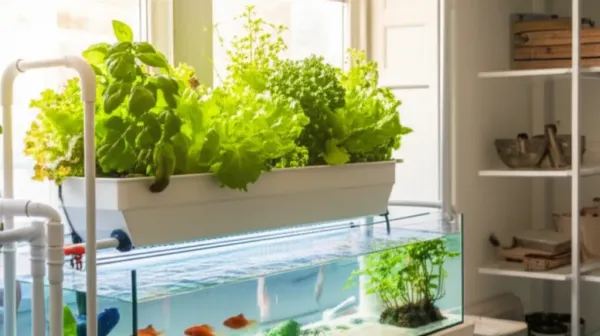
Position your fish tank on a sturdy stand at the height you'll comfortably observe fish behavior, eye level when seated works well for extended viewing sessions. Place the grow bed directly above the tank if space allows, or beside it if vertical stacking seems unstable, the pump will move water upward regardless of configuration.
Install the water pump in the fish tank with intake facing away from where fish congregate, then run tubing up to the grow bed inlet. Drill or cut your grow bed drain hole and insert the standpipe, this sets your flood level and should position the water line 1-2 inches below the media surface when the bed fills. Connect the drain tube so water returns to the fish tank, creating a complete circuit.
Add your air pump outside the tank with airline tubing running to airstones positioned on the tank bottom. Fill the grow bed with rinsed media, clay pebbles need multiple rinses to remove manufacturing dust that clouds water. Before adding fish or starting the cycling process, run the system with plain water for 24 hours to verify all connections hold and pumps function correctly, this test run reveals leaks when fixing them requires only mopping rather than emergency fish rescue.
Accessibility Modifications for Easier Maintenance
Building your system on a platform 30-36 inches high allows seated work without bending to floor level. Replace standard valve handles with large lever-style controls if arthritis makes small knobs difficult to grip. Label all components clearly with waterproof tags, "Main Pump," "Air Supply," "Drain Valve", because troubleshooting at midnight when something sounds wrong is stressful enough without guessing which switch controls what.
Consider installing a permanent step stool if your grow bed sits above shoulder height, reaching into deep beds to harvest plants or clear debris becomes awkward quickly. I've seen growers struggle with tight valve placements until 2 AM when a pump fails and arthritic fingers can't grip the shutoff—that's when good design choices prove their worth. After installing lever-style ball valves and adding glow-in-the-dark labels to my own system, I could execute emergency procedures in under 90 seconds even half-asleep, which saved my tilapia during a power outage last winter.
Cycling Your System and Introducing Fish
The cycling process builds populations of beneficial bacteria that convert toxic ammonia into plant-usable nitrate, rushing this phase by adding fish too early results in sick or dead fish and weeks of setbacks. Patience during cycling determines whether your system thrives or becomes a frustrating problem generator.
The Cycling Process: Building Beneficial Bacteria
Fishless cycling introduces an ammonia source without risking live animals while bacteria colonies establish themselves. Add pure ammonia solution (available at hardware stores, avoid versions with surfactants or fragrances) to reach 2-4 parts per million (ppm) in your system, then test daily as bacteria populations grow and begin processing that ammonia into nitrite, then nitrate.
The cycling process typically takes 3-6 weeks depending on water temperature, with warmer water (75-80°F) accelerating bacterial reproduction (University of Hawaii). You'll see ammonia levels drop first as Nitrosomonas bacteria establish, then nitrite will spike and gradually decline as Nitrobacter bacteria catch up to convert it into nitrate. The system is cycled when you can add ammonia to 2 ppm and see it convert completely to nitrate within 24 hours with no ammonia or nitrite remaining.
Test daily during cycling using your master test kit, it seems tedious but those measurements tell you exactly what's happening inside your system and prevent the guesswork that leads to premature fish introduction.
Selecting and Introducing Your First Fish
Goldfish are an excellent alternative fish species for aquaponics, especially for hobbyists and in areas where tilapia are prohibited (University of Arkansas Extension). They tolerate the parameter fluctuations common in new systems, remain active and visible for daily health checks, and thrive in the 65-75°F temperatures comfortable in most homes.
Purchase healthy fish from reputable suppliers, look for active swimming, clear eyes, intact fins, and no visible spots or lesions. Stock conservatively at first, one pound of fish per 5-10 gallons of water gives your bacterial colonies time to adjust to the new waste load (University of Maryland Extension). For a 20-gallon tank, that means 2-4 small goldfish initially, you can increase population later once you've confirmed the system handles the bioload.
Acclimate new fish by floating their transport bag in your tank for 15 minutes to equalize temperature, then gradually add tank water to the bag over another 15 minutes before releasing them. Feed sparingly for the first week, one small pinch daily, while monitoring ammonia levels to ensure your bacterial colonies keep pace with the new waste production.
Recognizing When Your System Is Ready for Plants
Plant introduction can begin once nitrate readings appear consistently and ammonia plus nitrite both measure below 0.5 ppm. This typically occurs 1-2 weeks after adding fish, though some growers start seedlings in the grow bed during the final week of fishless cycling since young plants tolerate slight ammonia exposure better than fish.
Begin with hardy seedlings rather than seeds, lettuce, basil, and Swiss chard transplant easily and establish quickly in new systems. Seeds germinate unpredictably in cycling systems where parameters still fluctuate, seedlings give you visible growth to confirm the system is functioning while you're still learning to interpret water test results.
Selecting Plants and Ongoing Maintenance Routines
Plant selection determines how much nutrition your system needs to provide and how frequently you'll harvest. Starting with leafy greens and herbs builds confidence before attempting fruiting plants that demand higher nutrient levels and more mature systems.
Best Plants for Beginning Indoor Systems
Leafy green vegetables such as lettuce, pak choi, kale, and Swiss chard, as well as culinary herbs like basil, parsley, and coriander are well suited to aquaponic systems (University of Hawaii). These plants thrive in the nutrient levels a lightly stocked fish tank produces and mature quickly, lettuce reaches harvest size in 4-6 weeks, providing regular rewards while you're still mastering system management.
Herbs offer continuous harvesting where you remove outer leaves while the plant keeps growing, creating a perpetual supply rather than the one-time harvest of head lettuce. Avoid fruiting plants like tomatoes and peppers in your first six months, they require supplemental nutrients beyond what fish waste provides and their larger root systems complicate grow bed maintenance.
Space plants according to mature size, not seedling dimensions. Lettuce needs 6-8 inches between plants, basil wants 8-10 inches, and overcrowding creates competition that reduces yields across all plants rather than maximizing production from available space.
Daily and Weekly Maintenance Tasks
Daily routines take 5-10 minutes once you develop efficient patterns. Check that pumps are running by listening for water flow and observing movement, feed fish once or twice daily with only what they consume in 3-5 minutes, and visually inspect plants for signs of pest damage or nutrient deficiency. Honestly, this daily observation teaches you more about system health than any amount of testing.
Weekly tasks include testing water parameters (pH, ammonia, nitrite, nitrate), topping off water lost to evaporation and plant transpiration (typically 5-10% of system volume), and removing any dead leaves from the grow bed before they decompose and create water quality issues. Monthly deep maintenance involves cleaning pump intake screens, checking all plumbing connections for developing leaks, and harvesting any fish waste solids that accumulate in tank corners.
Feeding Schedules and Water Parameter Management
Fish feeding directly controls nutrient input to your plants, more food means more waste, which converts to more nitrate for plant growth. Start with commercial fish pellets fed at 1-2% of total fish body weight daily, split into two feedings if possible to maintain stable nutrient levels rather than creating spikes.
Water parameters should stabilize within ranges once your system matures: pH 6.8-7.2, ammonia and nitrite both at 0 ppm, and nitrate 10-40 ppm. If nitrate climbs above 80 ppm, your plants aren't consuming nutrients as fast as fish produce them, add more plants or reduce feeding slightly. If nitrate stays below 5 ppm, increase feeding gradually or add more fish once you've confirmed your system can handle the bioload.
Troubleshooting Common Problems and Long-Term Success
Every system develops quirks that require interpretation and adjustment. Learning to recognize early warning signs prevents minor issues from cascading into system crashes that set your progress back weeks.
Best Beginner Plants for Indoor Aquaponics Systems
| Plant Type | Days to Harvest | Water Depth Required | Light Requirements | Difficulty Level | Yield per Plant |
|---|---|---|---|---|---|
| Lettuce (leaf varieties) | 30-45 days | 6-8 inches | 12-14 hrs/day | Very Easy | 0.5-1 lb |
| Basil | 21-30 days | 6-8 inches | 14-16 hrs/day | Easy | 0.25-0.5 lb |
| Spinach | 40-50 days | 6-8 inches | 12-14 hrs/day | Easy | 0.5-0.75 lb |
| Chard | 45-60 days | 8-10 inches | 12-14 hrs/day | Easy | 0.75-1.5 lbs |
| Tomatoes (dwarf) | 60-80 days | 12 inches | 14-16 hrs/day | Moderate | 2-4 lbs per plant |
| Peppers (compact) | 70-90 days | 10-12 inches | 14-16 hrs/day | Moderate | 1-2 lbs per plant |
Identifying and Fixing Water Quality Issues
Cloudy water indicates bacterial bloom (usually harmless and temporary during cycling) or suspended particles from new grow media that wasn't rinsed adequately. Green water signals algae growth from excess light, reduce photoperiod or block light from reaching the fish tank. Foul odors mean anaerobic decomposition in areas with insufficient oxygen, check that your air pump is functioning and water is circulating through all system zones.
pH drift occurs naturally as the nitrogen cycle produces acidic byproducts. If pH drops below 6.5, add calcium carbonate or potassium carbonate in small increments, 1 teaspoon per 10 gallons, then retest after 24 hours. Sudden pH swings stress fish more than gradual changes, so adjust slowly over several days rather than trying to correct in one dose.
Dealing with Pests and Plant Diseases Indoors
Indoor systems face fewer pest pressures than outdoor gardens, but aphids and fungus gnats still find their way to plants. Manual removal works for small infestations, spray aphids off with water or wipe them away with a damp cloth. Yellow sticky traps catch fungus gnats before populations explode, and reducing grow bed surface moisture by lowering flood levels slightly makes the environment less hospitable to their larvae.
Avoid chemical pesticides entirely in aquaponics systems, anything that kills insects also threatens your fish and beneficial bacteria. Powdery mildew and other fungal diseases respond to improved air circulation and reduced humidity, add a small fan to move air across plant canopies if you notice white patches developing on leaves. "The closed environment of indoor aquaponics actually works in your favor for pest management—you can monitor every plant daily and catch problems when they're just a few insects," says Dr. Nate Storey, Chief Science Officer at Plenty Unlimited and aquaponics researcher. "The key is never letting a small problem become a large one, because you don't have the beneficial insect populations that outdoor systems develop naturally."
Expanding Your System and Advanced Techniques
Once you've maintained stable water parameters for three consecutive months and harvested multiple plant cycles successfully, you're ready to consider system expansion. Adding a second grow bed to your existing fish tank increases plant production without requiring more fish or additional filtration, the established bacterial colonies simply colonize the new surfaces.
Advanced techniques like supplementing iron and other micronutrients, experimenting with fruiting plants, or adding specialty fish species become approachable once you've mastered the fundamentals. Many growers discover that their second system performs better than their first because they've learned to read subtle signals and make small corrections before problems develop into crises. Research from the University of the Virgin Islands' aquaponics program demonstrates that mature systems can support a 2:1 ratio of grow bed surface area to fish tank volume without compromising water quality, effectively doubling your harvest capacity from the same fish population. A 2019 study published in Aquaculture Engineering found that established biofilter communities reach maximum nitrification efficiency after 90-120 days of operation, creating a resilient bacterial foundation that adapts quickly to increased nutrient loads from expanded growing areas. This biological stability means your three-month-old system has developed the microbial infrastructure to handle additional plant biomass—the bacteria will simply multiply across new media surfaces to match the increased ammonia processing demands.
The transition from beginner to competent practitioner happens gradually through daily observation and small adjustments, there's no substitute for time spent watching your specific system's patterns and responding to what you see rather than following rigid schedules. Start your first system with realistic expectations, commit to the daily routine during the critical first six months, and you'll develop the intuition that separates thriving systems from abandoned experiments.
Related Articles
- Complete Guide to Aquaponics Systems: How They Work & Getting Started
- How Does an Aquaponics System Work? The Complete Cycle Explained
- Aquaponics System Design: Planning Your Perfect Setup
- Best Fish for Aquaponics Systems: Complete Species Guide
- DIY Aquaponics Systems: Complete Build Guide for Beginners
- Aquaponics System Pros and Cons: Is It Right for You?
Frequently Asked Questions
How long does it take to harvest vegetables from a new indoor aquaponics system?
Plan for 6-8 weeks total: 4-6 weeks for bacterial cycling to establish, then 2-4 weeks for plants to grow to harvest size. First-year yields typically run 30-40% below experienced growers as you learn to optimize your system.
What's the minimum space required to start an indoor aquaponics system?
A 20-gallon starter system occupies approximately 4 square feet of floor space, making it suitable for spare rooms, basements, or sunrooms. You can build systems at waist height to eliminate bending and improve accessibility.
Do I need to do anything special to prepare my system before adding fish?
Yes, your system must cycle for 4-6 weeks before introducing fish. During this period, beneficial bacteria (Nitrosomonas and Nitrobacter) colonize wet surfaces to convert ammonia into nitrates, creating a stable environment safe for fish.
What are the best plants to grow in a beginner indoor aquaponics system?
The article mentions basil, lettuce, and leafy greens as suitable options for indoor systems. These plants thrive in the nutrient-rich water produced by the fish waste conversion process.
How does the biological filtration process work without electricity or filters?
Beneficial bacteria form sticky biofilm colonies on grow media, tank walls, and pipes, naturally converting fish ammonia into nitrite, then into nitrate that plants absorb. This process mirrors the nitrogen cycle in lakes and streams, running 24/7 once established.
Can I grow an aquaponics system year-round indoors?
Yes, indoor climate control allows you to grow vegetables regardless of season—basil in January and lettuce in July—without fighting temperature extremes or seasonal shutdowns.
What water quality parameters do I need to monitor regularly?
The article mentions testing water parameters as part of daily maintenance routines, though specific parameters aren't detailed in this excerpt. You should establish a regular testing schedule as part of your weekly maintenance tasks.
Is aquaponics suitable for older gardeners or people with mobility limitations?
Yes, systems can be built at waist height to eliminate bending and joint stress, making them ideal for mature gardeners. The water circulation handles nutrient delivery, eliminating the need to haul soil, kneel in beds, or perform heavy physical labor.